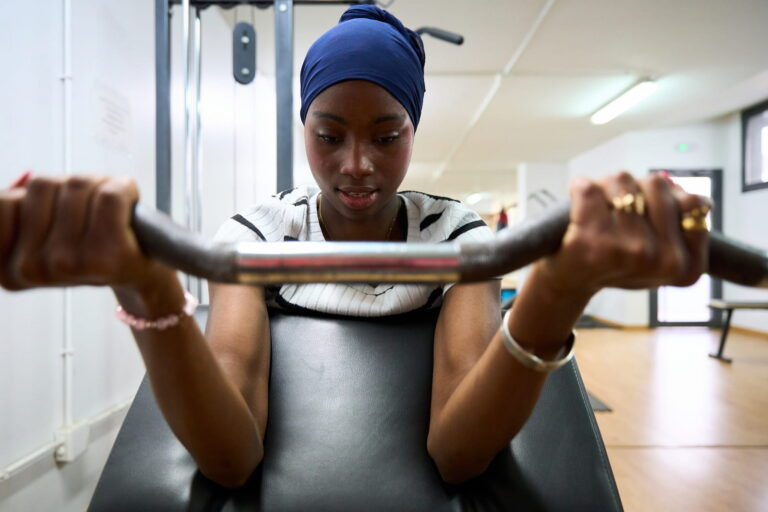
For years, the standard advice for patients undergoing chemotherapy was simple: rest. The toll of treatment—marked by bone-deep exhaustion, dwindling muscle mass, and the heavy weight of psychological stress—seemed to demand total stillness. However, a growing body of research is flipping that script. It turns out that for those battling breast cancer, the most powerful tool to reclaim their vitality might not be the couch, but the gym (or the walking path).
Extreme fatigue, muscle loss, and psychological stress are well-known side effects of the chemotherapy that saves the lives of breast cancer patients. But should patients exercise during active phases of their treatment?
What the study shows
A new study provides additional evidence that movement may be one of the best ways to combat these challenges and improve quality of life during treatment.
Researchers at the University of Miami’s Sylvester Comprehensive Cancer Center reviewed 21 studies involving 3,000 women who were receiving chemotherapy for breast cancer.
Their findings — published recently in The Lancet Healthy Longevity — offer evidence that exercising during the active phase of chemo helps patients feel better physically and mentally, when the body is under stress.
By staying active, patients may actually protect their bodies from some of the harshest impacts of their medication cycles.
“Chemotherapy places stress on every system in the body,” said lead author LaShae Rolle, a predoctoral fellow at Sylvester. “Quality of life becomes a central outcome during treatment, not something to consider only after it ends.”

Across the studies, women prescribed structured exercise programs during treatment had significant gains in quality of life compared with those having standard care alone. The benefits included boosts in physical, emotional and mental health.
All types of exercise — aerobic, strength training and combined aerobic-strength training — were beneficial, the study showed.
This flexibility allows patients to choose activities that match their fluctuating energy levels during different points in their treatment cycle.
Researchers noted that exercise during treatment can reduce fatigue, improve physical functioning, support mental health and emotional well-being, and help patients keep their independence.
Experts emphasize that this is not about running marathons or pushing to the point of total exhaustion. Instead, it is about finding a sustainable way to keep the body moving.
“Exercise during treatment shouldn’t feel rigid or intimidating,” explained co-author Tracy Crane, director of lifestyle medicine at Sylvester.
The most important factor, she noted, is that the activity is safe, realistic and tailored to the individual.
“These findings are consistent with American Society of Clinical Oncology recommendations,” the authors wrote. “Clinicians should consider recommending both aerobic exercise and combined aerobic–strength exercise.”
RELATED: These 7 Exercises Will Help Ease Your Pain After Breast Cancer Surgery
While the science is clear, the execution can feel daunting. If you or a loved one are navigating treatment, keep these expert-backed tips in mind:
Ultimately, integrating movement into a cancer journey is about more than just physical fitness; it is about reclaiming agency in a situation that often feels out of one’s control. By shifting the focus from “surviving” the side effects to “actively managing” them, patients can transform their treatment experience.
As the research suggests, every step taken and every weight lifted is a vote for a stronger, more resilient future. In the fight against breast cancer, exercise isn’t just an “extra”—it is a vital component of the cure.



By subscribing, you consent to receive emails from BlackDoctor.com. You may unsubscribe at any time. Privacy Policy & Terms of Service.
Enter your name and email to receive the download link.