Photo courtesy of Dexcom U
Marlee Fray’s journey with Type 1 diabetes began when she was just two and a half years old. Her earliest memories are hazy, but she distinctly remembers her parents’ unwavering support as they managed her condition.
Growing up in a sports-centric household with two brothers—one older, one younger—both close in age, soccer was an inevitable part of her life. Fray’s parents had both played in college, and her younger brother even went professional. Her older brother decided to stop before college, but the love for the sport was deeply ingrained in her family.
Although she had been living with diabetes for years, middle school marked the ‘official’ beginning of Fray’s personal battle with diabetes.
“When I was in middle school, the responsibility was handed over to me a bit, so I started learning the ropes of taking care of myself,” Fray shares. “I managed until my teenage years, when I went through a rebellious phase and didn’t want to deal with it. I didn’t take care of myself very well, didn’t want to check my glucose levels, and didn’t want to give myself the correct amount of insulin or any insulin at all.”
The neglect led to dangerous highs and lows and persisted into high school, where Fray would often check her levels in private, not wanting to draw attention to her condition. Although her close friends knew, she tried to keep it hidden from everyone else.
Through it all, soccer remained a constant in Fray’s life, though it came with its challenges.
RELATED: 9 Tell-Tale Signs Your Child Has Type 1 Diabetes
“In soccer, I had a hard time with some club coaches dealing with me having to come off the field to adjust my levels. It affected my performance, and my endocrinologist finally said, during my sophomore or junior year, that we had to make a change if I wanted to continue my soccer career. My A1Cs were in the double digits because I was completely not taking care of myself, and I didn’t care at that point,” Fray adds.
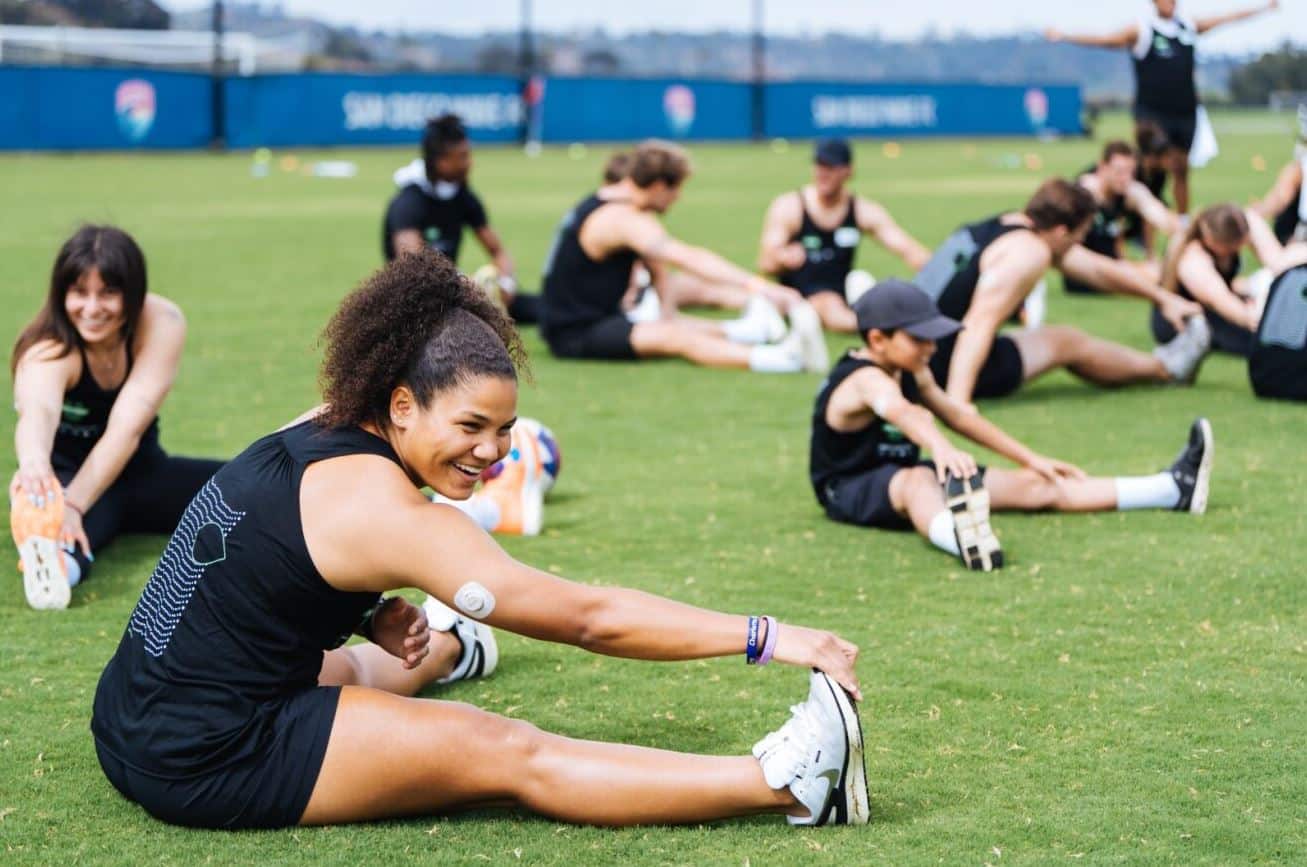 Photo courtesy of Dexcom U
The turning point came when Fray’s endocrinologist introduced her to the Dexcom continuous glucose monitor (CGM). Initially resistant to the idea of another device, Fray reluctantly agreed to try it. To her surprise, it was a game-changer, providing her with a newfound sense of freedom and control.
“I didn’t want another patch—it was too big, too bulky. But then she gave me a G5 to try, saying if I loved it, great, and if I hated it, I could return it. I ended up loving it because I didn’t have to check my glucose levels manually anymore. My mom could monitor my levels from the sidelines when I was on the field,” Fray says.
As Fray transitioned to college, she found more structure and support, beginning to work with nutritionists to understand the importance of a balanced diet and its impact on her performance. The combination of the Dexcom CGM and the tandem insulin pump, which adjusts insulin levels automatically based on readings from the CGM, also made managing her condition much more manageable.
A significant boost to Fray’s confidence came in her sophomore year of college when she met another athlete with Type 1 diabetes on her soccer team.
“She was older than me and had an Omnipod. We bonded over our shared experiences, which helped me become more open about my diabetes. I started educating others and talking to my athletic trainer, coaches, and teammates, which improved my mental health. It helped me embrace my condition and perform better on and off the field,” Fray shares adding that she felt less isolated.
Fray, who recently graduated from the University of Texas at San Antonio and transferred to Oral Roberts University in Tulsa, Oklahoma to pursue her Masters of Science in Sport and Leisure Administration, is now a partner of Dexcom.
“They’ve played a big role in my community, and partnering with them was a big step for me. It opened my eyes to the fact that there are many other athletes going through the same thing,” Fray shares.
 Photo courtesy of Dexcom U
Fray recently had the opportunity to participate in the first annual Dexcom U Sports Camp in San Diego, which brought together collegiate and professional athletes with Type 1 diabetes to mentor young athletes, share experiences and offer advice.
“It was a great experience for the kids and also for us collegiate athletes, swapping stories and realizing we’re all going through the same things,” Fray adds.
As Fray wraps up her final year as a collegiate soccer athlete, her immediate goal is to continue playing soccer at the highest level possible, potentially even playing professionally overseas. Her long-term ambition is to continue advocating for diabetes awareness and supporting other athletes with Type 1 diabetes.
Managing Type 1 diabetes as an athlete has been a challenging journey for Fray, but it has also been incredibly rewarding. The support of family, friends, and medical professionals, along with advancements in technology like the Dexcom CGM and tandem insulin pump, have made it possible for her to pursue my dreams. Her advice to fellow young athletes managing a chronic condition is to give yourself grace.
“Understand that bad days will come, but there will also be good days. Patience and time are key, and it took me a while to learn that. But it makes you stronger,” Fray concludes.


By subscribing, you consent to receive emails from BlackDoctor.com. You may unsubscribe at any time. Privacy Policy & Terms of Service.