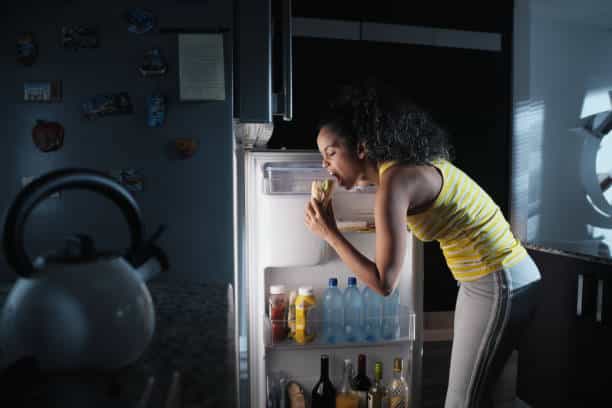
One thing about the body is that when it’s hungry, it’s going to tell you it’s hungry. Whether that be at 10 am in the morning or 11 pm in the evening. And since your body is telling you that it needs food and nutrients, what do you usually do? Go and give your body the nourishment that it needs of course, but what happens when you eat too late? For example, you went out and had a five-course meal at nine o’clock at night and then got home and went right to bed? Or when it’s two in the morning and you wake up for something sweet, but that something sweet turns into half a tub of ice cream and then you simply go right back to bed because of the “itis”? What happens when this cycle continues often and you don’t even realize it? Unfortunately, late-night snacks (eating too late or right before bed) can cause some serious complications in the future. No, you can be experiencing problems as soon as you wake up.
Your body has its own clock, so the window of time you should be eating is anywhere between 8-12 hours. This includes breakfast, lunch, dinner and in-between snacks.
Eating outside this window often does not give your body the time to digest foods properly and efficiently and it can disrupt your circadian rhythm.
Eating after the 8-12 hour period you should be using to nourish your body can not only lead to weight gain, but put you at a higher risk for developing diseases such as heart disease and suffering from acid reflux. This is because your body is working overtime to constantly process food and doesn’t get a long enough break to do so.
RELATED: 7 Late-Night Snacks that Flatten Your Belly
Your body processes food differently at night. Insulin sensitivity drops, and your metabolism slows, making it easier to store calories as fat.
Over time, this can lead to obesity, especially when combined with poor sleep.
Eating late—especially carbs or sugary foods—can cause prolonged blood sugar spikes.
This is particularly risky for people already dealing with prediabetes.
Late-night eating is associated with:
These factors raise the risk of Cardiovascular Disease over time.
Lying down soon after eating makes it easier for stomach acid to travel upward.
Symptoms are often worse at night and can disrupt sleep
Late-night eating is linked to a cluster of conditions called metabolic syndrome, which includes:
This significantly increases risk for both diabetes and heart disease.
The time of day you should stop eating depends on your lifestyle. If you are someone who has early mornings but are typically home during the evening, then you should stop eating at night. If you are someone who starts their days at night, then you should stop eating during the day.
The point at which you should stop eating is usually a few hours before you go to bed no matter what time of day or night that may be. This is because there is no actual evidence that supports when is a good time of the day to stop eating.
Due to our bodies and lifestyles being different, the only research that you can go off of to get the best results is the 8-12 hour window period. This is because, after that window, your body has time to digest and process food to prepare you for the next window.
RELATED: Drink These At Night To Shrink Your Stomach While You Sleep late night snacks
Yes, you may be hungry after your food window but if you’re trying to be mindful, then you need a way to curb the urge to eat late at night. One way to curb the urge is to eat more fulfilling but healthier meals that contain high fiber and protein.
Another way to curb the urge is to lower the number of snacks in your home. If you see snacks at night, then you’re going to be tempted into wanting to eat them at night. Buying fewer or even no snacks the next time you go food shopping could be a big help.
Brushing your teeth when you think you want a snack or drinking herbal tea can also be a good way to avoid eating late at night. Going to bed earlier rather than later will definitely help because you’ll be asleep and won’t feel the urge. Though if you do wake up because of hunger, get a piece of fruit instead of an unhealthy snack.
Eating late may sound good especially when it’s something sweet, but that doesn’t mean it’s good for you. A change now can make your mornings and your future more enjoyable.


By subscribing, you consent to receive emails from BlackDoctor.com. You may unsubscribe at any time. Privacy Policy & Terms of Service.