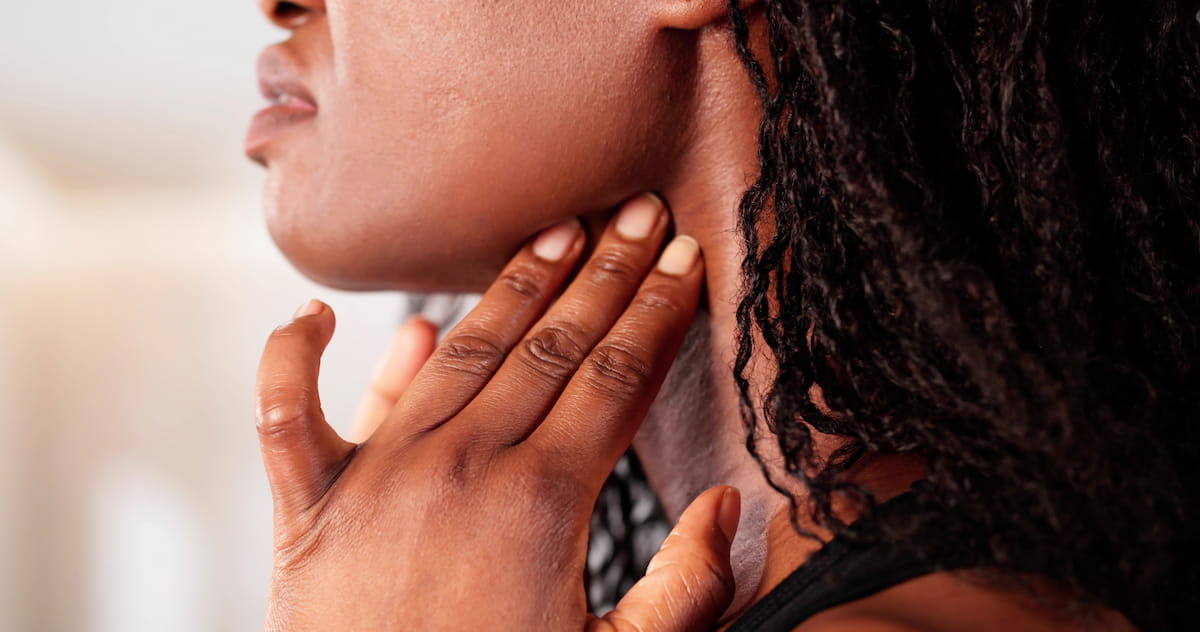
It’s typical for your body to change as you age. However, even some changes that feel common can be a sign that there’s something else going on. Women over the age of 40 may start to feel tired more easily and notice that their weight isn’t as easy to control as it used to be. While there are times when this is normal, doctors want you to know the difference so you can stay healthy.
RELATED: Underactive vs. Overactive Thyroid: Why Black Women Are Often Misdiagnosed
The most common issue people with an underactive thyroid notice is that they’re tired all the time–even when they’re sleeping well. While some women may not have as much energy as they did when they were younger, chronic fatigue is something else altogether. If your thyroid isn’t active enough, your metabolism slows down, making you tired all the time.
A slowed metabolism can also contribute to another issue that many women discard as a symptom of aging: weight gain. Although being older can make it easier to gain weight, the change may be more noticeable if the problem is your thyroid. You may find yourself gaining weight regardless of diet changes and exercising regularly.
Some people are known for having cold hands and feet. If you’re dealing with thyroid issues, though, it’s because your body isn’t able to properly regulate your temperature. That means you’ll feel cold all the time. You’ll likely feel it in more than your extremities and have to wear a sweater when the people around you are fine.
If you’re already in menopause, one change that you may be familiar with is brain fog. Having trouble concentrating is fairly common for older women, but it can also be caused by thyroid issues. The difference with brain fog that is rooted in a malfunctioning thyroid is that it tends to be more significant and can worsen over time.
Another potential sign you may dismiss is dry, itchy skin. As you age, changes in estrogen levels can affect your skin’s moisture level. You can usually improve this with the right skin products or by asking your doctor about medication. If the issue is your thyroid, though, you may not see a difference regardless of the type of skin products you use. You should also be wary if your dry skin is accompanied by unexplained hair loss.
Some women may experience changes in their moods as they enter menopause. With an underactive thyroid, your emotional well-being may be worse overall. You may feel depressed, irritable, and have no motivation at all. Nothing interests you. Finally, you may have unexplained bloating or constipation. Of course, changes in your diet can influence that as well, but this can happen regardless of what you do.

The interesting thing about thyroid hormones in older women is that it’s supposed to increase. This increase is most apparent when you’re over 50. However, as you age, your risk of developing thyroid issues as well as conditions that can affect your thyroid increases. For example, illnesses such as Graves’ disease, Toxic multinodular goiter, Toxic adenoma, and
Transient (silent) thyroiditis can lead to hyperthyroidism.
With hypothyroidism, you may develop the condition because of your age, having a family history of the illness, or an autoimmune condition such as Hashimoto’s thyroiditis. If you take certain medications like interferon alpha, tyrosine kinase inhibitors, interleukin 2, and amiodarone, you also have a higher chance of developing hypothyroidism.
If you’re in perimenopause or menopause, shifts in your hormone levels can also affect your thyroid. Even though the levels of your thyroid hormones should increase, that may not be true for everyone.
Your diet plays a huge role in taking care of your thyroid. It’s best to avoid eating processed food as they usually contain additives that can disrupt how well your thyroid works. The best diet for thyroid health is chock full of whole foods, including fresh fruits and vegetables.
You should focus on foods that are rich in selenium, such as nuts, fish, shellfish, seeds, and legumes, as that mineral supports thyroid function. Zinc is also great as it helps your body produce the hormones it needs. Some foods that contain zinc include dairy, whole grains, nuts, beef, lamb, and poultry.
While iodine can be important in maintaining thyroid health, you should be careful how much you eat, as you can get too much. Using iodized salt occasionally while eating seaweed, fish, and dairy should be enough.
Studies also show that being physically active regularly can help keep your thyroid healthy because it promotes hormone balance. Since there’s no proof that one particular routine is better than another for thyroid health, you can aim for a good combination of cardio and strength training.
You might not be surprised to hear that being stressed all the time can hurt your thyroid. After all, chronic stress can make your body and mind feel completely out of whack. To help with this, you need to use effective stress management techniques. Although meditation and yoga work for many, you may find that breathing exercises and taking a walk are a better fit. All that matters is you find what works for you.
If you work in an environment with toxic chemicals, you should always wear the recommended protective gear. That’s because an unhealthy environment can have a terrible effect on your thyroid. Most importantly, your gear should be up to date and effective against the toxins you’re dealing with. If you’re not sure, then do a little research online.
Getting a good night’s rest is another essential part of keeping your thyroid healthy. You may be resting, but your body does a lot while you’re asleep. That’s the time when your body flushes out toxins, rests your muscles, balances hormones, and consolidates your memories, among other things. Without proper sleep, it’s harder to keep things running as they should.
Finally, don’t skimp on your annual check-up. It’s a lot easier for your doctor to catch health problems in their early stages when you see them regularly. Thyroid issues, in particular, can sneak up on you because of how the symptoms can sneak up on you.
You should always talk to your doctor if you notice a change in your health. When it comes to your thyroid, though, there are a few symptoms you should look out for. You may feel tired all the time, feel colder than everyone else around you, have trouble with your memory or focus, and experience constipation.
Some people may lose their hair, find that their nails break more easily, have dry skin, have persistently itchy skin, see weight gain, feel like their heart is beating more slowly than usual, or feel depressed.
Of course, other conditions can lead to similar symptoms. As an older adult, you also may not exhibit as many symptoms as someone younger. However, the main point is that they’re not normal, so you shouldn’t ignore them. You should see your doctor so they can check on you.
Although your body can change when you age, that doesn’t mean you shouldn’t pay attention to what’s happening. If you notice any of the symptoms of thyroid issues, you need to see your doctor as soon as possible so you can start treatment.


By subscribing, you consent to receive emails from BlackDoctor.com. You may unsubscribe at any time. Privacy Policy & Terms of Service.