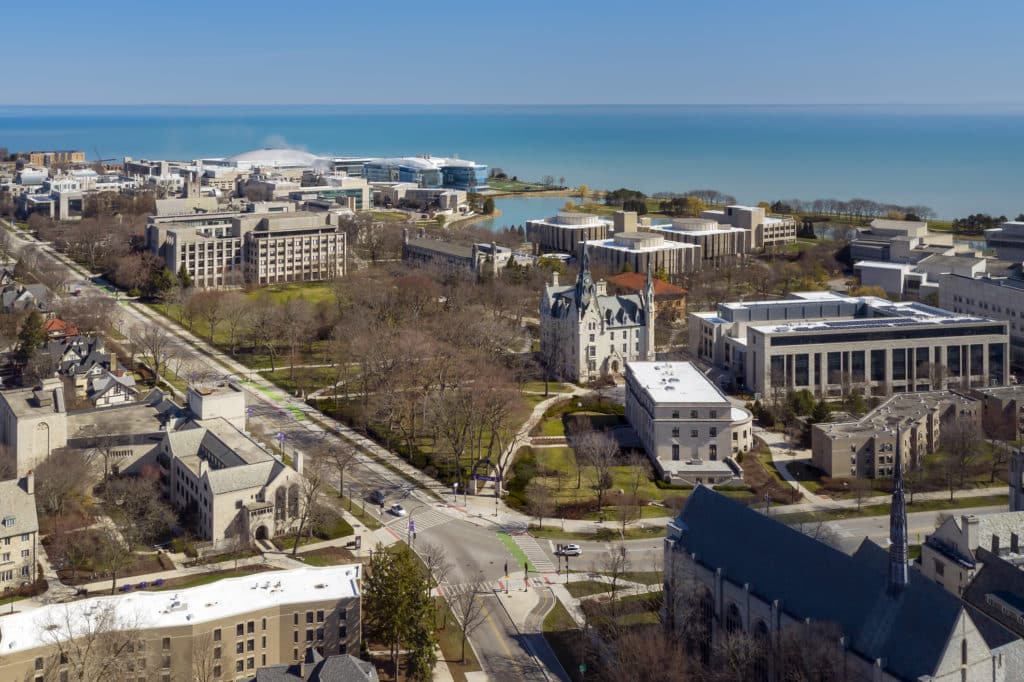
Evanston, Illinois, has become the first city in the country to fund reparations in an effort to compensate Black Americans for the loss of generational wealth due to inequality and systemically racist policies that emerged after the era of slavery.
Initially, there were reports the Evanston city council would vote on the measure at its Monday night meeting. The city council said that information was incorrect and that the final vote is scheduled for a meeting two weeks later on March 22.
The 158-year-old city, located in Chicagoland along the north shore of Lake Michigan, plans to distribute $10 million in tax dollars to the cause over the next decade, with $25,000 payments to eligible residents beginning this spring, according to ABC News.
The first initiative of the $10 million plan is the Restorative Housing Reparations program that would distribute up to $25,000 for housing per eligible resident with funding expected to come from a 3% tax on recreational marijuana sales.
The discussion on reparations has been going on for a long time in the U.S. since slavery was abolished in 1865. Originally, reparations were proposed to make amends for slavery, which built the nation’s wealth — but excluded Black Americans from it.
There is a sorted history about how reparations of 40 actres and a Mule came about, but it is noted that was an order issued by Union General William T. Sherman’s Special Field Order No. 15, issued on Jan. 16, 1865. It states that “…each family shall have a plot of not more than (40) acres of tillable ground, and when it borders on some water channel, with not more than 800 feet water front, in the possession of which land the military authorities will afford them protection, until such time as they can protect themselves, or until Congress shall regulate their title.”
With this Order, 400,000 acres of land — “a strip of coastline stretching from Charleston, South Carolina, to the St. John’s River in Florida, including Georgia’s Sea Islands and the mainland thirty miles in from the coast,” would be redistributed to the newly freed slaves.
Evanston’s reparations resolution was designed to address the discriminatory housing practices of the past. A term that many call “redlining.”
Redlining is a discriminatory practice that puts services (financial and otherwise) out of reach for residents of certain areas based on race or ethnicity. It can be seen in the systematic denial of mortgages, insurance, loans, and other financial services based on location (and that area’s default history) rather than on an individual’s qualifications and creditworthiness. Notably, the policy of redlining is felt the most by residents of minority neighborhoods.
The term “redlining” was coined by sociologist John McKnight in the 1960s and derives from how the federal government and lenders would literally draw a red line on a map around the neighborhoods they would not invest in based on demographics alone. Black inner-city neighborhoods were most likely to be redlined. Investigations found that lenders would make loans to lower-income Whites but not to middle- or upper-income African Americans.
The only option to buy in Evanston was basically limited to the city’s 5th Ward. Banks in Evanston would not loan to Black families for
housing [and] the real estate agencies would be hesitant to show you anything other than the 5th Ward.
In the late 1940s, the city also demolished some homes belonging to Black families that were outside of the 5th Ward — or physically took them from their foundations and moved them into the redlined boundaries.
Evanston’s reparations really went into serious discussions in 2019. It was spearheaded by 5th Ward Alderman Robin Rue Simmons and is mainly rooted partially in Simmons’ experience growing up Black in Evanston.
Reparations first arose as a promise, in early 1865, to redistribute land in the southeast U.S. to formerly enslaved people. For decades, the promise is often invoked in the phrase, “40 acres and a mule.”
Simmons still lives in the ward she represents. She says over time, resources were stripped away from her neighborhood. That, she said, coupled with a lack of investment, led to an ever-increasing wealth gap between white and Black residents in the city.
In a 70+ page report, Robinson documented a systematic history of discrimination and racism in Evanston that dated back to the late 1800s.
She hopes that her work will help families in her neighborhood that are “burdened … get some relief” via reparations, which will first be distributed this year in increments of up to $25,000 per eligible resident to use for housing.


By subscribing, you consent to receive emails from BlackDoctor.com. You may unsubscribe at any time. Privacy Policy & Terms of Service.