
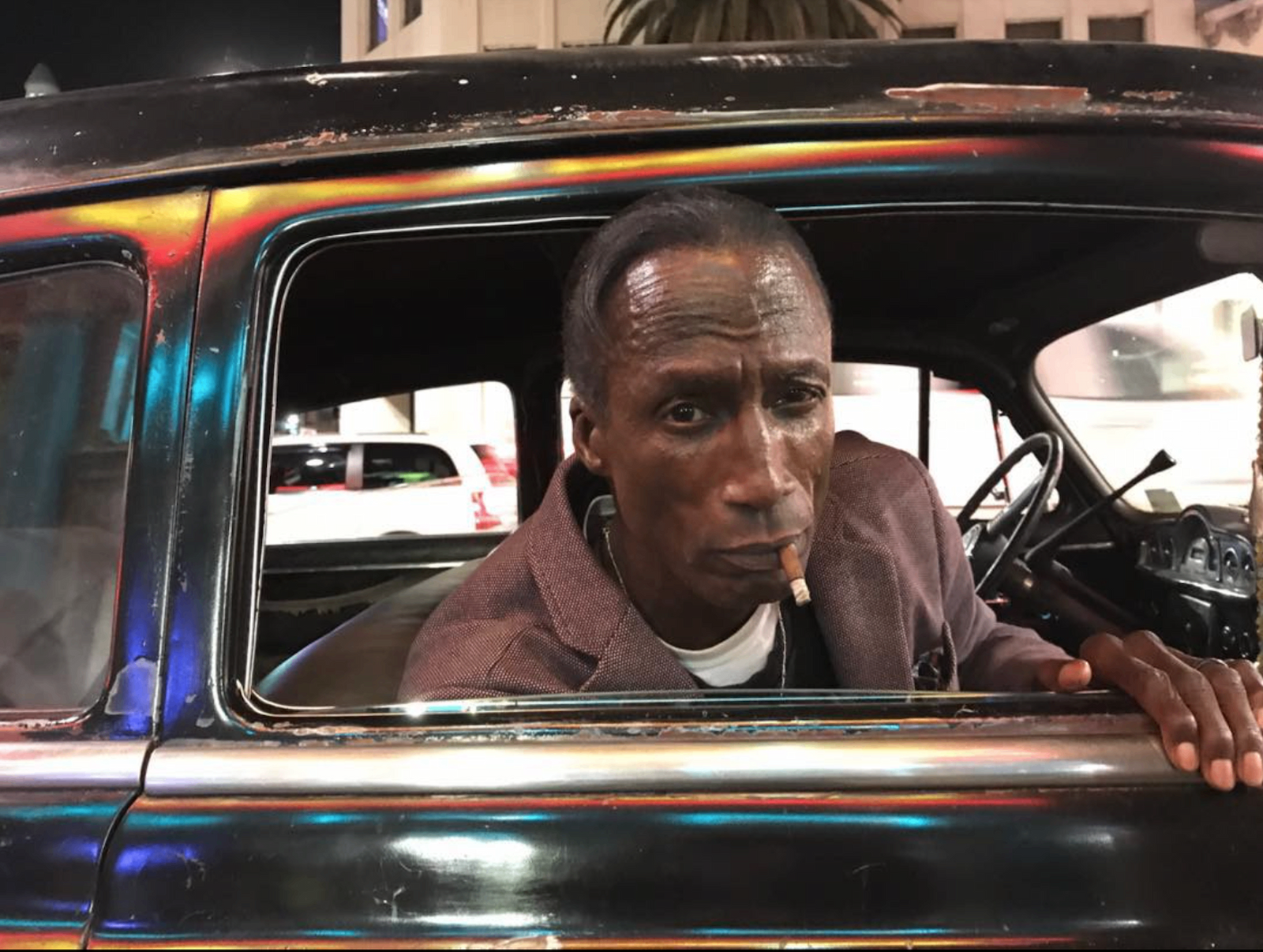
Michael Wright, the veteran actor whose intense performances made characters such as Eddie King Jr. in The Five Heartbeats unforgettable, has died at age 70.
Wright died in Los Angeles after suffering heart failure and complications from Marchiafava-Bignami disease, a rare neurological disorder, according to reports.
For many fans, particularly Black moviegoers who embraced The Five Heartbeats as a cultural classic, Wright will forever be Eddie King Jr.—the extraordinarily talented but troubled lead singer whose voice could electrify a room while his personal demons threatened to destroy everything around him.
But Wright’s career was much bigger than one role.
Over several decades, he developed a reputation for playing complicated men—sometimes dangerous, sometimes vulnerable, sometimes unpredictable and frequently a mixture of all three.
One of the most impressive parts of Wright’s career was the sheer variety of people he portrayed.
His early breakthrough came in the 1979 film The Wanderers, where he played Clinton, the intimidating leader of the Del Bombers. A few years later, Wright delivered an acclaimed performance as Carlyle, a volatile young soldier in Robert Altman’s Streamers. The film’s ensemble cast received the Volpi Cup for Best Actor at the Venice Film Festival.
Science-fiction audiences came to know him as Elias Taylor in the television franchise V, including the original miniseries, V: The Final Battle and V: The Series.
Then came another memorable villain.
In 1987’s The Principal, Wright played Victor Duncan, a violent student and gang leader who terrorizes his troubled inner-city high school. The performance demonstrated Wright’s ability to make a character genuinely frightening without turning him into a one-dimensional caricature.
Four years later, Wright transformed himself again.
As Eddie King Jr. in Robert Townsend’s 1991 musical drama The Five Heartbeats, Wright portrayed a gifted singer struggling with addiction, ego, fame and self-destruction. Eddie could be charming one minute and heartbreaking the next.
The performance gave audiences one of the most memorable character arcs in the film—from rising star to addiction and downfall, followed eventually by redemption.
Wright continued moving between very different worlds.
In Sugar Hill, he appeared alongside Wesley Snipes as Raynathan “Ray” Skuggs. He later played Omar White on HBO’s prison drama Oz, a volatile inmate whose unpredictable behavior made him one of the show’s memorable recurring characters. He also appeared in Miami Vice, New York Undercover, Money Talks, Point Blank, The Interpreter, Rel and, decades after V, returned to science-fiction television as Lazarus Prime in Black Lightning.
Gang member. Soldier. Alien-resistance fighter. High-school menace. R&B singer. Criminal. Prison inmate. Supernatural character.
Wright’s résumé demonstrated remarkable range.
He wasn’t simply playing different jobs or costumes. He had a gift for portraying men carrying something beneath the surface—anger, addiction, fear, ambition, trauma, desperation or vulnerability.
That ability helped make even his most intimidating characters feel human.
Reports indicate that Wright’s death involved heart failure as well as complications from Marchiafava-Bignami disease.
Heart failure does not mean that the heart has suddenly stopped beating.
Instead, it is a chronic or sometimes rapidly worsening condition in which the heart cannot pump enough blood to adequately meet the body’s needs. The heart may become too weak to pump effectively or too stiff to fill properly.
Heart failure affects an estimated millions of American adults and can progressively worsen without treatment.
Common symptoms can include:
Sudden or severe shortness of breath, fainting, severe chest pain or rapidly worsening symptoms require emergency medical attention.
Wright’s death also provides an opportunity to discuss a cardiovascular problem that disproportionately affects Black Americans—and Black men in particular.
According to the American Heart Association’s 2026 statistics, 63 percent of non-Hispanic Black men age 20 and older have some form of cardiovascular disease, when the definition includes high blood pressure, coronary heart disease, heart failure and stroke.
Research has consistently found that Black Americans experience some of the nation’s highest rates of heart failure. One analysis found heart-failure prevalence among Black Americans increased from 3.68 percent to 4.14 percent between 2001 and 2020, remaining higher than rates among White and Hispanic populations.
The disparity can become particularly striking among younger Black adults.
Heart-failure guidelines from the American College of Cardiology and American Heart Association note that heart-failure hospitalization and mortality rates are higher among Black patients than White patients, with especially concerning disparities among younger adults. Among adults ages 35 to 64, heart-failure-related cardiovascular death rates have been reported to be 2.6 times higher among Black men than White men.
That means heart failure shouldn’t be viewed exclusively as an “old man’s disease.”
There isn’t one single explanation.
High blood pressure is one of the most important risk factors for heart failure, and hypertension disproportionately affects Black adults. Diabetes and obesity can also increase risk.
But individual behavior doesn’t tell the whole story.
Researchers and cardiovascular organizations also point to social determinants of health—including access to preventive care, neighborhood conditions, economic inequality, chronic stress and differences in access to high-quality treatment—as contributors to cardiovascular disparities. Race itself should not be interpreted as a biological cause of these differences.
Disparities can continue even after heart failure develops.
Research highlighted by the American Heart Association found that Black men with heart failure with reduced ejection fraction were 25 percent less likely than White men to receive a left ventricular assist device and had a 46 percent lower heart-transplant rate.
For Black men, knowing your blood pressure, cholesterol and blood sugar—and taking changes in stamina or breathing seriously—can therefore be particularly important.
Don’t automatically dismiss persistent exhaustion, swollen ankles or getting unusually winded walking upstairs as simply “getting older.”
They could be signs that your heart needs attention.
The other condition reported in connection with Wright’s death has a name many people have probably never heard before: Marchiafava-Bignami disease (MBD).
It is extremely rare.
Marchiafava-Bignami disease is a neurological disorder involving damage to the corpus callosum, the thick bundle of nerve fibers connecting the left and right hemispheres of the brain. The disease can cause demyelination—the destruction of the protective covering surrounding nerve fibers—and necrosis, or tissue death.
The condition was first described in 1903 by Italian pathologists Ettore Marchiafava and Amico Bignami.
Historically, MBD has been most strongly associated with chronic heavy alcohol use and severe malnutrition, particularly deficiencies involving B vitamins such as thiamine. However, cases have occurred in people without alcohol use disorder, and other medical and nutritional circumstances have been associated with the disease.
Importantly, the fact that someone develops MBD does not by itself establish why that individual developed it. Reports of Wright’s death identify the condition but should not be used to speculate about his personal medical history beyond what his family or medical representatives have disclosed.
Part of what makes Marchiafava-Bignami disease challenging is that symptoms can vary substantially from one person to another.
Possible symptoms include:
Some patients experience sudden severe symptoms, while others develop neurological problems gradually.
Doctors typically use a combination of the person’s medical history, neurological examination and brain imaging—particularly MRI—to help identify characteristic abnormalities in the corpus callosum.
There is no single universally proven treatment regimen for MBD. Because thiamine deficiency and malnutrition are frequently involved, treatment commonly includes nutritional support and high-dose thiamine and other B vitamins when clinically appropriate. Early diagnosis matters because some patients can experience substantial improvement, while severe untreated disease can result in permanent neurological damage, coma or death.

Michael Wright’s career stretched across movies, television, science fiction, crime dramas, musicals and prestige television.
Yet there was something remarkably consistent about his work.
When Wright appeared on screen, you noticed him.
Whether he was terrifying teachers in The Principal, fighting alien invaders in V, creating chaos inside the walls of Oz or singing his heart out as Eddie King Jr., Wright had the ability to make a supporting character feel like the center of the story.
For generations of fans, however, Eddie will remain special.
The Five Heartbeats became more than a movie for many viewers. It became one of those films people quote, sing along with and introduce to the next generation.
And at the center of some of its most powerful moments was Michael Wright—a character actor who repeatedly proved that there was no such thing as a small role when he was on the screen.


By subscribing, you consent to receive emails from BlackDoctor.com. You may unsubscribe at any time. Privacy Policy & Terms of Service.