
Omega-3 fish oil supplements might slightly lower the risk of death after a heart attack or heart failure, but don’t count on them to prevent heart disease, according to the American Heart Association (AHA).
So, should you be taking them? Here’s what you need to know.
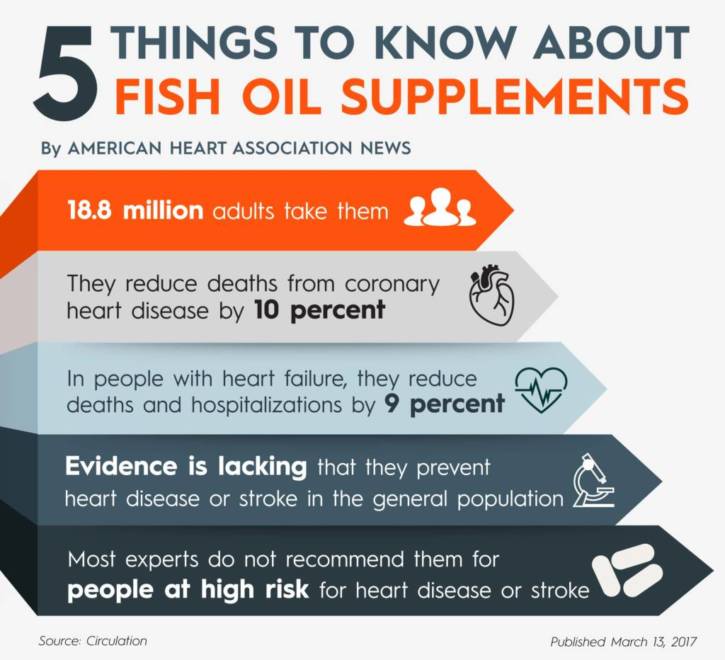
A staggering 18.8 million adults in the U.S. take omega-3 fish oil supplements, according to a 2012 survey. These supplements contain EPA (eicosapentaenoic acid) and DHA (docosahexaenoic acid)—essential omega-3 fatty acids linked to heart health.
But for over 15 years, experts have debated their true benefits. When the AHA first endorsed fish oil in 2002, studies suggested it helped prevent further heart problems. However, newer research has produced mixed results, says Penny Kris-Etherton, Ph.D., R.D., a nutrition professor at Penn State University and co-author of the advisory.
“As the years went on, a lot of studies didn’t show benefits. The research got very muddled,” she explains. “Some studies didn’t enroll enough people or didn’t last long enough.”
RELATED: What Omega-3 Can Do For You…Right NOW!
Many experts remain skeptical about fish oil supplements.
“In today’s environment of evidence-based medicine, the data just doesn’t strongly support fish oil supplements,” says Robert Eckel, M.D., an endocrinologist and past AHA president. “But for those who take them, there’s little, if any, risk.”
Here’s what the latest research suggests:
One reason fish oil studies show weaker results today? Better heart disease treatments.
“In the early 2000s, patients weren’t on as many medications like statins or blood pressure drugs,” says Kris-Etherton. “Today’s patients are different, which affects study results.”

While supplements may help certain individuals, experts agree that eating whole foods is best.
Tip: The AHA recommends eating at least two servings of fatty fish per week for heart health. If that’s not possible, fortified foods or supplements can help
RELATED: Before You Take That Supplement, Here’s What You Should Know
If you have a history of heart attack or heart failure, talk to your doctor about omega-3 supplements. But don’t rely on them as a magic bullet—focus on a heart-healthy diet, exercise, and medication when needed.
Bottom line: Omega-3 fish oil isn’t a cure-all, but it may offer some benefits in certain cases. If you’re considering supplements, make sure you’re making an informed choice!


By subscribing, you consent to receive emails from BlackDoctor.com. You may unsubscribe at any time. Privacy Policy & Terms of Service.