
Eating a balanced diet is one of the best ways to support your overall health. If you are currently putting in the effort to incorporate more veggies in your diet, cut processed foods, and lower sugary beverage intake, then bravo! These changes can support your longevity and quality of life.
While you might be piling all the veggies on every meal, how you prepare your meal is just as important as the meal itself. When you sauté your greens in large amounts of oil or sweeten your evening tea, you may be adding extra calories, unhealthy fats, or added sugar that can reduce the health benefits of an otherwise nutritious choice.
Learn more about how the ingredients we use to cook alter overall diet, why cholesterol is important to track, and what healthy alternatives you can reach for to ensure you put only the best into your body.
Cholesterol often gets a bad reputation, but your body does need some of it. It’s a waxy, fat-like substance that travels through your bloodstream, helping you build cells, produce hormones, and make vitamin D. Your liver makes all the cholesterol you need on its own, and the rest comes from the food you eat.
The trouble starts when there’s too much of the wrong kind circulating in your blood. Because cholesterol can’t dissolve in blood on its own, it hitchhikes a ride on tiny carriers called lipoproteins, and those carriers come in two main types that affect your heart in very different ways.
The first is LDL, often called “bad” cholesterol. When you have too much of it, LDL builds up along the walls of your arteries, forming a sticky plaque that narrows blood vessels and constricts blood flow. Over time, that buildup can stiffen and clog your arteries, raising your risk of high blood pressure, heart attack, and stroke.
The second type is HDL, the “good” cholesterol, which acts like a cleanup crew, carrying excess cholesterol away from your arteries and back to your liver to be flushed out. The goal is to keep your LDL in a healthy range while your HDL stays high enough to do its job.
Fortunately, what you cook and how you cook it can move both numbers in the right direction.
RELATED: The First Daily Cholesterol Pill of Its Kind Is Here. What It Means for Black Patients.
It is key to keep an eye on cholesterol levels as you build a balanced diet for your health. Even when you fill your fridge with the right foods, the ingredients used to prepare them matter just as much.
Let’s clean some items out of your pantry and fill it up with ingredients that support your healthy cholesterol numbers.
When looking at the nutrition label on cooking oils, it’s important to pay attention to various fat levels. Saturated fat and trans fat both contribute to bad cholesterol levels. Monounsaturated and polyunsaturated fats are the healthy fats we want more of, with each of these supporting good cholesterol and lowering bad cholesterol levels. Generic vegetable oils commonly carry more saturated and trans fats than others, so this is a key ingredient to swap out in your kitchen.
Your healthy swap: Avocado oil is a great pick, with 70 percent of its fats being full of positive HDL cholesterol and its tolerance of high cooking temperatures. Olive oil is great when cooking on medium heat, and sesame oil can even support lower blood sugar for those living with or at risk of diabetes. Overall, the American Heart Association recommends oils with no more than 4 grams of saturated fat per tablespoon, no hydrogenated oils, and no trans fat.
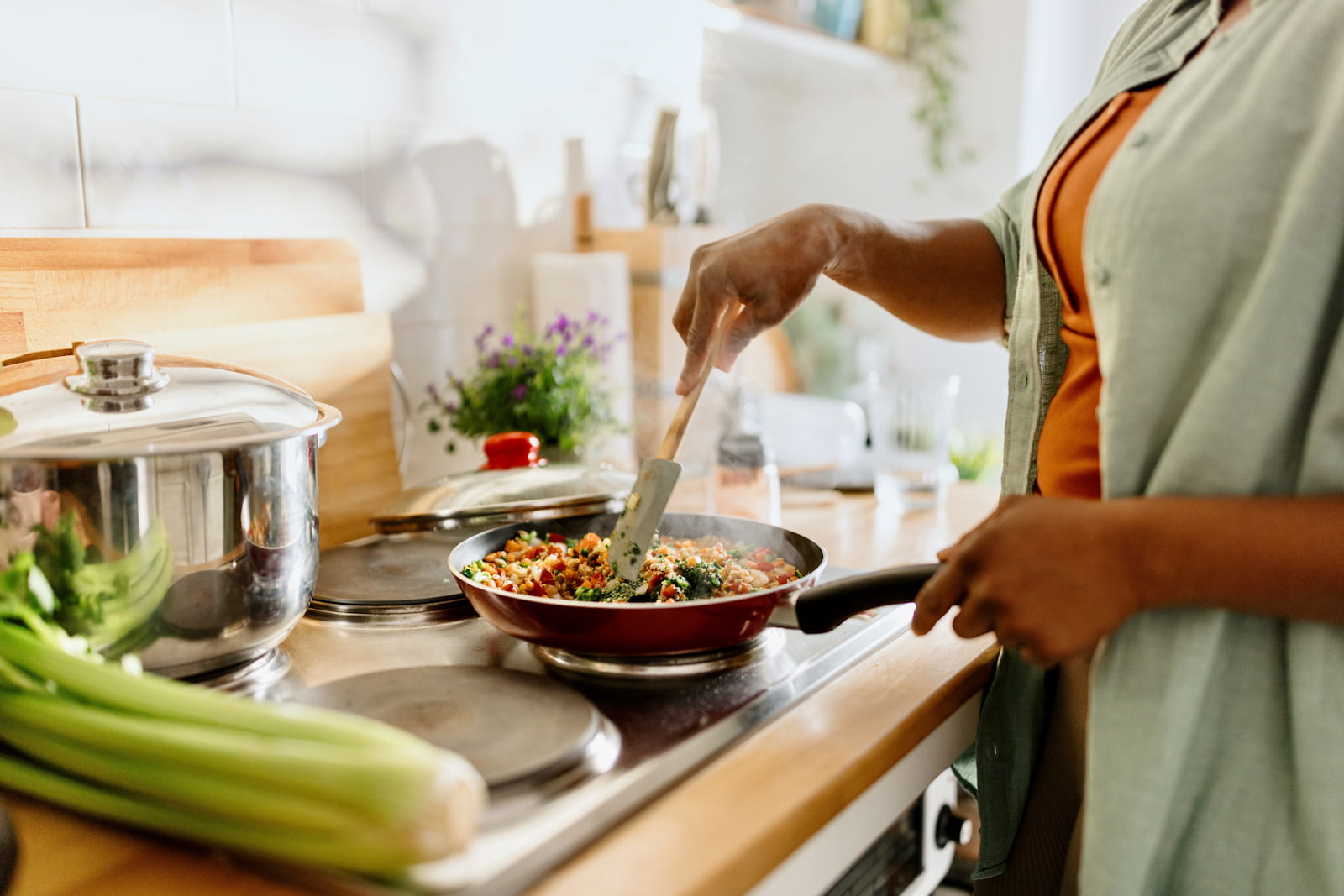
This section is a bit… complicated. For decades, nutritionists and doctors alike agreed that full-fat dairy can negatively affect cholesterol levels due to their high saturated fats. But can the benefits outweigh the negatives?
New research suggests that not all whole-fat dairy is made the same. Fermented dairy, like yogurt and kefir, has a ton of benefits for your overall health and, in moderation, influences positive levels of cholesterol. On the other hand, reaching for full-fat butter, cheese, and milk may not be so balanced.
Here is the recommendation: keep some fat, not full fat, if your cholesterol numbers are not at their best. The switch from whole fat to one percent or two percent is the ideal compromise, and there are a ton of amazing options that meet this recommendation.
Keep an eye on sugar levels when shopping for flavored yogurt! I suggest sugar-free or less than 8g of added sugar per serving. Speaking of sugar…
RELATED: Heart-Healthy Cooking: Recipes to Lower Cholesterol
Sugar has a sneaky influence on bad cholesterol levels. While cane sugar doesn’t contain any cholesterol at all, it creates an environment in your body that is more likely to increase LDLs and decrease HDLs.
Even when your sugar is organic, your body just isn’t going to do well with too much of it. The influences go far beyond cholesterol, so it is essential to limit how much daily sugar you’re consuming. Stick with 100 calories of added sugar for women and 150 calories for men.
A sweet swap: fortunately, the people who love sweet treats created an amazing alternative to cane sugar. Date sugar is all the rage! This healthy swap, made from dates, is going to keep life sweet while providing a TON of health benefits like boosting bone health and supporting our immune systems.
Here’s where high-fructose corn syrup (HFCS) earns its bad name. When you take in more of it than your body can handle, your cholesterol and triglycerides pay the price. The reason comes down to how your liver works. Your liver breaks fructose down much faster than it does glucose, and when you flood it with more than it can use, it turns that excess straight into fat.
The result is more of the harmful LDL cholesterol clogging your arteries and more triglycerides circulating in your blood, a combination your heart would rather do without. And because HFCS hides in so many everyday foods, from sodas and sweet tea to salad dressings and bread, those numbers can creep up long before you ever notice.
Audit your kitchen: Since HFCS is used so often, your best bet is to go through every food and ingredient in your kitchen and get rid of items with it listed in their ingredients list. Foods that contain HFCS might surprise you, like breakfast cereal, bread, protein bars, instant oatmeal, and yogurt. I know, you may have to throw some seemingly good stuff away (bread?!), but this is the one instance where we would rather see real sugar than this manufactured evil twin. If you need to use items with HFCS (because, hey, in this economy, we just can’t throw food away), use it in moderation.
Lowering your cholesterol does not mean tossing out everything you love or overhauling your kitchen overnight. It starts with small, doable swaps that add up over time, one meal, one grocery run, one recipe at a time. What matters most is that you keep coming back to the choices that love your heart right back. Your body is worth the effort, and every small swap is a step toward feeling your best.


By subscribing, you consent to receive emails from BlackDoctor.com. You may unsubscribe at any time. Privacy Policy & Terms of Service.