Coronavirus outbreaks in prisons and jails in the United States have been widespread. However, inmates have been neglected as policymakers determine the priority level for vaccinations. Inmates of US prisons and jails have largely been left behind as the country rolls out its first set of COVID-19 vaccines. Public health experts and advocates have been pushing for states and the federal government to make this vulnerable population a priority.
More than 1.3 million people are incarcerated in the United States. One tracking project of the coronavirus reported more than 270,000 cases and more than 1,700 deaths in the prison system since April 2020. Inmates are twice as likely to die from the coronavirus as the general population, and 19 of the top 20 hot spots in the US are inside prisons, according to the National Commission on COVID-19 and Criminal Justice. Poor living conditions and overpopulation have added to the problem.
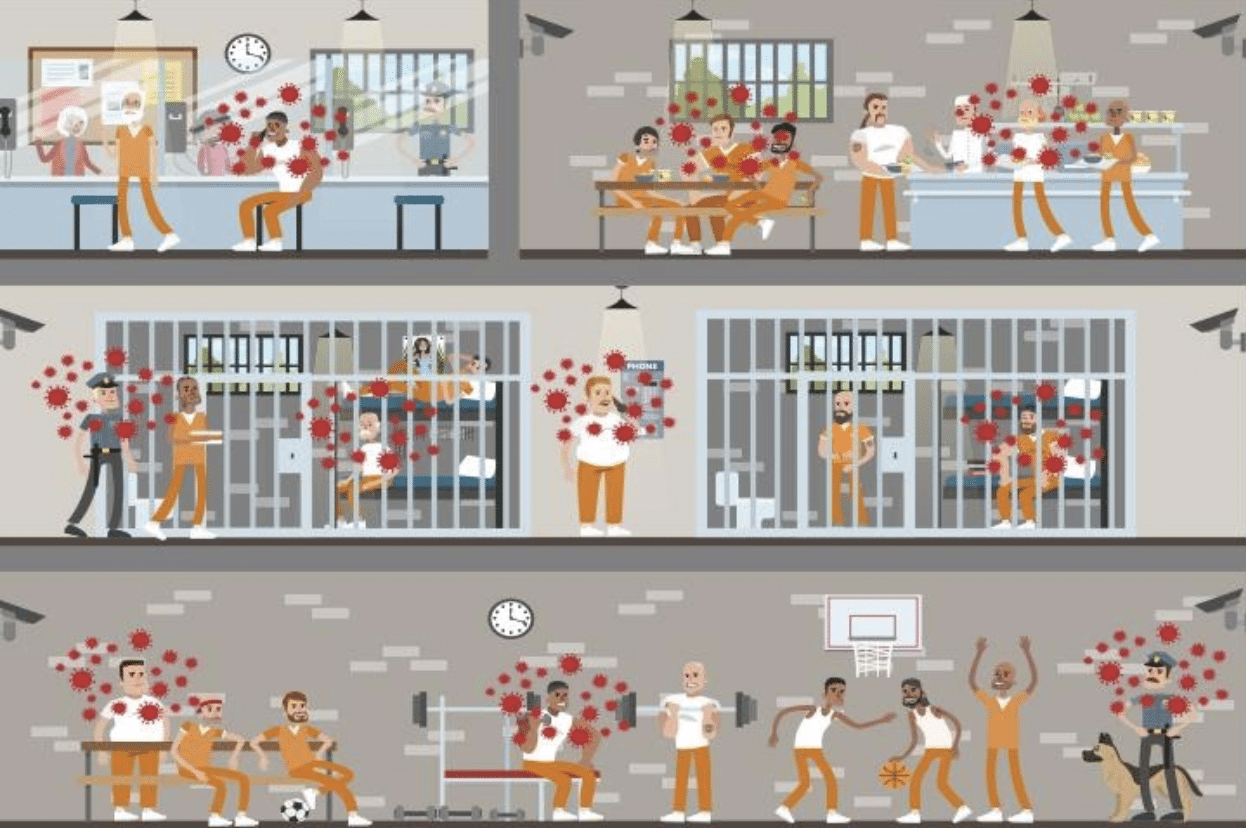
“They have been the source of so many cases because they are a confined population because they can’t do the social separation,” Dr. William Schaffner, professor of preventive medicine and health policy at Vanderbilt University, told DW. “They are a high-risk circumstance.”
Health experts warn that the consequences could be disastrous if nothing is done to help alleviate infections among the incarcerated. The American Medical Association recommends inmates and correctional workers “should be prioritized in receiving access” to the vaccines in the first phase of inoculations.
Still, the Centers for Disease Control and Prevention (CDC) advisory committee in mid-December did not recommend prisoners be included in the initial phase. Under the Trump administration, the federal government largely left state governments on their own to determine how to distribute the vaccines.
A few states have added prisoners and staff to the first tier of candidates, but most have not designated them as a priority. In Colorado, health officials had recommended prisoners be part of the second tier of vaccine recipients. That prompted a backlash driven by state Republicans and conservative media. Colorado Governor Jared Polis changed course in early December, saying “there’s no way prisoners are going to get it before members of a vulnerable population.”
Civil rights advocates are concerned that as the numbers of COVID-19 cases continue to grow, more politicians will cave to public pressure because vaccines and resources are limited.
“Science should dictate this, not politics,” said Denise Maes, director of public policy at the ACLU of Colorado. “Science tells us that we do need to start vaccinations in the prisons.”
Jails are also risky because they hold suspects for short periods of time — sometimes only for hours — before sending them back into their communities, possibly after being exposed to infected people.
Correctional staff and prison inmates are also constantly being moved to balance out the population size, and in the process, coming into contact with people outside prison walls. State prisons throughout the country are not taking the necessary measures to protect the public, prisoners or staff, according to DeAnna Hoskins, president, and CEO of JustLeadership USA, an organization focused on reducing the prison population.
“They transfer prisoners from facility to facility. They are not testing them,” she said. “This is a super-spreader situation.”
After a major outbreak in San Francisco’s San Quentin Prison in late May, the US Appeals Court ordered the facility to cut its population to 1,700 people, or by one half.
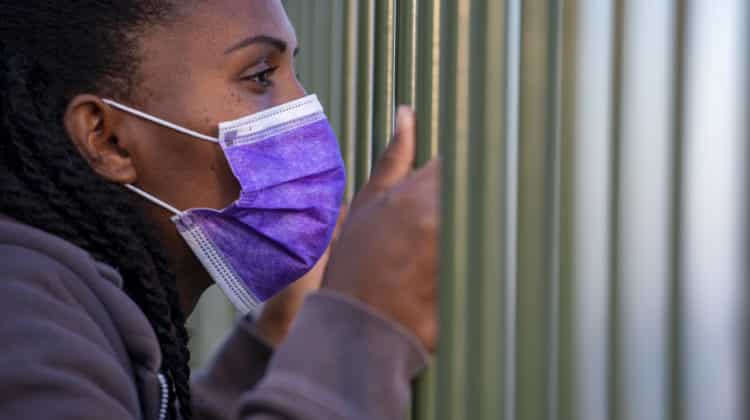
Some states have decided to thin out their prison populations in the hopes of creating more space to allow for physical distancing by releasing prisoners who are either near the end of their sentence or who don’t pose a threat to the community. In New Jersey, Governor Phil Murphy freed more than 2,000 inmates in November to reduce the spread of the coronavirus there.
Prisons are facing another ethical dilemma when they impose lockdowns to limit interaction between inmates and staff. Civil rights advocates have observed that isolating people for long stretches punishes them for something that is not their fault and essentially creates a prison within a prison.
“They are stuck in their cells, and that creates a serious situation,” said Maes. “They don’t get visitations, outdoor activities or cafeteria time and that cannot be sustained.”
Hoskins said prisoners are afraid, getting sick, and worried they’re going to die. She likened the situation to “a burning building,” where prisoners are stuck inside without any help.
The vaccines could relieve those problems if prisoners could get them. It can be said that the lack of procedures in disseminating the virus in the correctional system is adding stress and unnecessary burdens to inmates’ lives and infringing on their rights as human beings.
“You are sentenced to prison, not to die,” King said. A telling statement indeed.


By subscribing, you consent to receive emails from BlackDoctor.com. You may unsubscribe at any time. Privacy Policy & Terms of Service.