Menu

Colorectal Cancer Clinical Trials: What to Expect

colorectal cancer clinical trials

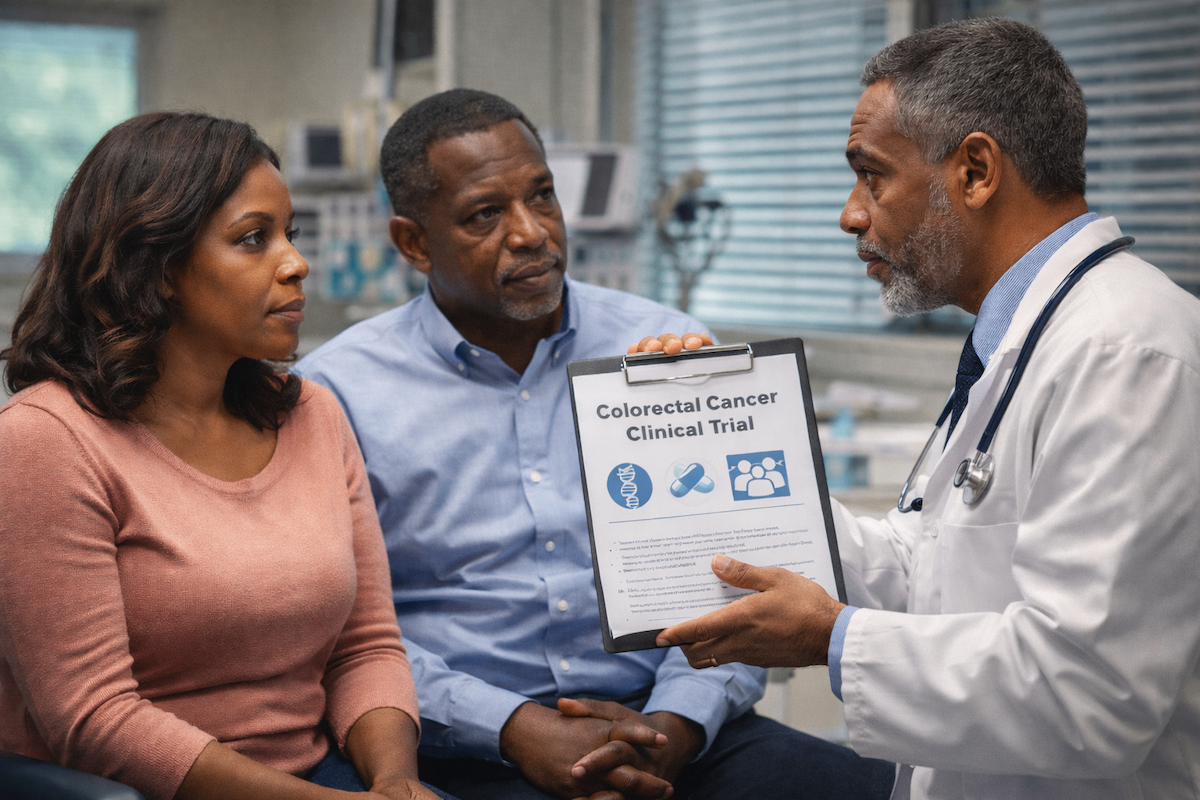
Clinical trials offer new ways to treat colorectal cancer, making them a suitable option for many people living with the disease. By participating in clinical trials, you may gain access to new treatments not available elsewhere and care from some of the best doctors in the nation. Before participating, it’s crucial to understand what they entail and whether they’re a good fit for you.

Here’s what you need to know about participating in colorectal cancer clinical trials.

What Is a Colorectal Cancer Clinical Trial?

A colorectal cancer clinical trial is a research program conducted that evaluates a new medical treatment, drug, or device. The purpose of clinical trials is to find new and improved methods of treating diseases and conditions.

Featured on BlackDoctor

Clinical trials enable the application of the latest scientific and technological advances to patient care. During a clinical trial, researchers use the best available treatment as the standard of comparison to evaluate the new treatments. The new treatments are expected to be at least as effective, and possibly more effective, than the standard treatment.

New treatment options are first researched in the laboratory, where they are carefully studied in test tubes and then in animals. Only those treatments most likely to be effective are further evaluated in a small group of people before being applied in a larger clinical trial.

When a new medical treatment is studied in people for the first time, it is not known exactly how it will work. With any new treatment, there are possible risks as well as potential benefits.

Clinical trials help researchers discover the answers to the following questions:

  • Is the treatment safe and effective?
  • Is the treatment better than the currently available treatments?
  • What is the proper dose of a new drug treatment?
  • What are the side effects of the treatment?
  • Does the treatment have any possible risks?
  • How well does the treatment work?

What are Clinical Trial Phases?

Clinical trials are conducted in phases, each designed to find out specific information. Each new phase of a clinical trial builds on information from previous stages.

Participants may be eligible for clinical trials in different phases, depending on their overall condition. Most clinical trial participants take part in Phases III and IV.

Phases of Colorectal Cancer Clinical Trials

Below are the phases for a colorectal cancer clinical trial:

  • Phase I: Researchers give the new treatment for colorectal cancer to a small number of patients to determine the best way to give it and how much can be given safely.
  • Phase II: Researchers determine the effect of a treatment on colorectal cancer.
  • Phase III: Researchers compare the new treatment with the standard treatment.
  • Phase IV: Researchers apply the new treatment to general patient care. For example, a new drug that was found effective in a clinical trial may be used together with other effective drugs to treat the particular disease or condition in a select group of patients.

What are the Benefits of Participating in a Clinical Trial?

If you decide to join a clinical trial for colorectal cancer, here are the potential benefits you can expect:

  • You may receive a new treatment before it is widely available to the public.
  • You can provide researchers with the information they need to continue developing new procedures and introducing new treatment methods.
  • Your treatment costs may be decreased because the company or agency sponsoring the study may pay for many of the tests and doctor visits directly related to the trial.
Colorectal cancer clinical trials

Are There Downsides to Participating in Colorectal Cancer Clinical Trials?

This will depend on the type of treatment and the participant’s condition.

Because the drug or device being studied is new, not all of its risks and side effects are known at the beginning of the clinical trial. There may be unknown side effects, as well as expected and unexpected benefits. It is important to note that most treatments, as well as the disease or condition itself, have potential unpleasant effects.

Participants will be informed of any known side effects they could experience, as well as any side effects that occur or become known while they are participating in the trial. If you’re not comfortable with the possible side effects, you have the right to voluntarily withdraw from the trial without facing any consequences.

Final Thoughts

Participating in clinical trials can offer an opportunity to contribute to research while also gaining access to new, potentially life-changing medical treatments. If you have colorectal cancer, consider reaching out to your healthcare provider to see discuss your options. You can also visit BlackDoctor’s Clinical Trial Resource Center or ClinicalTrials.gov to find trials that are currently enrolling participants.


Related Stories
Answer the question below
What actions have you taken regarding your leaky heart valve?

Get our Weekly Newsletter

Stay informed on the latest breakthroughs in family health and wellness. Sign up today!

By subscribing, you consent to receive emails from BlackDoctor.com. You may unsubscribe at any time. Privacy Policy & Terms of Service.

More from BlackDoctor

Where Culture Meets Care

BlackDoctor is the world’s largest and most comprehensive online health resource specifically for the Black community. BlackDoctor understands that the uniqueness of Black culture - our heritage and our traditions - plays a role in our health. BlackDoctor gives you access to innovative new approaches to the health information you need in everyday language so you can break through the disparities, gain control and live your life to its fullest.
✦ AI Search Disclaimer
This AI-powered search tool helps you find relevant health articles from the BlackDoctor.org archive. Please keep the following in mind:
✦ For Informational Purposes Only
The information provided through this AI search is for general educational and informational purposes only. It is not intended as a substitute for professional medical advice, diagnosis, or treatment.
✦ Always Consult a Healthcare Provider
Never disregard professional medical advice or delay seeking it because of something you have read through this search tool. If you have a medical emergency, call your doctor or 911 immediately.
✦ AI Limitations
This search tool uses artificial intelligence to help match your queries with articles in our archive. While we strive for accuracy, AI-generated results may occasionally be incomplete, outdated, or not fully relevant to your specific situation.
✦ No Doctor-Patient Relationship
Using this search tool does not create a doctor-patient relationship between you and BlackDoctor.org or any healthcare provider.
Explore over 35,000 articles and videos across black health, wellness, lifestyle and culture
Full AI Search Experience >
×

Download PDF

Enter your name and email to receive the download link.

BlackDoctor AI Search