Menu

Reduce Your Risk of Cervical Cancer

499566179

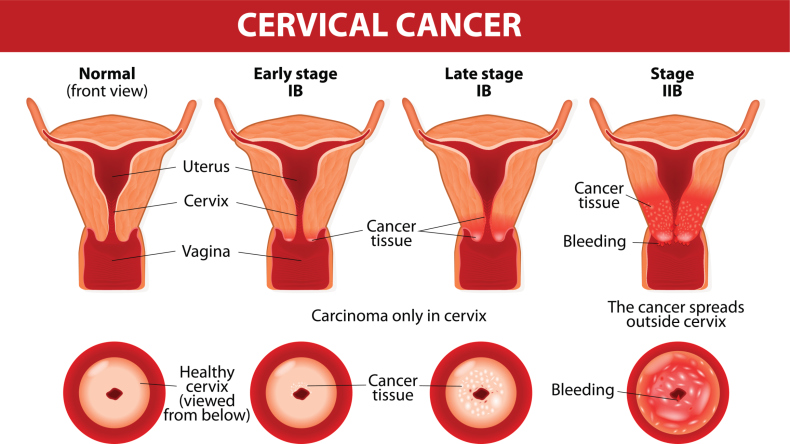
It is estimated that 1 of out of every 3 people in the United States knows someone with cancer. Its unfortunately becoming commonplace to find out someone has been diagnosed with some form of cancer. And cervical cancer is no different. One of our followers asks: “What Can I Do to Reduce My Risk?” See below and share!

Cervical Cancer Causes
Infection with certain strains of the human papillomavirus (HPV) is believed to be the major cause of cervical cancer. Other risk factors include:

  • Birth control pills: A 2003 scientific review of 28 studies found that compared to women who never took oral contraceptives, those who were on the pill for less than five years had a 10 percent increased risk of cervical cancer; those who took it for five to nine years had a 60 percent increased risk. The same study found that the risk returns to normal 10 years after a woman stops taking oral contraceptives.
  • Smoking: Women who smoke have twice the normal risk of non-smokers. Tobacco byproducts have been found in the cervical mucus of women who smoke, and researchers believe that these substances damage the DNA of cervical cells.
  • Pregnancies: More than three full term pregnancies are associated with an increased risk. The reason is unknown.
  • Diet: A diet low in fruits and vegetables increases the risk.
  • DES: Daughters of women who took the drug diethylstilbestrol (DES) during pregnancy between the years 1940 and 1971 may be at increased risk of a rare form of cervical cancer. DES is no longer given to pregnant women.

SIGN UP FOR OUR NEWSLETTER HERE!

Featured on BlackDoctor

Reduce Your Risk With:

HPV Vaccine
Some gynecologic cancers are caused by the human papillomavirus (HPV), a very common sexually transmitted infection. Vaccines protect against the HPV types that most often cause cervical, vaginal, and vulvar cancers. It is recommended for 11- and 12-year-old girls and boys. (Note: The vaccine can be given beginning at age 9.) It also can be given to females or males who are 13–26 who did not get any or all of the shots when they were younger. Ideally, girls and boys should get three doses of this vaccine before their first sexual contact. If you or someone you care about is in this age range, talk with a doctor about it.

Screening Tests
Screening is when a test is used to look for a disease before there are any symptoms. Cancer screening tests are effective when they can find disease early, which can lead to more effective treatment. (Diagnostic tests are used when a person has symptoms. The purpose of diagnostic tests is to find out, or diagnose, what is causing the symptoms. Diagnostic tests also may be used to check a person who is considered at high risk for cancer.)

READ: How Healthy Are Your Breasts?

Of all the gynecologic cancers, only cervical cancer has a screening test—the Pap test—that can find this cancer early, when treatment works best. The Pap test also helps prevent cervical cancer by finding precancers, cell changes on the cervix that might become cervical cancer if they are not treated appropriately. In addition to the Pap test, which is the main screening test for cervical cancer, a test called the HPV test looks for HPV infection. It can be used along with the Pap test for screening women aged 30 years and older. It also is used to provide more information when Pap test results are unclear for women aged 21 and older. Learn more about the Pap and HPV tests.

Since there is no simple and reliable way to screen for any gynecologic cancers except cervical cancer, it is especially important to recognize warning signs and learn if there are things you can do to reduce your risk. Talk with your doctor if you believe that you are at increased risk for gynecologic cancer. Ask what you might do to lower your risk and whether there are tests that you should have.


Visit the BlackDoctor.org Cancer center for more articles. 

SHARE
Related Stories
Answer the question below
What actions have you taken regarding your leaky heart valve?

Get our Weekly Newsletter

Stay informed on the latest breakthroughs in family health and wellness. Sign up today!

By subscribing, you consent to receive emails from BlackDoctor.com. You may unsubscribe at any time. Privacy Policy & Terms of Service.

More from BlackDoctor

Where Culture Meets Care

BlackDoctor is the world’s largest and most comprehensive online health resource specifically for the Black community. BlackDoctor understands that the uniqueness of Black culture - our heritage and our traditions - plays a role in our health. BlackDoctor gives you access to innovative new approaches to the health information you need in everyday language so you can break through the disparities, gain control and live your life to its fullest.
✦ AI Search Disclaimer
This AI-powered search tool helps you find relevant health articles from the BlackDoctor.org archive. Please keep the following in mind:
✦ For Informational Purposes Only
The information provided through this AI search is for general educational and informational purposes only. It is not intended as a substitute for professional medical advice, diagnosis, or treatment.
✦ Always Consult a Healthcare Provider
Never disregard professional medical advice or delay seeking it because of something you have read through this search tool. If you have a medical emergency, call your doctor or 911 immediately.
✦ AI Limitations
This search tool uses artificial intelligence to help match your queries with articles in our archive. While we strive for accuracy, AI-generated results may occasionally be incomplete, outdated, or not fully relevant to your specific situation.
✦ No Doctor-Patient Relationship
Using this search tool does not create a doctor-patient relationship between you and BlackDoctor.org or any healthcare provider.
Explore over 35,000 articles and videos across black health, wellness, lifestyle and culture
Full AI Search Experience >
×

Download PDF

Enter your name and email to receive the download link.

BlackDoctor AI Search