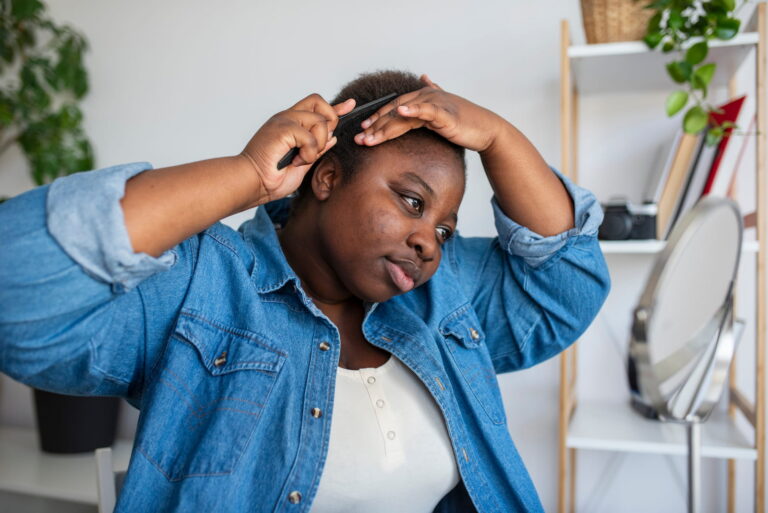
For decades, a common question has popped up in schools, beauty salons, and even doctors’ offices: Can Black people get lice? Many people — both Black and non-Black — believe the answer is “no.” This myth has been passed down through generations, often without anyone taking the time to fact-check it.
The truth is more nuanced. While lice infestations are far less common in Black people compared to White or Asian individuals, they are not impossible. Black people can and do get lice, though the numbers are significantly lower. This lower rate has nothing to do with immunity and everything to do with biology, history, and even the types of lice that exist in different parts of the world.
In this article, we’ll break down why lice are less common in Black hair, how infestations happen, the differences in treatment for natural hair, braids, wigs, or locs, and how to prevent lice no matter your hair type.
RELATED: Top 5 Home Remedies for Head Lice
Head lice are tiny, wingless parasites that live on the human scalp and feed on small amounts of blood. They spread primarily through direct head-to-head contact and occasionally by sharing personal items. Lice lay eggs (nits) that stick firmly to hair shafts, making them tricky to remove.
Research has shown stark differences in lice rates among different racial groups in the U.S. A notable study found:
About 10 percent of White children had lice
Only 0.3 percent of Black children had lice
That’s more than 30 times less common — but clearly, it still happens.
RELATED: Doctors Warn Against Lice Hiding In Eyelash Extensions
Hair texture plays a huge role.
White hair: Typically round in cross-section — easier for lice claws to grip.
Black hair: Often oval or elliptical in shape — harder for lice to hook onto.
Since lice crawl along hair shafts to feed and lay eggs, a shape that’s difficult to grasp naturally lowers the chance of infestation.
The most common lice species in the U.S., Pediculus humanus capitis, originally evolved in Europe. These lice adapted to straighter, round-shaped hair and were brought to America in the 19th century. They are less well-suited to cling to African hair textures.
Some traditional and modern Black hair care practices — such as the use of oils, pomades, and moisturizers — may create a scalp environment that’s less welcoming to lice. However, this is not a guaranteed shield. There are documented cases of Black people who used these products and still got lice.
It’s important to note: in parts of Africa, some lice strains are adapted to oval-shaped hair shafts. So while rates are low in Black Americans due to the U.S. lice strain, Black people in African countries may face different risks.
Even with these natural barriers, lice can still spread through:
Direct head-to-head contact — the most common method, especially in schools or group activities.
Sharing items like hats, scarves, helmets, brushes, or towels.
Contact with contaminated surfaces, such as bedding, couches, or carpets used by someone with lice.
Avoid head-to-head contact, especially in group settings like camps or sports.
Do not share hats, scarves, combs, or hair accessories.
Disinfect combs and brushes by soaking in hot water (130°F / 54°C) for 5–10 minutes.
Wash and dry bedding and clothes on high heat after possible exposure.
Seal unwashable items in a plastic bag for two weeks.
Vacuum furniture, rugs, and car seats used by an infested person.
Skip chemical lice sprays — they’re unnecessary and can be harmful.

The standard lice treatments — medicated shampoos, combing, and nit removal — work for all hair types. However, Black hair may require modified steps to ensure success, especially if wearing braids, wigs, weaves, or locs.
Before treatment:
Take out weaves, wigs, and extensions.
Consider unlocking or cutting locs — lice can hide deep inside, making treatment nearly impossible without removal.
Use an over-the-counter or prescription lice treatment, following the instructions carefully.
No treatment kills 100% of eggs, so manual removal is essential.
Use a high-quality nit comb, like the Terminator Comb.
Straightening hair or using light oils can make combing easier.
If you want to avoid cutting your locs or braids:
Olive & Tea Tree Oil Treatment – Mix a few drops of tea tree oil into olive oil, soak overnight, wash with vinegar and water, and blow-dry. Repeat for 2 weeks.
Apple Cider Vinegar & Coconut Oil – Loosens the glue holding nits, making them easier to comb out.
Straightening Iron Heat – Applying high heat to sections can kill lice and nits, though not scientifically proven.

Many people wonder, “Can Black people get lice?” and the answer is yes, though it happens less often. These common questions break down how lice spread, what makes them harder to detect or treat in certain hair types, and what prevention really looks like.
Yes. While rare overall, Black people can get head lice if the wig or weave has been in contact with an infested scalp. Lice don’t live on synthetic hair, but if the wig or weave has been in contact with an infested scalp, lice or nits can be present. Always wash or disinfect hairpieces before use.
Not entirely. Braids and locs can make it harder for lice to move through hair, but they can still infest the scalp. They also make treatment more difficult.

Yes. Studies show rates are much lower in Black children compared to White children in the U.S., but they can still get lice if exposed.
Some oils may make it harder for lice to survive, but they are not foolproof. People using oils and pomades have still gotten lice.
Use a fine-toothed nit comb and good lighting. Separate hair into small sections and check close to the scalp, especially around the ears and neck.
RELATED: Maintain Healthy Hair Underneath Your Extensions
Yes. While rare, lice infestations can and do occur in Black people. So when people ask, “Can Black people get lice?” the answer is yes — just less often. Factors like hair shape, history, and hair care habits lower the risk — but don’t eliminate lice in Black hair. Awareness, prevention, and the right treatment approach are key for everyone, regardless of race or hair texture.


By subscribing, you consent to receive emails from BlackDoctor.com. You may unsubscribe at any time. Privacy Policy & Terms of Service.