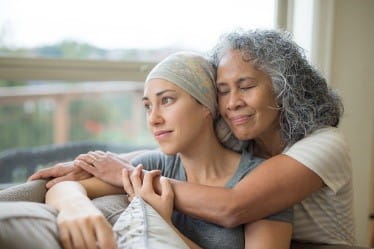
Every April, with breaking hearts, we acknowledge Black mothers and mothers-to-be. The question follows, heavy each time: How does childbirth still take Black women’s lives?
Black Maternal Health Week is observed every year from April 11 through 17. It’s not a health observance in the traditional sense — it’s a week of grief and glory. Grief over the sisters we’ve lost, and glory in the movement that keeps fighting for the ones who are still here.
This year, the stakes feel higher than ever before. The data confirms that the gaps are widening. Federal support systems relied upon by Black mothers face sharp reductions. But our resistance is rising, too. And this year’s theme says it all.
The 2026 Black Maternal Health Week theme — “Rooted in Justice and Joy” — is both a declaration and a demand. Initiated by the Black Mamas Matter Alliance (BMMA), this moment marks their 10th year of organized advocacy that has shifted policy, changed narratives, and saved lives.
As one advocate put it: when Black women are discussed primarily through the lens of mortality and crisis, joy becomes an act of resistance. That focus shifts perception, and instead of seeing motherhood through loss alone, space opens up for other truths — affection exists here, as does resilience and connection, even as it demands that systems be held accountable.
BMMA describes the theme as a “liberated future rooted in restoration, justice, and joy” — one that acknowledges systemic oppression while calling for something better. Not just surviving, but thriving.
Let’s talk about what the data actually says. Because if we don’t look it in the face, we cannot change it.
| 44.8 deaths per 100,000 live births — the Black maternal mortality rate in 2024 |
| 3x+ Black women are more than three times more likely to die from pregnancy-related causes than white women |
| 80%+ of pregnancy-related deaths in the U.S. are preventable, according to the CDC |
The most recent data from the Centers for Disease Control and Prevention (CDC), released in March 2026, show a troubling trend. Though nationwide maternal deaths declined modestly — to 17.9 deaths per 100,000 live births — the number among Black women was 44.8. In contrast, white women experienced a rate of 14.2. Meanwhile, Hispanic women recorded 12.1.
Black women were the only group whose rate showed no statistically significant decline. The gap is not closing. In some measures, it is widening.
The leading causes of maternal death among Black women include preeclampsia and eclampsia, issues tied to post-delivery heart function (postpartum cardiomyopathy), along with severe bleeding during childbirth (obstetric hemorrhage). Though less common overall, preeclampsia appears in Black mothers about 60 percent more often compared to their white counterparts. Survival odds drop sharply — their risk of dying from it is roughly five times greater than that of white women.
Postpartum cardiomyopathy — a form of heart failure that can emerge in the weeks or months after delivery — claims Black women at five times the rate.
And here is a truth that many people don’t know: most maternal deaths don’t happen in the delivery room. More than half occur in the days, weeks, and months after birth. Among Black women, a larger portion of these losses happen in what’s called the late postpartum period — 43 days to a year after delivery. This pattern reveals critical gaps in follow-up care that disproportionately leave Black mothers without a safety net when they need one most.
RELATED: What Black Expectant Mothers MUST Know About Their Rights (According to a Doula)
The physical toll on Black mothers is devastating, but the unseen mental health crisis deserves just as much attention.
According to the Black Mamas Matter Alliance’s 2026 Fact Sheet, between 29 and 44 percent of Black women experience postpartum depressive symptoms, yet few are properly identified, and even fewer receive treatment.
Perinatal mood and anxiety disorders (PMADs) — which include postpartum depression, anxiety, obsessive-compulsive disorder, and PTSD — affect 1 in 5 pregnant and postpartum women nationally. But for Black women, the barriers to getting help are filled with obstacles.
There’s the “Strong Black Woman” image, the deeply ingrained cultural expectation that we Black women handle pain in silence, without asking for help. Following that closely is health care provider distrust, born from generations of medical racism and the very real experience of being dismissed in clinical settings. Close to that are the culturally sensitive screening tools that don’t account for the ways Black women experience and describe depression.
And there’s the looming threat of Medicaid cuts in 2026. Medicaid covers more than 60 percent of births to Black mothers in the U.S. It is also the primary payer for mental health services. The One Big Beautiful Bill Act threatens that support through almost a trillion-dollar reduction in funds across 10 years, putting both maternal and mental health coverage for Black families in serious jeopardy.
RELATED: Reproductive Rights: How One Advocate Is Leading the Fight

One of the most heartbreaking aspects of this crisis is that it does not spare advocates, healers, and those who have devoted their lives to protecting other Black women in childbirth.
At 31-years-old, Dr. Janell Green Smith carried deep purpose into her work. She was known as The Loc’d Midwife — a certified nurse-midwife from South Carolina who spent her career fighting racial disparities in maternal care, supporting women through their reproductive journeys, and encouraging other Black women to pursue their dreams in medicine. She earned her Doctor of Nursing Practice degree in 2024 and was excited, her family said, about her February due date.
Dr. Green Smith died on New Year’s Day 2026, less than a week after giving birth to her daughter, Eden, after developing preeclampsia. She knew the statistics and spoke about them regularly on social media. Smith shared that she became a midwife because she wanted to be part of the solution. Her worst fear, her sister said, had come to pass.
We also carry Shamony Gibson, who died in 2019 after her concerns about postpartum symptoms were dismissed. Her mother, Shawnee Benton Gibson, has since become one of the most powerful advocates for Black maternal health in the country, co-founding The ARIAH Foundation to honor her daughter’s name. Shamony’s story — and the art installation “In Her Honor” unveiled in Congress just last year — reminds us that this is real breath and real grief.
These are our people. We carry all the women whose names we may never know. The ones who died in intensive care, at home, in emergency rooms, whose deaths were preventable, and who deserved better.
RELATED: Why Are Black Women 25% More Likely to Have C-Sections?
One of the most important things to understand about this crisis is that it’s not about individual health choices, education, or poverty alone.
In 2023, groundbreaking research from the National Bureau of Economic Research found that the wealthiest Black woman in California faces a higher risk of maternal death than the least wealthy white woman. A college degree does not close the gap. A good job does not close the gap.
This study showed how Black families, no matter their socioeconomic status, are disproportionately affected by structural racism in medical settings.
One out of three Black and Hispanic women who gave birth in a hospital reported provider mistreatment, while one in five white women did. Our concerns and symptoms are dismissed. Doctors downplay our pain.
Unfortunately, this is not a glitch in the system; it’s how the system was designed.
RELATED: 7 Things Pregnant Black Women Can Do to Be Heard by Doctors
Black Maternal Health Week is about awareness and action. Here’s how you can show up this week and beyond.
1. Learn the warning signs. Watch for symptoms of postpartum preeclampsia, postpartum depression, and cardiomyopathy that can appear weeks after delivery. Share what you know; you could save a life.
2. Support a Black birth worker. Doulas, midwives, and community health workers are often self-funded and under-resourced. Many have community fundraisers and ways you can donate.
3. Find your local BMHW events. Events are happening across the country this week — from Atlanta to Philadelphia to New York to California. See our sidebar for details.
4. Contact your representatives. The Medicaid cuts are hitting Black mothers harder than others. Use BMMA’s advocacy tools to make your voice heard.
5. Donate to Black-led maternal health organizations. Organizations like the Black Mamas Matter Alliance, Sisters in Loss, Shades of Blue Project, and Oshun Family Center are doing life-saving work with small budgets.
For mental health support, call the National Maternal Mental Health Hotline: 1-833-943-5746 (available 24/7). For postpartum support, contact Postpartum Support International at 1-800-944-4773.
Source: Black Mamas Matter Alliance, 2026 BMHW Toolkit and Black Maternal Mental Health Fact Sheet (blackmamasmatter.org) | CDC Maternal Mortality Data 2024


By subscribing, you consent to receive emails from BlackDoctor.com. You may unsubscribe at any time. Privacy Policy & Terms of Service.