
It sounds like crazy talk, but AI might soon be governing your entire sleep schedule.
And even if it isn’t, it’s providing the kinds of health and wellness insights that we would have never dreamed of in the past. Take this scenario: imagine drifting off to sleep one night and waking up with insights not just about how rested you feel, but about your long-term health risks.
And imagine if these insights were potentially years before symptoms appear.
Sound too good to be true? Cutting-edge research from Stanford Medicine, published in January 2026, makes this closer to reality. Their AI model, SleepFM, is capable of analyzing physiological data from a single night’s sleep to predict risks for over 100 health conditions, including heart disease, diabetes, dementia, stroke, various cancers, and even all-cause mortality.
That’s a lot!
Not only that, but it’s trained on nearly 600,000 hours of polysomnography (PSG) recordings! Basically, SleepFM represents a breakthrough in turning sleep into a powerful biomarker for proactive health.
But what does that mean to you?
The truth is, sleep data unlocks a whole range of predictive insights. These signals are captured by the latest technology and are about as accurate as we can get at this point. In the case of the SleepFM, the model is highly developed based on everything it learned from the gold-standard sleep study that includes EEG (brain waves), eye movements, muscle activity (EMG), heart rate (ECG), breathing patterns (airflow and effort), blood oxygen levels, and body movements.
Basically, everything!
RELATED: 10 Diseases You Can Get From Not Getting Enough Sleep
Cutting-edge AI will always seem crazy to some people.
In reality, it’s just another step in the technological future. We have the printing press. We have the internet. We’ve had a lot of major inventions that have, for a brief period, disrupted society until they could be adapted and modified appropriately.
The same is true with these technologies. With SleepFM, we’re talking about something that processes rich datasets using advanced contrastive learning to create latent representations that capture the “language of sleep.”
In simpler terms, it’s looking at the timing of sleep, the body’s related processes that help with sleep, and the small but important differences between bodily systems, especially when there are sleep disorders present.
In some AI models, we’ve seen very strong performance, with concordance indices (C-index) of 0.75 or higher for 130 conditions. In plain talk, that means a statistically significant high correlation. It’s hard to explain these away, in other words, as just a mere coincidence. Beyond that, AI has also excelled at standard tasks like sleep staging and apnea detection, which are strong indicators of issues.
Now, you might be asking yourself, how trustworthy is this SleepFM thing?
And you’re certainly not alone. Currently, SleepFM relies on clinical-grade PSG in sleep labs, which means it uses the PSG, or sleep study, to monitor all kinds of bodily signs overnight. These kinds of tests offer detailed, high-fidelity data – just with limited accessibility.
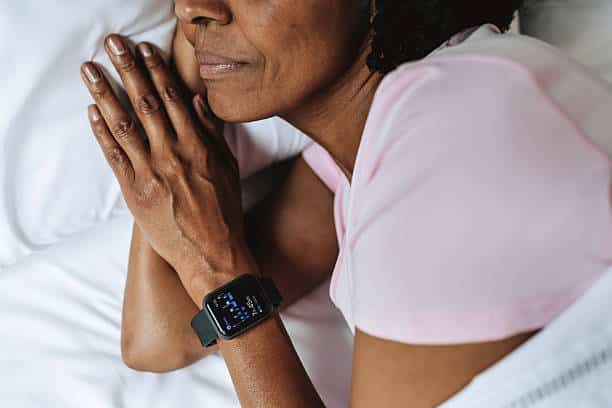
That’s why new consumer tools are bridging the gap. You’ve probably already heard of wearables like the Oura Ring, Whoop, Fitbit, Apple Watch, and Garmin devices. The reason for that is pretty clear. They’re highly popular and useful. They appeal to so many people – whether hardcore athletes or everyday folks – because they can do so much. Among their useful functions, these wearables track heart rate variability (HRV), movement, breathing rate, blood oxygen, and estimated sleep stages.
They also rely on a whole range of interesting technologies, like optical sensors and accelerometers, the kinds of interesting metrics that are really starting to gain traction in the New Year.
What most people like is the continuous data they provide. Some integrate AI for personalized insights, mirroring many of the capabilities of SleepFM. The main difference is SleepFM’s ability to address a broad disease-prediction scope. With future integrations, it really could bridge the gap, allowing wearable data to feed into advanced models for earlier warnings.
For patients, this could mean the difference between getting diagnosed with a deadly disease with limited options or getting reviewed early and preventing that disease from ever even occurring.
At the end of the night (when you should be sleeping), the results speak for themselves.
People often wonder why sleep quality serves as such a potent biomarker for overall health. The answer is, because it’s about when the human body and brain try to repair damage during the day.
Let’s be honest, our daily lives are exposing us to all kinds of toxins and contaminants. Many people get discouraged when they hear that and just want to give up – after all, who can change that? Sounds like so many issues, like it’s too big, doesn’t it?
Here’s the truth: it’s not too much for you.
Sleep isn’t just rest—it’s a nightly reset for nearly every system. Disrupted patterns reflect underlying issues. From chronic inflammation to impaired glucose regulation, it’s all obvious what is going on.
If you wish to master sleep, be keen on timing and consistency. Align with your circadian rhythm by keeping fixed bed and wake times—even on weekends.
Also, when you sleep, be mindful of light exposure. Get bright natural light in the morning, or you can always use a 10,000-lux lamp. This will help to suppress melatonin and boost alertness. Likewise, you can always dim lights and avoid blue light one to two hours before bed, which is a great way to support natural wind-down!
As long as your bedroom is cool (60-67°F/15-19°C) for optimal deep sleep, your core temperature will naturally drop at night!
Last but not least, take care of your bed & pillow types. Choose a supportive mattress (i.e., medium-firm for spine alignment) and a good pillow that maintains a neutral neck position. For instance, memory foam or adjustable options reduce pain and improve circulation.
Whatever you do, track these with a simple journal or app to spot patterns.
If your wearables flag persistent issues, definitely consider frequent awakenings, low deep sleep percentages, or apnea as possible reasons for your issues.
And definitely consider Stanford’s SleepFM. It’s really a good way to highlight sleep’s untapped potential as a preventive health frontier. From now on, we should view sleep not as downtime but as nightly health surveillance.
Start tonight and see how long you can go. Consistent routines, cooler room, morning light. You’ve got this!


By subscribing, you consent to receive emails from BlackDoctor.com. You may unsubscribe at any time. Privacy Policy & Terms of Service.