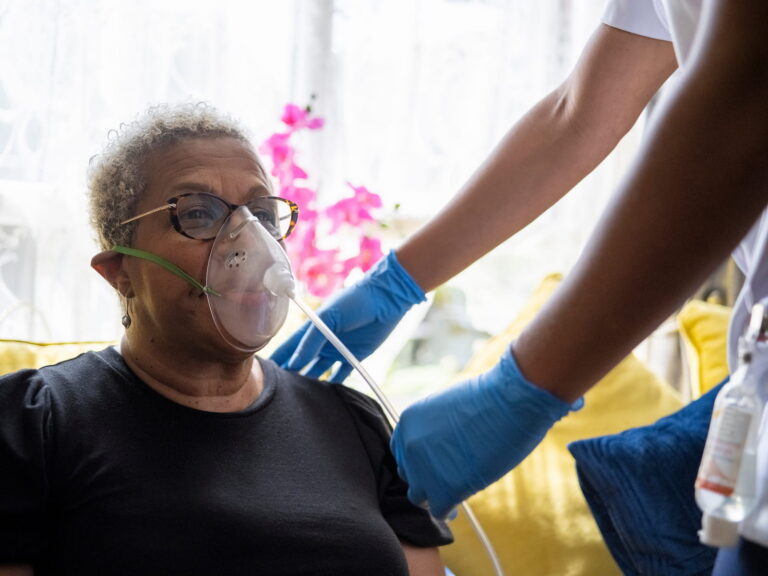
AI-driven oxygen delivery can help hospitalized patients maintain better blood oxygen levels, potentially speeding their recovery, a new study says.
Patients treated with AI-automated oxygen spent 85 percent of their time in the target oxygen range, compared with 63 percent in people whose oxygen was manually managed by hospital staff, researchers reported Aug. 3 in JAMA Internal Medicine.
“Oxygen is one of the most widely used therapies in medicine yet even in 2026, it is still managed largely through repeated manual adjustments made by clinicians,” senior researcher Dr. Adit Ginde said in a news release.
“Our findings show that autonomous oxygen titration can help patients remain in their target range more consistently while reducing both under- and over-oxygenation,” said Ginde, a senior associate dean for clinical research and professor of emergency medicine at the University of Colorado Anschutz School of Medicine. “This technology has the potential to fundamentally change how supplemental oxygen is delivered in both civilian and military medicine.”
RELATED: Can AI Reduce Emergency Room Disparities for Black Patients?
For the new study, researchers recruited 300 people receiving oxygen as part of their treatment at four U.S. hospitals. These patients were suffering from acute respiratory illness, traumatic injury or burns, or were recovering from surgery.
The patients were randomly assigned to either receive doctor-managed oxygen or AI-managed oxygen, in which the device continuously monitored their oxygen levels and adjusted their oxygen flow in real time.
Results showed that people who had AI managing their oxygen levels spent less time with either too little or too much oxygen in their bloodstream.
“Oxygen levels can change quickly in hospitalized patients,” lead researcher Dr. David Douin, an associate professor of anesthesiology at the CU Anschutz School of Medicine, said in a news release. “This system responds in real time, helping patients spend more time in their target oxygen range with less manual adjustment.”
AI-managed oxygen also can reduce workload for nurses and respiratory therapists, allowing clinicians to focus on other aspects of patient care, researchers said.
They next plan to test the use of AI-managed oxygen in emergency transports and other pre-hospital settings, such as on the battlefield.
“When you are caring for a wounded service member hours from a hospital, oxygen runs short and so does the medic’s attention,” researcher Dr. Vik Bebarta, chair of emergency medicine and founding director of the CU Anschutz Combat Medicine Research Center, said in a news release.
“A device that adjusts oxygen on its own takes one urgent task off their hands so they can focus on everything else the patient needs,” he said.
A pulse oximeter is a small, painless electronic device that clips onto a finger to estimate blood oxygen saturation (SpO₂) and pulse rate using light beams. But research has raised concerns about its accuracy in people with darker skin. Some studies have found that readings can be higher than the patient’s actual oxygen level in people with darker skin. That difference can matter when healthcare providers are deciding whether to increase oxygen or provide other treatment. However, this doesn’t mean every pulse oximeter gives an inaccurate reading for every Black patient.

Possibly. If AI-managed oxygen relies heavily on pulse oximeter readings, then the accuracy and limitations of those readings remain important. Researchers and health systems will need to consider this as AI becomes more involved in clinical decision-making.
The study doesn’t necessarily establish that this particular AI system performs differently by race or skin tone. Instead, its findings raise the question of whether future AI-managed oxygen systems are trained, tested, and validated across diverse patient populations.
RELATED: The FDA Is Encouraging AI Data in Clinical Trials
Medical devices like AI-managed oxygen must be tested across a range of skin tones to determine if they deliver different results for lighter or darker skin. Many AI tools can be biased, so they require diverse training and validation data to provide more accurate results that can improve care for patients from all backgrounds. Even seemingly small differences in measurements can have consequences when they’re used to make treatment decisions.
These potential inaccuracies in AI tools are why Black patients should be more involved in clinical trials evaluating new medical technologies. Greater representation can help researchers, manufacturers, and healthcare providers ensure these new tools are thoroughly evaluated across a diverse group of participants before they’re implemented into clinical practice.
If you’re interested in participating in medical research, visit BlackDoctor’s Clinical Trials Resource Center.
More information
The Cleveland Clinic has more on blood oxygen levels.
SOURCE: University of Colorado Anschutz School of Medicine, news release, Aug. 3, 2026


By subscribing, you consent to receive emails from BlackDoctor.com. You may unsubscribe at any time. Privacy Policy & Terms of Service.