D’Yana was pregnant with her first child, Ari’Yanna, when her obstetrician told her that she carried the sickle cell trait.
She understood that she had inherited a gene associated with sickle cell disease, but the news didn’t fully sink in. That changed when a routine newborn screening revealed that her daughter had sickle cell disease (SCD).
Suddenly, D’Yana was navigating a diagnosis she knew little about—and learning that her daughter would face a lifelong condition.
Sickle cell disease develops when a child inherits two copies of a sickle cell gene—one from each parent. The condition causes red blood cells to become rigid and take on a characteristic crescent, or “sickle,” shape.
Those misshapen cells can become stuck in small blood vessels, blocking blood flow and limiting the delivery of oxygen to tissues and organs. This can lead to episodes of severe pain and other potentially serious complications.
Ari’Yanna was referred to St. Jude Children’s Research Hospital®, which has one of the largest sickle cell programs in the country. St. Jude treats about 850 patients with sickle cell disease while also advancing research and treatments, including bone marrow transplantation and gene therapy.
“I was crushed, not knowing anything about the disease or anyone with it,” D’Yana recalled. “But at St. Jude, they give you a guideline like what to expect. You never feel alone when you’re in St. Jude.”
About 100,000 people in the United States are living with sickle cell disease, which occurs most commonly among people of African ancestry.
RELATED: ‘Yes, I Have Sickle Cell—But It’s Never Limited Me’: How I Found Purpose Through Baking

Sickle cell disease can affect people differently, and symptoms can vary in severity. According to the Cleveland Clinic, symptoms can include:
D’Yana says her first visits to St. Jude are somewhat of a blur. She was trying to process her daughter’s diagnosis while learning how to care for a child who had a disease that, for most people, has no broadly available cure.
But her daughter’s care team helped her understand what was happening inside their bodies.
Doctors explained how healthy red blood cells are typically round and flexible, allowing them to move easily through blood vessels. In people with SCD, red blood cells can become stiff and sickle-shaped, making it harder for them to travel through the bloodstream.
Over time, these blockages can cause pain and damage to organs. People with sickle cell disease may experience complications such as pain crises, lung problems, heart disease, kidney disease, stroke and infections.
A bone marrow transplant, also known as a hematopoietic stem cell transplant, can potentially cure sickle cell disease in some patients when a suitable donor is available. However, the procedure carries significant risks and is not an option for everyone.
For D’Yana, understanding the disease was the first step toward learning how to advocate for her daughter.

Understandably, D’Yana was distraught. There was a lot to process, and she was learning a new vocabulary at the same time she was trying to care for her young daughter.
But she says St. Jude’s care team never made her feel embarrassed about asking questions.
“They took me step by step every day to get me comfortable to ask, ‘I don’t understand this,’ or ‘I don’t know this word,’ or ‘I don’t know what this means,’” she said.
That support became especially important as Ari’Yanna’s treatment progressed.
At 10 months old, Ari’Yanna began taking hydroxyurea, a medication that can increase the production of fetal hemoglobin and reduce the sickling of red blood cells. For many people with SCD, hydroxyurea can help reduce pain crises and other complications.
Then, two years later, D’Yana’s family received another life-changing diagnosis.
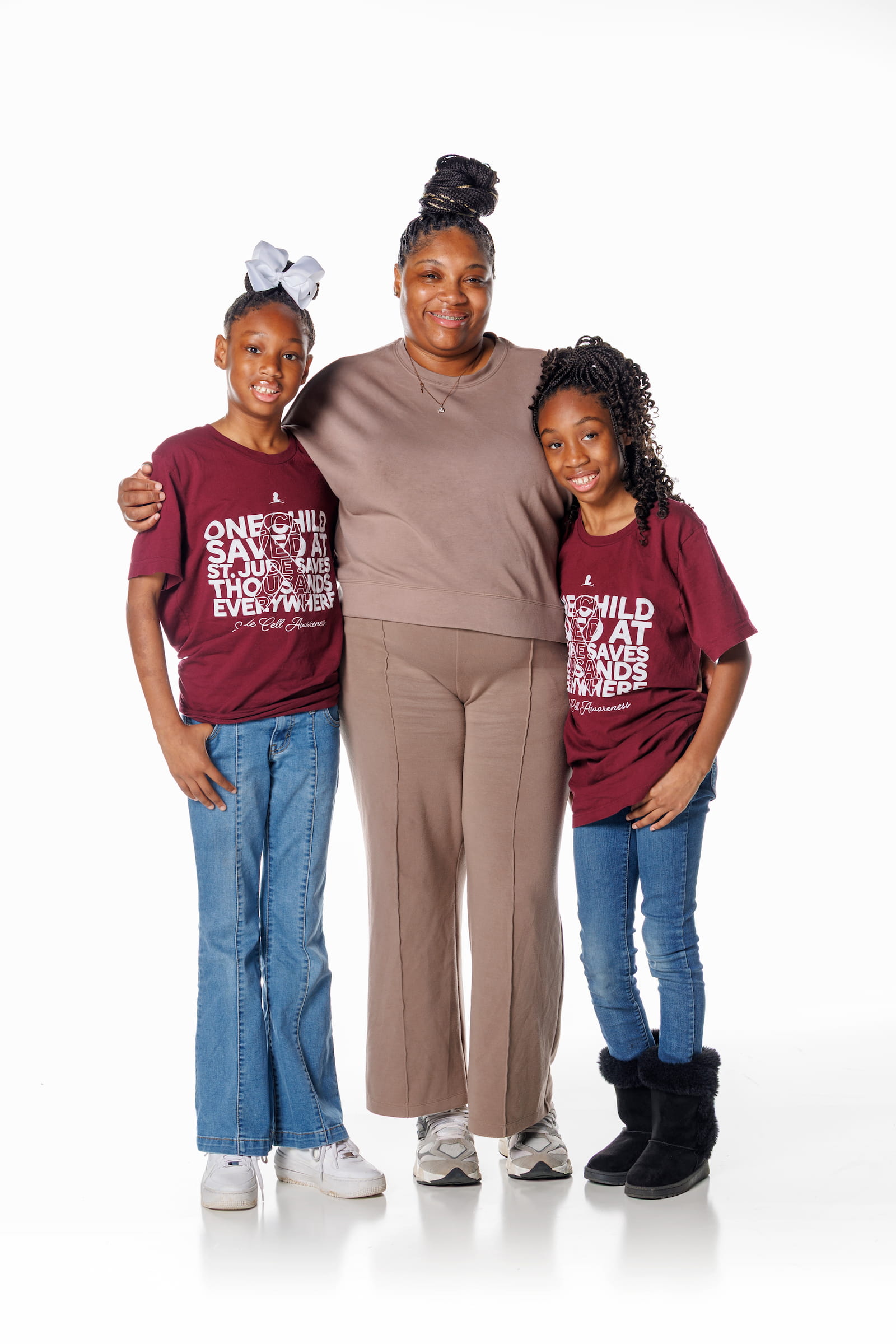
D’Yana’s second daughter, Ariyah, was also diagnosed with sickle cell disease.
Managing a chronic illness in two toddlers was challenging enough. Doing so when neither child was old enough to explain where or how much they hurt made it even harder.
D’Yana also quickly learned that sickle cell disease did not look exactly the same in both of her daughters.
Ari’Yanna experienced pain most often in her arms and hands. Ariyah felt it primarily in her legs.
As Ari’Yanna grew older and became able to describe what she was feeling, she found a powerful way to explain her pain to her mother.
She said it felt like “fire deep in my bones.”
Ariyah experienced severe symptoms even earlier. Her pain crises began when she was just three months old. She would cry inconsolably, experience frequent fevers, develop swelling around her eyes and writhe in pain from her legs.
By age one, Ariyah needed surgery to have her spleen removed.
Today, Ariyah is nine years old and visits St. Jude monthly for blood transfusions designed to help prevent sickled cells from blocking blood vessels and reduce her risk of stroke.
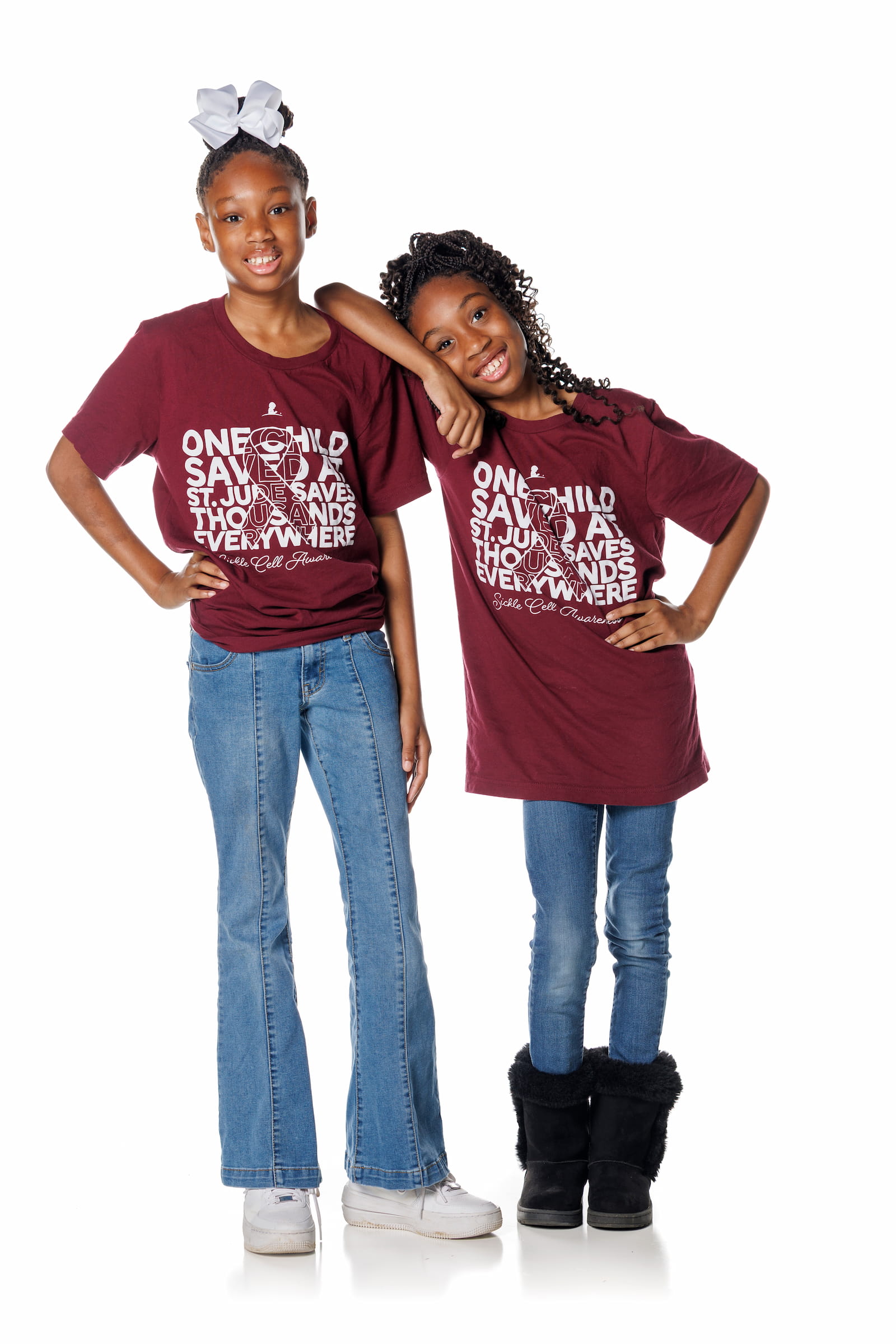
Living with sickle cell disease has given the sisters something D’Yana never expected: an extraordinary bond built around their shared experiences.
They look out for each other at school, sometimes recognizing that the other is hurting before a word is spoken. When one sister needs help, the other may alert a teacher.
Ari’Yanna, now 11, knows how to help Ariyah wrap her legs in warm blankets when her pain becomes severe. Ariyah, in turn, knows how much pressure to apply to her big sister’s arms to help ease her pain.
Their connection has become one of the most meaningful sources of support for their mother.
“Sometimes it’s overwhelming and I have to remind myself to stay strong when they’re going through their crises,” D’Yana said. “They do a better job of helping each other than I do because they know each other’s pain.”
The sisters are also learning at a young age that their experiences can help make a difference for other people living with sickle cell disease.
Both participate in the Sickle Cell Research and Intervention Program, or SCCRIP, a long-term St. Jude study that follows people with sickle cell disease over many years. The program helps researchers better understand how SCD affects people throughout their lives and how care can be improved.
For D’Yana, allowing her daughters to participate in research is another way they can help shape the future for people living with sickle cell disease.
But the sisters are not waiting for the future to start living their lives.
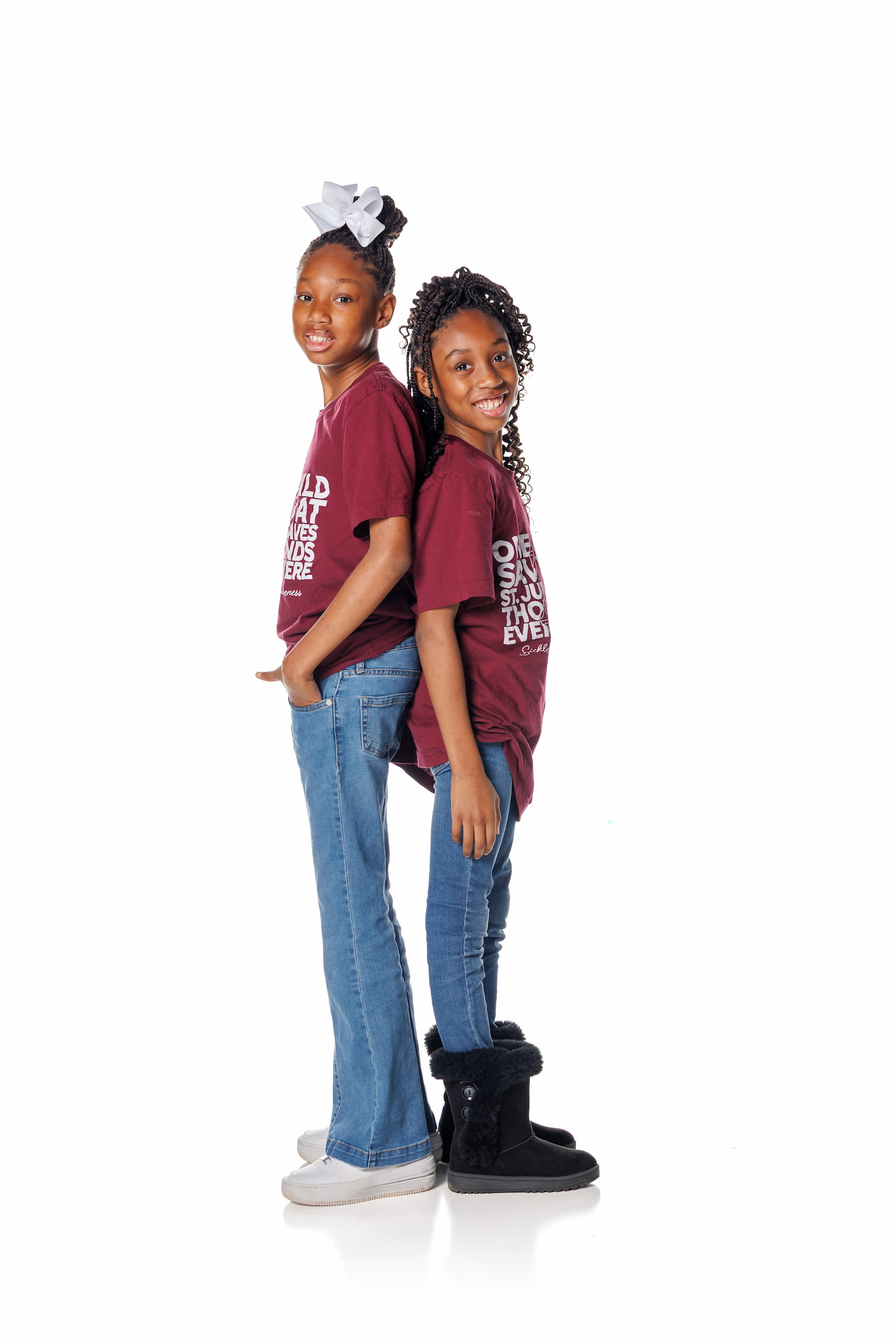
Despite everything they have experienced, Ari’Yanna and Ariyah refuse to let sickle cell disease define them.
Ari’Yanna plays basketball. Ariyah is a majorette and runs track. They go to school, spend time with friends and continue doing the things that bring them joy.
Sometimes, their friends are surprised to learn that the girls have sickle cell disease—and that they make regular trips to St. Jude.
“You don’t ‘act sick,’” their friends sometimes tell them.
Ari’Yanna is quick to correct that perception.
She wants people to understand that sickle cell disease is something she lives with—not something that defines who she is.
“I have sickle cell. Sickle cell doesn’t have me.”
For D’Yana, watching her daughters grow into confident young advocates has transformed the fear she felt after Ari’Yanna’s diagnosis into something else: hope.
She knows their journey with sickle cell disease will not always be easy. There will be pain crises, hospital visits, treatments and difficult days.
But there will also be basketball games, track meets, school days, sisterly moments and dreams for the future.
And through it all, the sisters will have something many people with chronic illnesses long for: someone who understands their pain without them having to explain it.

By subscribing, you consent to receive emails from BlackDoctor.com. You may unsubscribe at any time. Privacy Policy & Terms of Service.