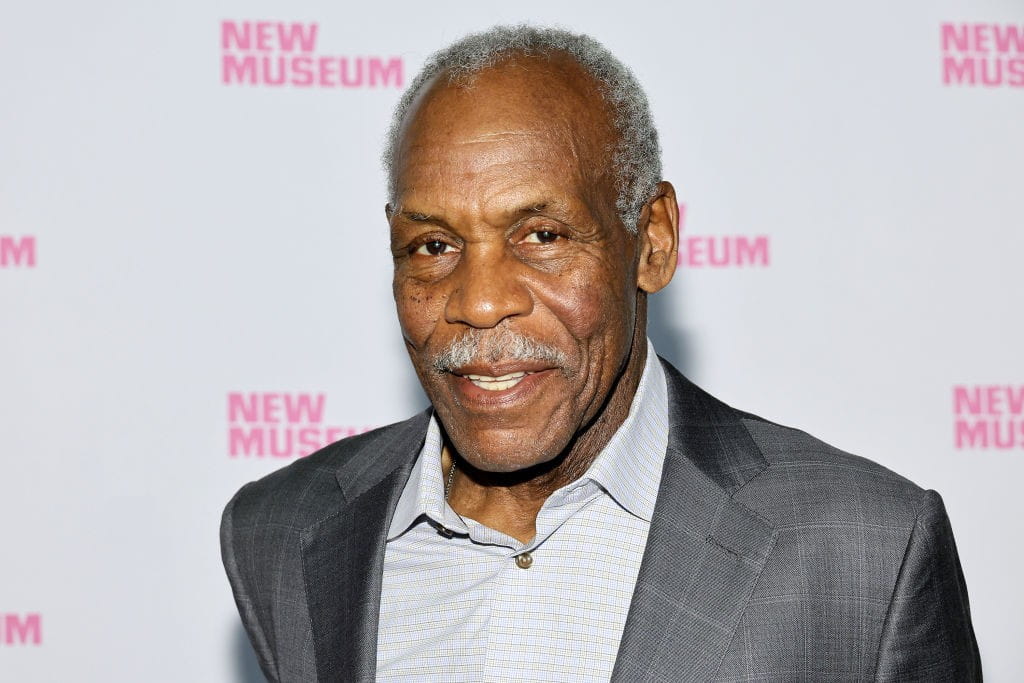
Before the world knew him as Detective Roger Murtaugh in the Lethal Weapon franchise or as Mister in The Color Purple, Danny Glover built a career around powerful storytelling and social activism. This week, the legendary actor shared perhaps his most personal story yet: he has been living with Alzheimer’s disease for several years.
The 79-year-old actor publicly revealed his diagnosis during recent interviews, sharing that Alzheimer’s has gradually affected his speech, movement, and memory. According to Glover, the disease has forced him to accept that life is changing, even as he remains committed to staying mentally engaged and physically active.
Glover sat down in his home with NBC’s Lester Holt for the interview.
“I could live with it, in a sense,” Glover said, but added that as the disease progresses, “things are going to be different and changing.”
His daughter, Mandisa Glover, said she first noticed subtle memory changes around 2022. The actor, once known for recalling minute details from decades earlier, began leaving out pieces of stories he had told countless times before. Those changes eventually led the family to seek answers and ultimately receive an Alzheimer’s diagnosis in 2023.
Despite the diagnosis, Glover has emphasized that he does not see this chapter as the end of his life or purpose. He continues to spend time with family, remain involved in advocacy work, and use his platform to increase awareness about the disease.
Alzheimer’s disease is a brain disorder that slowly destroys memory and thinking skills and, eventually, the ability to carry out the simplest tasks. People with Alzheimer’s also experience changes in behavior and personality.
More than 6 million Americans, many of them age 65 and older, are estimated to have Alzheimer’s disease. That’s more individuals living with Alzheimer’s disease than the population of a large American city. Many more people experience Alzheimer’s in their lives as family members and friends of those with the disease.
Many people worry that occasional forgetfulness means Alzheimer’s is beginning, but there are important differences between normal aging and dementia-related memory loss.
| Normal Aging | Alzheimer’s Disease |
|---|---|
| Occasionally forgetting names but remembering them later | Forgetting names and never recalling them |
| Misplacing keys or glasses occasionally | Placing items in unusual locations and being unable to retrace steps |
| Missing a bill payment once in a while | Difficulty managing finances or following familiar routines |
| Forgetting why you entered a room | Becoming confused about where you are or how you got there |
| Occasionally searching for the right word | Struggling to hold conversations or repeatedly losing track of thoughts |
Alzheimer’s disease is not simply “getting older.” It is a progressive brain disorder that damages memory, thinking skills, language, judgment, and eventually the ability to perform everyday activities independently. It accounts for an estimated 60% to 80% of dementia cases worldwide.
For Black Americans, Alzheimer’s represents a growing public health crisis.
Research shows older Black Americans are approximately twice as likely to develop Alzheimer’s disease or related dementias compared to older White Americans. Among Black adults aged 70 and older, more than one in five are living with Alzheimer’s disease.
Several factors may contribute to this disparity, including:
The numbers are expected to grow. Experts project that by 2030, nearly 40% of Americans living with Alzheimer’s disease will be Black or Latino, underscoring the need for culturally relevant education, early screening, and greater participation in research studies.
While memory loss receives most of the attention, Alzheimer’s symptoms often begin in less obvious ways, including:
Early evaluation can lead to treatments that may slow progression and improve quality of life, making it important not to dismiss these symptoms as “just aging.”
For now, Glover says he is focused on living intentionally and embracing each day as it comes. Surrounded by family, caregivers, and longtime friends, he continues to advocate for causes that have defined his life for decades while helping shine a spotlight on Alzheimer’s disease itself.
His openness could have an impact far beyond Hollywood. By sharing his experience publicly, Glover is helping reduce the stigma surrounding dementia and encouraging families—particularly in Black communities where the disease strikes hardest—to recognize symptoms early and seek help sooner rather than later.
As he recently expressed, life continues, even in the face of Alzheimer’s. And for a man whose career has always centered on using his voice to help others, that mission appears far from over.


By subscribing, you consent to receive emails from BlackDoctor.com. You may unsubscribe at any time. Privacy Policy & Terms of Service.