(photo credit: Instagram)
South African anti-apartheid hero who followed in the footsteps of her famous grandfather, Nelson Mandela, Zoleka Mandela has passed away of cancer, her family said in an official statement. She was only 43 years old.
Known for having detailed her long battle against the disease, the author and dedicated mother was admitted into hospital on Monday as part of her ongoing treatment, a family spokesman said.
She was the child of Mandela’s youngest daughter, Zindzi Mandela, and her first husband, Zwelibanzi Hlongwane.
“On Monday, September 18th, Zoleka Mandela was admitted into hospital for ongoing treatment for metastatic cancer to the hip, liver, lung, pelvis, brain and spinal cord,” the statement attributed to family spokesperson Zwelabo Mandela read. “Recent scans revealed significant disease progression including fibrosis in the lungs as well as several emboli.”
“The Nelson Mandela Foundation extends its heartfelt condolences to the Mandela family on the passing of Zoleka Mandela, tragically last night,” the Nelson Mandela Foundation said in a statement released on Tuesday morning. “We mourn the loss of a beloved grandchild of Mum Winnie and Madiba and a friend of the Foundation.”
She was an outspoken writer and activist for health care and justice throughout her life.
“Her work in raising awareness about cancer prevention and her unwavering commitment to breaking down the stigma surrounding the disease will continue to inspire us all,” the Nelson Mandela Foundation said.
Just a week ago, Mandela shared an update regarding her battle with the disease.
“I had a CT Scan administered a few weeks back, which have shown that I have blood clots as well as Fibrosis in my lung,” explained Mandela. “This explains the chest pains I had been feeling. My Medical Oncologist has recommended blood thinners and Oral Chemo. On the upside, I’m incredibly grateful that I am still treatable! I’m off to bed … Good night … Good morning, beloved hearts! Love, the Oros Lady.”
Zoleka’s early story was a series of struggles and tragedies that were almost too much for one person. They were set against her self-confessed attempt and initial failure to live up to the example of her grandfather, a Nobel Peace Prize winner, the leader of the anti-apartheid movement, the first Black president of South Africa and a powerful force for good recognized and admired across the globe.
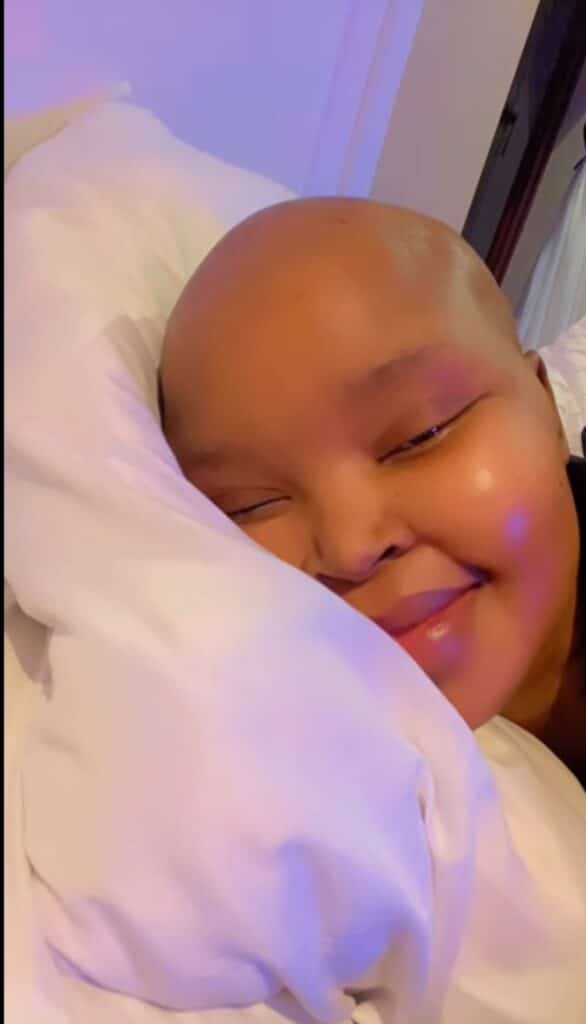 (One of the last screenshots of Zoleka during chemotherapy treatment / Photo credit: Instagram)
Mandela suffered sexual abuse as a child and battled drug and alcohol addiction from her teenage years. Her 13-year-old daughter, Zenani, was killed in a car crash in 2010 on the way back from a concert that marked the opening of the soccer World Cup in South Africa. It was caused by a drunk driver and came when Zoleka, herself, was deep in her drug and alcohol addiction and in a hospital having attempted suicide.
“I hadn’t seen my daughter for 10 days before her passing, and I hadn’t because I chose to use drugs,” Mandela said in an interview with The Associated Press in 2013. “That’s obviously a reminder that I chose my addiction over my kids and I have to live with that for the rest of my life.”
The horror and guilt jarred her into seeking help and going into rehab for the good of her other child at the time, son Zwelami, and the memory of her daughter Zenani, she said. Zenani’s death brought a frail-looking Nelson Mandela out to a church for his great-granddaughter’s funeral and one of his last public appearances.
For decades, lung cancer has been the leading cause of death from cancer for both Black and White men and women. But as of 2019, breast cancer became the leading cause of cancer death for Black women.
Social, economic, and behavioral factors may partially account for disparities. Black women are statistically more likely to have diabetes, heart disease, and obesity, and are less likely to breastfeed after childbirth—all of which are risk factors for breast cancer. They are more likely than white women to have inadequate health insurance or access to health care facilities, which may affect screening, follow-up care, and completion of therapy.
Through continued research, it’s clear that biology also plays a role. Black women are disproportionately affected by more aggressive subtypes, such as triple-negative breast cancer (TNBC) and inflammatory breast cancer, and they are more likely to be diagnosed at younger ages and at more advanced stages of the disease.


By subscribing, you consent to receive emails from BlackDoctor.com. You may unsubscribe at any time. Privacy Policy & Terms of Service.