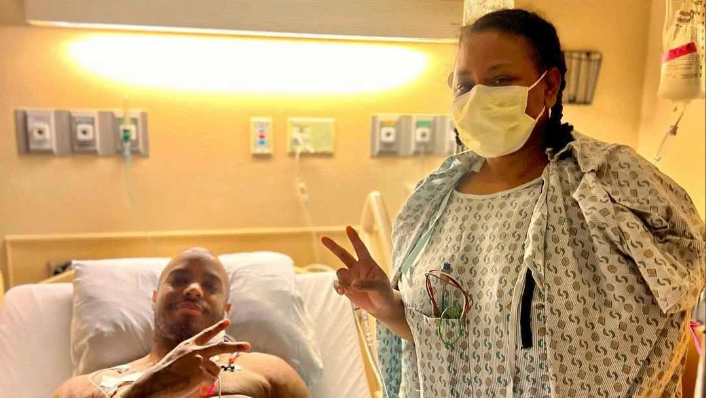
Peripartum cardiomyopathy survivor Marian Dancy. (American Heart Association)
Marian Dancy is a mother of four and a payroll specialist with a local law enforcement agency in Columbus, Ohio. Her fourth pregnancy was the easiest, giving her a third daughter to round out her family.
When the baby was about six months old, Dancy started getting winded and occasionally lightheaded. An episode where she momentarily lost her vision prompted a visit to her doctor.
“I kind of heard, ‘You’re young. You’re healthy. It should pass. It’ll be fine. Just check in with us if you start feeling worse,'” said Dancy, then 35.
It wasn’t long before she did feel worse and scheduled a virtual appointment with a different physician in the group. They couldn’t find anything wrong or any clues in her family medical history. There was a little virus going around. Maybe that was it.
Then came another flareup, her third in a month.
Her symptoms of fatigue and fluid buildup became more consistent and severe. Her ankles and feet would swell at night, her legs felt heavy and her muscles fatigued. She went to the emergency room.
RELATED: Woman on Post-Pregnancy Heart Failure: “I Just Didn’t Feel Right”
After an electrocardiogram, or EKG, and other tests, Dancy left the ER with a pneumonia diagnosis, some antibiotics, and an inhaler. That only seemed to make things worse.
Then one day she woke up to a little voice in her head saying, “If you don’t figure this out today, this will be it.”
Home alone and feeling like she was dying, Dancy called the nurse referral number on the back of her insurance card. She pleaded for an appointment. Most doctors were either booked or off because it was right before Thanksgiving. But she got lucky. There was an opening.
She found it so hard to walk that she had to crawl across the living room floor and to her truck. At the doctor’s office, Dancy took quick, shallow breaths. The nurse took note of those, performed an EKG and then rushed out of the room to get the physician.
The doctor said it looked like heart failure. She had Dancy admitted to the hospital.
During those first few days, the toughest part for Dancy was being alone at night. Scary thoughts crept in. Things like what this meant for the rest of her life and how her being compromised might affect her children. She’d always been their superhero; seeing her like this in the hospital and having never spent a night away from each other, they were worried.
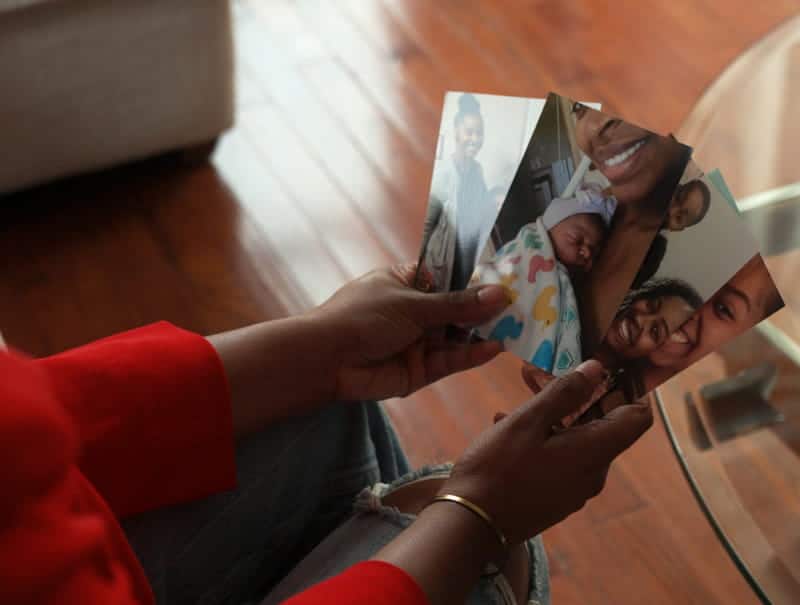
Marian Dancy holding photos taken with her children. (American Heart Association)
“You try to reassure them that it was going to be OK,” Dancy said. “But I really didn’t know myself. All I could think was, ‘Is this the last place I’m going to be?'”
A heart ultrasound showed her heart’s ability to pump blood to her body was extremely low. It’s a measurement called ejection fraction, which normally may be between 50 percent and 70 percent. Doctors at the hospital told Dancy her ejection fraction was 15 percent.
About a week later, doctors diagnosed Dancy with peripartum cardiomyopathy, a rare form of heart failure most often diagnosed during the last month of pregnancy or five months or more after giving birth. The condition causes the heart chambers to enlarge and the muscle to weaken, leading to less blood flow. In the U.S., peripartum cardiomyopathy occurs in an estimated 1 in 1,000 to 4,000 deliveries.
“I can imagine there are a lot of people out there who aren’t even aware that this thing could happen,” said Bertha Willis, Dancy’s mother. “Considering how women are so, I say, critical to almost everything that happens in our community, it’s just important that they know these things.”
RELATED: Mom of 2 Young Boys Was Waiting for Pizza When Her Heart Stopped
Dancy was determined to make a full recovery. She took medication, ate a low-sodium diet, did breathing treatments and walked, little by little. When she could make it down the hospital hallway, she got to go home. It had been a little over two weeks.
She wore a defibrillator vest in case her heart stopped or needed to be shocked back into a normal rhythm. Within six months, that was replaced by a defibrillator/pacemaker implanted in her chest.
Dancy also took a holistic approach to her recovery. She put down the salt shaker. She worked out. She leaned on her faith. She began journaling and seeing a counselor. She focused on reducing stress and saying no.
“When I had to put myself first, it was uncomfortable. But I moved out of that discomfort, and it really ended up being really valuable for my family,” she said. “Now I’m more intentional. Now when I’m spending time, I’m present.”
Dancy, who got a divorce and whose children are 16, 10, 9 and 4, also learned to ask for help from others, like her mother, who lives within a 15-minute drive.
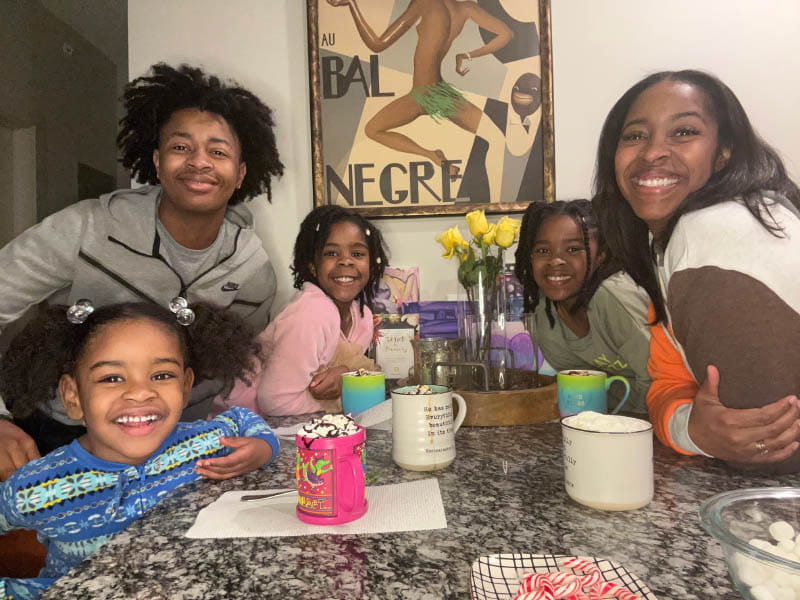
Marian Dancy (far right) with her kids, from left, Harper Dancy, Darian West, Taylor Dancy and Morgan Dancy. (Photo courtesy of Marian Dancy)
Four years later, Dancy’s prognosis is good. Her ejection fraction of 46 percent is not quite in the normal range, but she rarely experiences symptoms.
“Even though I’m doing better physically now, none of us know how long we have on this earth. The present is what you have now. The future is great if you make it there. It really forced me to be intentional,” she said. “If today is the last day, how did I live today?”
Peripartum cardiomyopathy can be difficult to detect because symptoms of heart failure,such as shortness of breath and swelling in the feet and legs can mimic symptoms that you may experience throughout your pregnancy. If you notice any new shortness of breath or swelling, after delivery or develop a sudden onset of these symptoms during pregnancy, contact your doctor for evaluation.
He or she will conduct a physical exam and look for signs of fluid in your lungs. They may use an x-ray to see, or a stethoscope to listen for, evidence of fluid in the lungs, a rapid heart rate or abnormal heart sounds. Your healthcare provider may also suggest a heart ultrasound, called an echocardiogram, which can detect cardiomyopathy by showing that the heart function is weak. You may also have to undergo lab tests to confirm your diagnosis.
By American Heart Association


By subscribing, you consent to receive emails from BlackDoctor.com. You may unsubscribe at any time. Privacy Policy & Terms of Service.