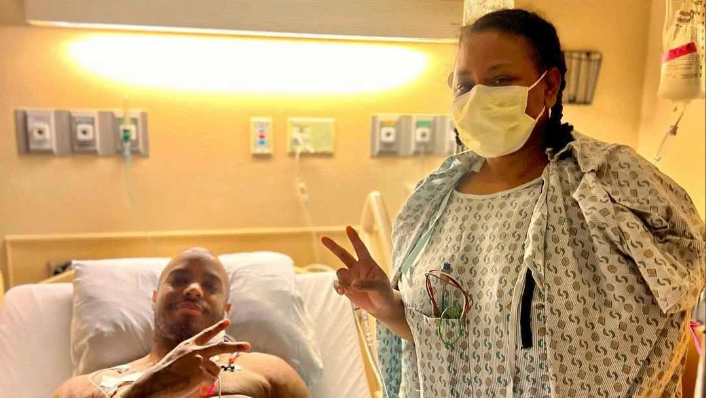
After a big surgery, you’re likely wondering what your recovery process will look like. Will there be any side effects? How long will it take for you to recover? How long will you need to stay in the hospital? In most cases, undergoing total hip or knee replacement, same-day surgery is a safe option, according to new research.
RELATED: The Ultimate Guide to Arthritis Surgery
If you are in relatively good health, you can breathe easy. Among folks in overall good health, the study of nearly 1.8 million patients found similar post-op complication rates among those who had outpatient joint replacement surgery compared to those who spent a night or two in the hospital.
“Careful patient selection is the key to success with outpatient surgery,” cautions senior study author Dr. Geoffrey Westrich, from the Hospital for Special Surgery in New York City.
For example, older age can increase the risk for any surgery, “and so monitoring patients overnight may be beneficial,” notes Westrich, research director emeritus of the hospital’s adult reconstruction and joint replacement service.
And those with underlying conditions like diabetes or lung disease may also face a higher risk for complications, the research team found. “Inpatient surgery in such patients is probably more safe,” Westrich adds.
But “there is no doubt that these findings are definitive, and that outpatient surgery is here to stay,” he adds.
During the 2010-2017 study period, outpatient hip and knee replacements grew by an average of 16% and 11%, respectively, each year, the authors found.
Still, inpatient surgery remains much more common, Westrich acknowledges.
So what is truly better for total replacement surgery? Inpatient or outpatient?
Of the many patients the researchers followed, just under a third underwent total hip replacement, while the remainder had a knee replacement.
When averaged out, only about 3% of knee procedures and just over 2% of hip procedures were handled on
an outpatient basis. (By 2017, however, those numbers approached 5% for both.)
Candidates for same-day discharge after knee and hip surgeries were about three and five years younger, respectively, than their inpatient peers. Those who went straight home also had fewer preexisting conditions including less pain, fewer transfusions, lower infection risk, better at-home recovery, and faster/more aggressive physical therapy.
Naturally, you may be concerned about the state of your health if you leave the care of trusted health professionals. To determine your risks, researchers looked at adverse events requiring readmission to a hospital within three months after surgery. Potential complications included heart attacks, blood clots, infection, pneumonia, bleeding, and/or mechanical or breakage issues involving the hip or knee prosthetic itself.
Complication rates were essentially the same across all hip replacement patients, whether treated as inpatients or outpatients, the study shows.
Among knee replacement patients, a slightly higher complication risk was seen among those discharged the same day. The good news, however, is that the risk was pegged as very small — less than 1% — among both those who stayed at the hospital and those who didn’t.
“The results are really interesting,” says Westrich, “and basically demonstrate that with proper patient selection outpatient surgery can be done safely and can benefit the patient.”
RELATED: Having a Hip, Knee Replacement? Some Tips to an Optimal Recovery
As a total replacement surgery patient, the most important thing on the road to a successful recovery will be follow-up care. Same-day patients still need follow-up, he noted. “All patients at our hospital receive a telephone call the next day to see how they are doing and if they need any help with anything,” he says.
If you are young, healthy, and “highly motivated patients,” outpatient surgery can be a good fit for you, according to Westrich.
That message is gaining traction, says Dr. Kanu Okike, an orthopedic surgeon with the Hawaii Permanente Medical Group in Honolulu.
“Over the past several decades, the amount of time that patients spend in the hospital following elective total joint replacement has gradually been decreasing,” Okike adds.
Increasingly, “forward-looking organizations have shown that same-day discharge is feasible and safe for the majority of patients undergoing elective total joint replacement,” he shares.
“As long as it can be performed safely, many patients prefer waking up in their own bed the morning after surgery,” Okike notes. “This has been especially true over the past few years during the COVID-19 pandemic.”
Choosing outpatient surgery can be done successfully if you have safe post-op pain control and a rigorous follow-up plan. Essentially, you play an important role in how well you do regardless of what you choose, but here are a few tips that will help make the best choice for your road to recovery, according to the Cleveland Clinic:


By subscribing, you consent to receive emails from BlackDoctor.com. You may unsubscribe at any time. Privacy Policy & Terms of Service.