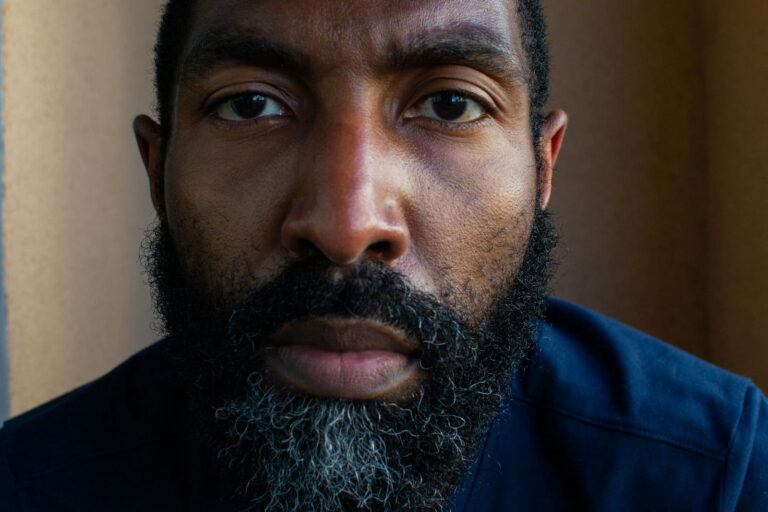
Photo via Tiara Johnson
Tiara Johnson’s second pregnancy went smoothly – until the last month.
“My fingers were so puffy, I couldn’t wear my wedding ring,” she shares.
The problem stemmed from her blood pressure. And the rising blood pressure stemmed from preeclampsia, a complication of pregnancy that usually manifests in the later months.
Tiara, who lives in Fraser, Michigan, was given medication to control her blood pressure. It didn’t work, so a few days later, she was sent to the hospital to have labor induced.
After delivering her second daughter, Azuri, Tiara’s blood pressure remained elevated. When she went home a few days later, she couldn’t get comfortable.
“I just didn’t feel right,” Tiara says. “The day after we went home, I noticed that I couldn’t breathe and it wasn’t relieved by lying down or sitting up or anything else. I went to take a shower and it felt like I was breathing underwater when I was inhaling. You could literally hear the gurgling of how much fluid I had in me. We ended up calling 911 and returning to the hospital.”
She was treated for fluid retention and sent home again. She continued to feel tired but attributed it to recovery from childbirth and life with a newborn.
RELATED: A Joyous Birth, Followed by Heart Failure
Two months later, Tiara passed out in the parking lot at work. Taken by ambulance to a different hospital, she received a different diagnosis: Peripartum cardiomyopathy, an uncommon form of heart failure that happens during the last month of pregnancy or within the first five months after giving birth. A physician said her heart was working at 10% of its normal function. A normal range is 50-75%, according to the American Heart Association
“I was confused and distraught,” she adds. “When you think of heart failure, you don’t think of someone who is 26.”
Over the next three and a half years, Tiara was constantly in and out of the hospital as doctors worked to ease the strain on her heart.
“My heart function wasn’t getting better and I was working 60 hours per week as a program manager. My husband was telling me to stop, that I was killing myself,” she shares.
Then, in August 2018, doctors wanted to implant a left ventricular assist device, a machine that essentially does the work for the left side of the heart. An LVAD is often used before a patient goes on the heart transplant waiting list.
However, there was another obstacle. Tiara needed to lose weight to become eligible for the list.
Working with a nutritionist, she learned to cut out fried and fast foods. She ate more meals at home, many of those including more vegetables than before. She also dabbled in intermittent fasting. Meanwhile, she began the process of getting an LVAD. She received it in March 2019 and continued her weight loss journey.
“I’ll never forget. Her name was Val. I kept the recording all these years, just to remind me what I went through,” she adds. “She called me and she was almost in tears. ‘If you don’t come back to this hospital, please, you have to go somewhere because you’re too sick to live at home at this point. I’m talking to you as a mom. Not as a nurse, not as a medical professional. I’m just talking to you as a mom. You need to get help.’ And so I got right back in the car and went to the University of Michigan Hospital. A few days later, I had my HeartMate 3 LVADTM.”
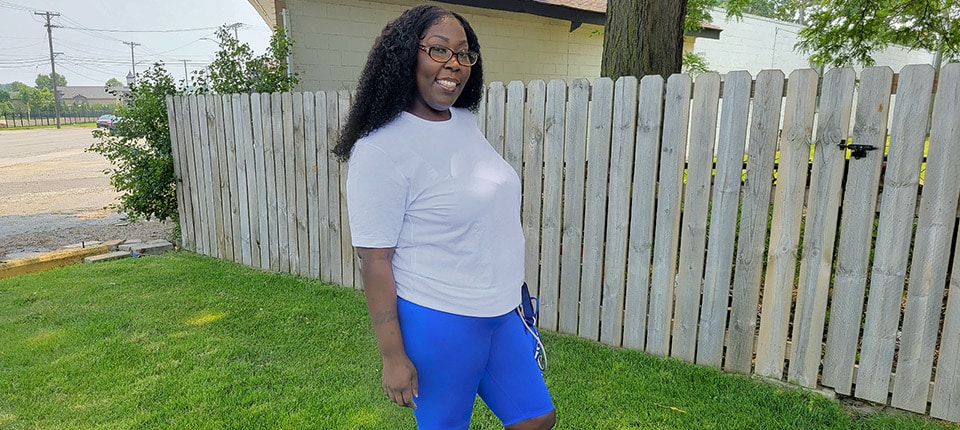 Photo via Tiara Johnson
By April 2021, she’d lost 110 pounds. She’d reached the acceptable range to receive a heart transplant, so the process of getting on the list began.
She received a spot on Oct. 14. Two weeks later, she was hospitalized because of a severe leak of her aortic valve. Doctors feared she would soon need open-heart surgery. Instead, on Nov. 5, she was moved closer to the top of the transplant list. She also was sent home.
The next day, Tiara was waiting in the car while her husband, Gvon, went into a store to get cold medicine for their older daughter when her phone rang. Caller ID showed it was the University of Michigan hospital in Ann Arbor.
“I couldn’t believe it was happening,” she says. “This is what I had worked hard for all this time and now I was going to get a new heart. Even when I got to the hospital, it was hard to process.”
Several days after the transplant, Tiara was walking laps around the unit. She even tidied her hospital room.
“Once I got up, it was like, ‘It’s on. I’m not going to be lying in this bed being miserable,'” she shares.
Next came learning to get used to having a heart that worked properly.
“When I first started walking, I thought, ‘Tiara, you better slow down or your heart is going to race.’ But the monitor was normal. I was just normal,” she says.
Tiara went home on Thanksgiving. But the celebration fizzled quickly. Azuri, now 6 and visiting Tiara’s godmother, had a high fever and was struggling to breathe. She tested positive for COVID-19 and was admitted to the hospital with pneumonia.
Azuri was hospitalized for five days, then quarantined in her room at home for another two and a half weeks as a precaution because of Tiara’s compromised immune system. Tiara then got the flu, sending her to bed for two weeks. Once healthy, she returned to cardiac rehab.
Tiara still finds herself automatically reaching for her LVAD to find it isn’t there. “I have to remind myself I’m free, I don’t need that anymore.”
“In the three years prior to the LVAD, I had over 150 hospital stays. In the two years since the HeartMate 3 was implanted, I’ve had zero heart failure-related hospitalizations,” Tiara adds.
“I tell people who are discussing getting LVADs with their physicians, to make an informed decision, but it’s the best decision I ever made.”
She also credits her recovery to an implantable heart failure monitoring sensor that is designed to reduce hospital admissions and manage heart failure.
“My CardioMEMS is small, but powerful because it has also helped keep me out of the hospital.”
“Just to see her smile is everything,” Gvon says.
Now 32, Tiara continues to focus on her recovery and her future. She’s taking classes to finish her associate degree in social work this spring before pursuing a bachelor’s degree.
According to the American Heart Association, “Peripartum cardiomyopathy (PPCM), also known as postpartum cardiomyopathy, is an uncommon form of heart failure that happens during the last month of pregnancy or up to five months after giving birth. Cardiomyopathy literally means heart muscle disease.”
Peripartum cardiomyopathy causes a decrease in the percentage of blood ejected from the left ventricle of the heart with each contraction and leads to less blood flow and the heart. This causes the heart to no longer be able to meet the demands of the body’s organs for oxygen and affects the lungs, liver, and other body systems.
Peripartum cardiomyopathy is rare in the United States, Canada, and Europe only affecting about 1,000 to 1,300 women each year.
Peripartum cardiomyopathy is diagnosed when the following three criteria are met, according to the AHA:
You should notify your doctor if you experience any of the following symptoms:
By American Heart Association News


By subscribing, you consent to receive emails from BlackDoctor.com. You may unsubscribe at any time. Privacy Policy & Terms of Service.