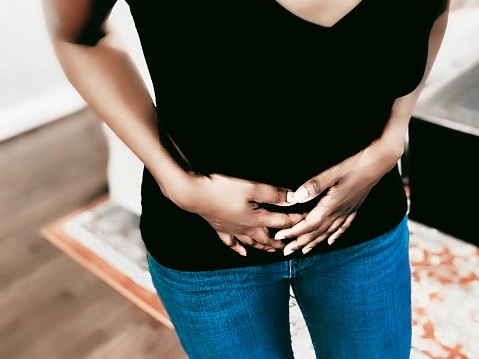
It is not uncommon to identify a connection between uterine fibroids and polycystic ovaries. After all, both are mutually notorious for provoking unhealthy growths on female reproductive organs.
Polycystic ovaries and uterine fibroids can interrupt regular menstrual cycles, trigger pelvic pain, and ultimately provoke fertility malfunctions. The infamous fraternity between polycystic ovaries and fibroids extends to being mutually connected to hormonal imbalances in women.
RELATED: Polycystic Ovary Syndrome (PCOS): What You Don’t Know, But Should
Featured on BlackDoctor
With so much similarity in the havoc they wreak, it is not unnatural to suspect a link between both conditions. Is it possible that the onset of one of these conditions facilitates the development of the other?
To better investigate the connection between polycystic ovaries and fibroids, let us first examine both conditions’ development and risk factors.
Polycystic Ovarian Syndrome – readily referred to as PCOS – is prominent in females within the age of childbirth. This spans women in their 20s up to those in their 30s.
Women with this condition experience elevated male hormone production. This elaborate production causes irregularities in menstrual cycles, introducing handicaps in conception.
Doctors are yet to lay their finger on the definitive cause of PCOS. Similarly, medical experts are yet unclear on the precise cause of uterine fibroid development.
However, for both PCOS and fibroids, androgen spikes, genetics, and abnormal Insulin resistance have been linked. This brings us to the specific risk factors for each condition.
Starting with uterine fibroids, genetics, ethnicity, obesity, and early menstruation have been identified as increasing women’s susceptibility to fibroid development.
The bad news is that Black women are more at risk of developing uterine fibroids across their lifetime compared to white women. While figures pit the susceptibility of white women at 70%, this for black women shoots as high as 80%. Frightening?
RELATED: PCOS Increases Risk For Diabetes
Genetically, women with a family history of fibroids have increased chances of developing fibroids too.
Overweight people whose lifestyle is starved of physical activity are more at risk of developing fibroids.
Also, women who had episodes of unusually early menstruation are at higher risk of developing fibroids across their lifetime.
Moving on to PCOS, women with heightened androgen production are likelier to develop POCS. Specifically, one in ten young women who experienced relatively elevated androgen production develop PCOs later in their lives.
Hyperinsulinemia – a condition where insulin is excessively produced – is also another risk factor for PCOS. Just like fibroids, women who have a family history of PCOS have higher chances of developing this condition across their lifetime.
Having established their formative process and risk factors, does the occurrence of PCOS or uterine fibroid offset the development of the other?
Before 2001, the scientific community agreed on the disconnection between uterine fibroid and PCOS. However, that agreement came crashing after a six-year Boston University Slone Epidemiology Center study.
With its inception in 1995, this authoritative study collected and analyzed data from 23,000 pre-menopausal African American women who had zero histories of fibroids for six years.
RELATED: Fibroids Can Develop in Other Places Besides Your Uterus
The researchers diligently studied the reproductive condition of these women for 24 months. Across this span, more than 3,600 fibroid cases were identified.
When researchers dug further into this data, it was discovered that the participants with PCOS were 65% more likely to develop fibroids compared to women without PCOS. This substantially established a connection between the development of fibroid and the existence of PCOS in women.
Scientists are asking why. The strongest postulation so far has been that increased androgen production offsets a counterbalancing increase in the estrogen content in the human body.
Correspondingly, when estrogen levels experience such elevations, the chances of uterine fibroid development are proportionately amplified. At this point, this is not scientifically authoritative.
Having established this, it is vital to draw the line between PCOS and fibroids despite their overbearing similarities. If you are experiencing pelvic discomfort, fertility handicaps, or irregular menstrual cycles, you should consult your health provider on the complications and what therapeutic procedures are available in your situation.
RELATED: Find A Gynecologist Here


By subscribing, you consent to receive emails from BlackDoctor.com. You may unsubscribe at any time. Privacy Policy & Terms of Service.