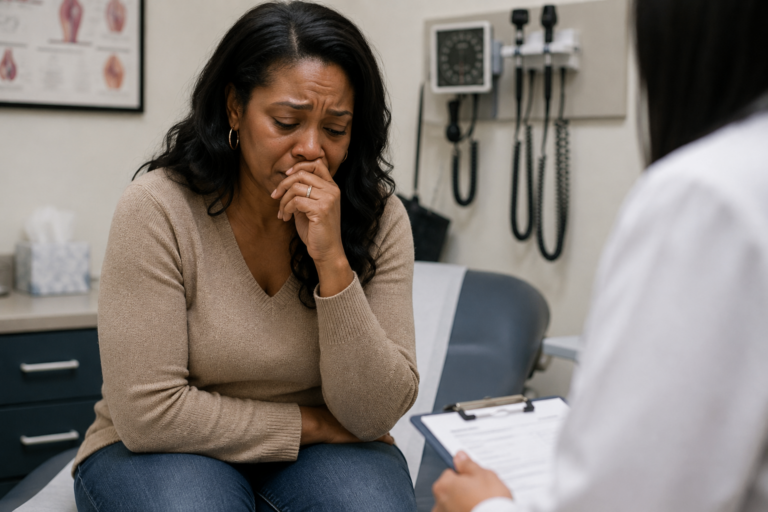
Vaginal atrophy is a condition in which the vaginal lining is thinner and drier than it’s supposed to be. When this happens, you’re more likely to develop urinary tract infections, have urinary incontinence, and have pain during sex. Though the symptoms of vaginal atrophy can progress slowly, they generally get to a point where they can significantly affect your life. That’s why it’s important to spot them early and talk to your doctor.
Vaginal atrophy is caused by a drop in estrogen levels. When you don’t have optional levels of estrogen in your body, it can result in vaginal tissues being thinner, drier, and less elastic.
Several things can affect your estrogen production including menopause, the surgical removal of both ovaries, breastfeeding, taking birth control pills, undergoing radiation therapy, undergoing chemotherapy, and undergoing hormonal cancer treatment.
RELATED: What Is Vaginal Atrophy? 9 Facts Black Women Need to Know
Depending on the severity of your symptoms, your doctor may suggest trying over-the-counter medications first. Vaginal moisturizers can restore some moisture to your vagina and you usually have to apply it every few days.
Water-based lubricants can also help if your main problem is a lack of lubrication during sex. If these measures are not enough, then your doctor will likely move on to prescription-level medications that will adjust your estrogen levels.
One option is topical estrogen which is available in the forms of creams, tablets, suppositories, or rings. These need to be placed directly in the vagina to be effective.
Alternatively, your doctor may prescribe oral estrogen if you’re having symptoms other than vaginal dryness. Vaginal dilators may also be used to stretch the vaginal muscles if you’re dealing with narrowing.
While many people experience vaginal atrophy because of a drop in their estrogen levels, statistics show that only a few seek treatment. If you have any of the symptoms listed above, it’s important to know that you don’t have to live with them.
Even if you’re trying over-the-counter treatments, it’s good to see your doctor if there’s any unusual discharge, unexplained bleeding, itching, soreness, or pain during sex. It’s also best to see a doctor if the non-prescription treatments you’ve tried haven’t made a difference.
It’s common to think that the symptoms of vaginal atrophy are natural after menopause or having certain procedures but you don’t have to live with them. Once you see the symptoms, you should consult your doctor to get an official diagnosis to start the treatment program that’s right for you.


By subscribing, you consent to receive emails from BlackDoctor.com. You may unsubscribe at any time. Privacy Policy & Terms of Service.