Cancer that forms in tissues of the breast, usually the ducts (tubes that carry milk to the nipple) and lobules (glands that make milk). It occurs in both men and women, although male breast cancer is rare.
According to Breast Cancer Prevention Partners, Black women with breast cancer have a 31% mortality rate, which is higher than any other ethnic group.
Breast cancer incidences are higher in Black women ages 45 and under than white women.
Many risk factors may increase your chance of developing breast cancer, but it is not yet known exactly how some of these risk factors cause cells to become cancerous. Hormones seem to play a role in many cases of breast cancer, but just how this happens is not fully understood.
Certain changes in DNA can cause normal breast cells to become cancerous. DNA is the chemical in each of our cells that makes up our genes — the instructions for how our cells function. We usually look like our parents because they are the source of our DNA. But DNA affects more than how we look.
Early breast cancer usually doesn’t cause symptoms. But as the tumor grows, it can change how the breast looks or feels. The common changes include:
• A lump or thickening in or near the breast or in the underarm area
• A change in the size or shape of the breast
• Dimpling or puckering in the skin of the breast
• A nipple turned inward into the breast
• Discharge (fluid) from the nipple, especially if it’s bloody
• Scaly, red, or swollen skin on the breast, nipple, or areola (the dark area of skin at the center of the breast). The skin may have ridges or pitting so that it looks like the skin of an orange.
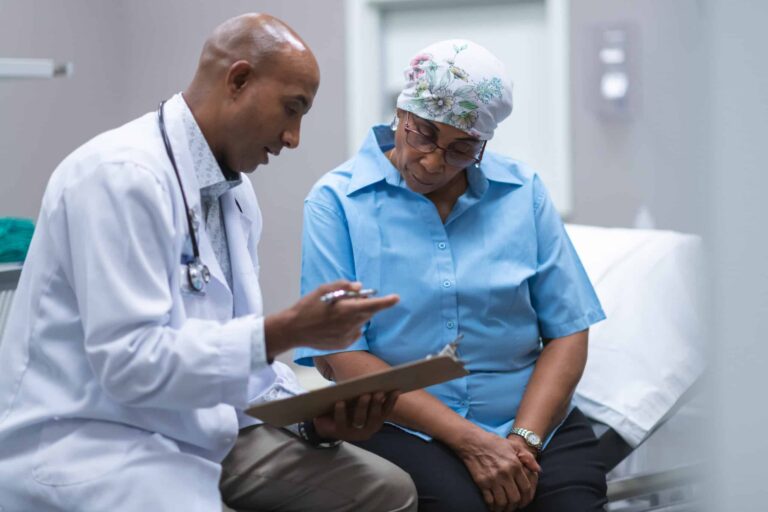
Your doctor can check for breast cancer before you have any symptoms. During an office visit, your doctor will ask about your personal and family medical history. You’ll have a physical exam. Your doctor may order one or more imaging tests, such as a mammogram.
Doctors recommend that women have regular clinical breast exams and mammograms to find breast cancer early. Treatment is more likely to work well when breast cancer is detected early.
Tests include:
• Clinical Breast Exam
• Mammogram
• Imaging Tests
• Biopsy
• Lab Tests With Breast Tissue
There are many treatment options. The treatment that’s best for one may not be best for another.
The options are surgery, radiation therapy, hormone therapy, chemotherapy, and targeted therapy. You may receive more than one type of treatment.
Surgery and radiation therapy are types of local therapy. They remove or destroy cancer in the breast. Hormone therapy, chemotherapy, and targeted therapy are types of systemic therapy. The drug enters the bloodstream and destroys or controls cancer throughout the body.
The treatment that’s right for you depends mainly on the stage of the cancer, the results of the hormone receptor tests, the result of the
HER2/neu test, and your general health.
Complications of breast cancer include:
• Destruction of the breast
• Destruction of the chest wall surrounding the breast
• Mastitis
• Nipple discharge
• Chest pain
• Radiation therapy side effects
• Chemotherapy side effects
Contact a doctor right away if you experience any of these warning signs:
• New lump in the breast or underarm (armpit).
• Thickening or swelling of part of the breast.
• Irritation or dimpling of breast skin.
• Redness or flaky skin in the nipple area or the breast.
• Pulling in of the nipple or pain in the nipple area.
• Nipple discharge other than breast milk, including blood.
• Any change in the size or the shape of the breast.
• Pain in any area of the breast.
You can help lower your risk of breast cancer in the following ways:
• Get screened for breast cancer regularly. By getting the necessary exams, you can increase your chances of finding out early on, if you have breast cancer.
• Control your weight and exercise. Make healthy choices in the foods you eat and the kinds of drinks you have each day. Stay active.
• Know your family history of breast cancer. If you have a mother, sister, or daughter with breast cancer, ask your doctor what is your risk of getting breast cancer and how you can lower your risk.
• Find out the risks and benefits of hormone replacement therapy. Some women use hormone replacement therapy (HRT) to treat the symptoms of menopause.
• Limit the amount of alcohol you drink.
What changes can you make to reduce your breast cancer risk or ease your treatment? According to research or other evidence, the following self-care steps may be helpful:
What You Need To Know:
These recommendations are not comprehensive and are not intended to replace the advice of your doctor or pharmacist. Continue reading the full breast cancer article for more in-depth, fully-referenced information on medicines, vitamins, herbs, and dietary and lifestyle changes that may be helpful.


By subscribing, you consent to receive emails from BlackDoctor.com. You may unsubscribe at any time. Privacy Policy & Terms of Service.