Yes, this is probably not a dinner topic, but it’s quite an important one. What your body releases may be saying a whole lot about your overall health. Dr. Amy Foxx-Orenstein, president of the American College of Gastroenterology states, “what comes out your body is reflective of how well or how ill the body is.”
The amount of time it takes for your food to digest and exit the body impacts the consistency of the stool. On average “intestinal transit” takes anywhere from 40-45 hours.
When any waste is left in your body longer than this, your body re-absorbs the fluids back into the body leaving the waste dry and hard. People on blood pressure, anti-depressant, or histamine drugs will commonly have a
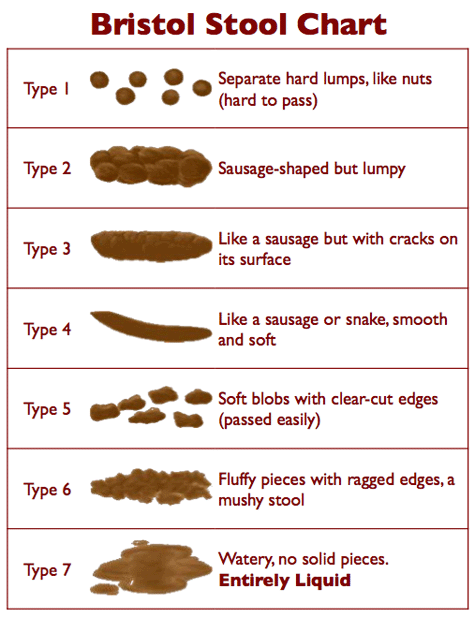
If your stool looks like little pellets, you are probably experiencing slow digestion. “An ideal stool looks like a torpedo—it should be large, soft, fluffy and easy to pass,” says Foxx-Orenstein. Introduce more fiber into your diet to assist with this.
It is natural for your body to secrete about eight liters of fluid each day. A healthy digestive system will absorb a majority of the fluids in your system along the “intestinal transit”.
In a less ideal situation, your body may be processing your waste too quickly, not giving it a chance to absorb as much liquid as it needs to. This consequently leaves your stool runny and watery.
This can often happen with a sudden increase of fiber into the diet, or if you have a bacterial/viral infection. When the body finds a virus present, it naturally releases toxins that increase the amount of liquid in your system. Your body is working rapidly to remove the infection and therefore making your digestive system work quickly.
Though being thin seems ideal in many situations, it’s NOT when it comes to your bowels. This could be a serious sign of
colon cancer or polyps. Thin stool could be an indicator of a mass in your colon that your stool is being forced to pace through.
The color of your bowels is often determined by your diet and medications you take. Unhealthy hues, such as pale gray, are not okay. The bile that the liver excretes not only assists to break down the fats in your food, it also gives your waste color. If your liver is unhealthy, your stool may have a pale appearance.
Now before you go rushing to dial 911 because you have red colored stool, think about what you recently ate. If you ate beets or a red popsicle CALM DOWN.
If not and you see streaks of blood, talk to your doctor. This is a sign that you are bleeding inside somewhere. Often this is due to a hemorrhoid or small ripping from straining to go.
READ: The Best Tasting High Fiber Foods
If you have tar-colored stool it could be something as simple as the vitamin you take daily. Iron supplements can have this effect on your bowels. If you aren’t taking vitamins, consult your doctor as this could be a sign of internal bleeding in your intestinal tract.
Your poop should sink. Improperly processed waste hasn’t had the fat removed. This results in yellowish, foul-smelling, floating bowels. This isn’t good, as it means that your body isn’t receiving the nutrients it needs from the food.
Not going at all? Everyone’s body has its own normal when it comes to how often you should “use it”, but if you notice a sudden change in your body’s pattern, you should consider why.
A change in diet can do this. It’s best to monitor this and make sure that your body isn’t constipated and that you are eating a well-balanced diet regularly.
Visit the BlackDoctor.org Digestive Disorders center for more.



By subscribing, you consent to receive emails from BlackDoctor.com. You may unsubscribe at any time. Privacy Policy & Terms of Service.