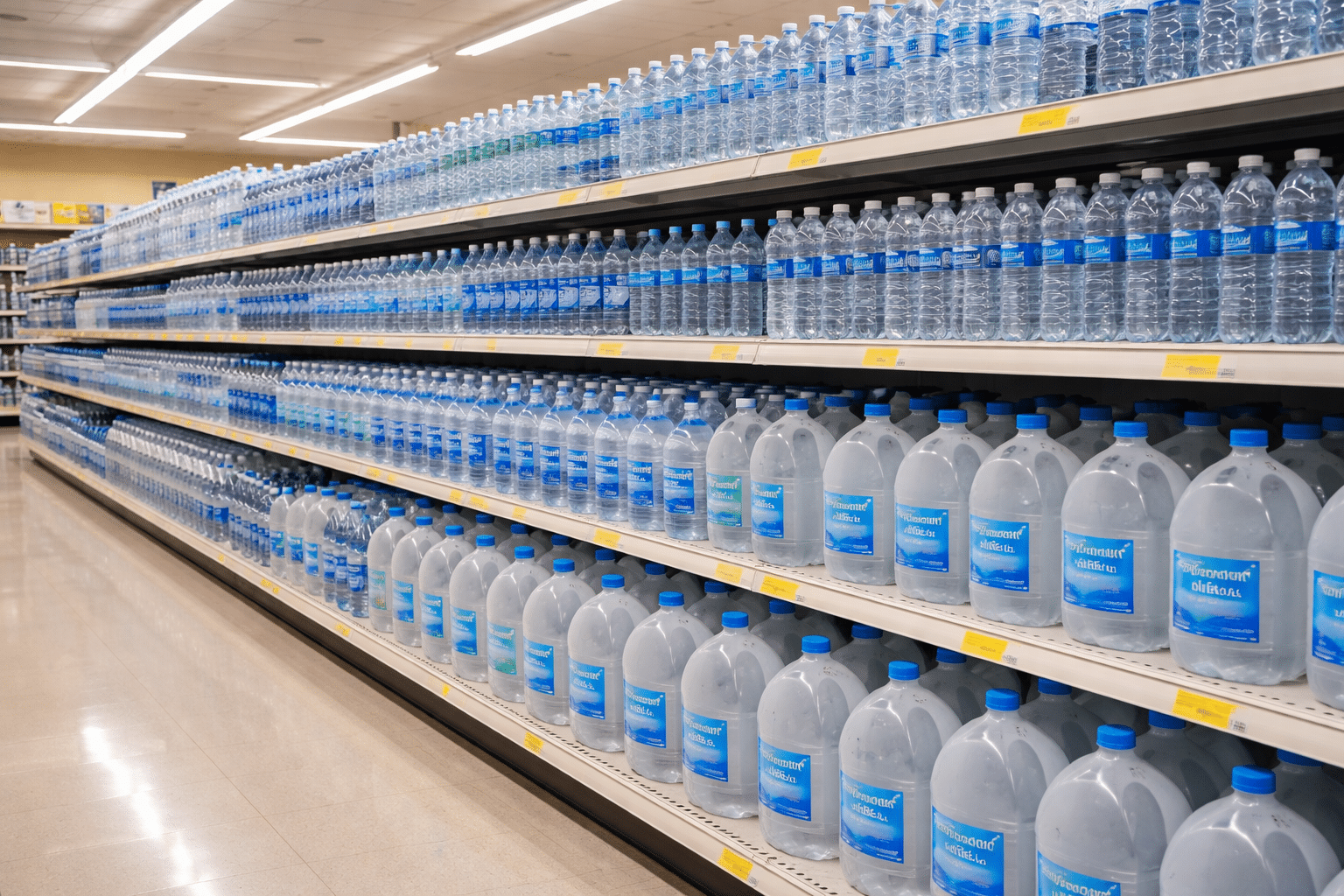
 The U.S. Food and Drug Administration (FDA) has announced a recall of approximately 651,148 water bottles due to unspecified “insanitary conditions.”
The affected products were distributed to retail locations in Illinois and Wisconsin, with the possibility of additional distribution beyond those states. The recall applies to all codes of the following products:
- Valley Springs 100% Natural Bottled Water
- Valley Springs 100% Natural Bottled Water with Fluoride
- Valley Springs Steamed Distilled Water
- Infant Water
- Daisy’s Doggy Water
All recalled items were sold in 1-gallon and/or 2.5-gallon containers.
The agency did not specify the exact nature of the sanitary deficiencies in its enforcement report, but here’s what the potential could be.
What Does ‘Insanitary Conditions’ Mean for a Water Factory?
Insanitary conditions in bottling plants—spanning drinking water, infant formula, and other beverages—refer to environments where filth, bacteria, or other contaminants can adulterate products, often leading to recalls, regulatory warnings, and severe health risks. Recent, high-profile examples include the 2022 Abbott baby formula crisis involving Cronobacter sakazakii and the February 2026 recall of over 650,000 units of Valley Springs Artesian Gold water due to improper sanitation.
Common Insanitary Conditions
Inspections by the FDA and other agencies often identify the following hazards:
- Microbial Growth: Presence of bacteria such as Cronobacter in wet environments, or mold, particularly in areas with standing water, leaking pipes, or damaged roofs.
- Structural Failures: Cracked equipment, poor cleaning, and inadequate separation between production and non-production areas.
- Poor Hygiene & Procedures: Inadequate handwashing, failure to sanitize contact surfaces, and improper, infrequent, or non-existent cleaning of pipes and containers.
- Foreign Matter: Presence of insects, rodents, or debris (e.g., rust, hair, paint chips) in production areas.
Recent Cases and Recalls
- Abbott Nutrition (2022): The Sturgis, Michigan plant was shut down after reports of “egregiously unsanitary” conditions, including standing water, bacterial growth, and, according to worker reports, the use of a cardboard funnel from a trash bin, which led to a major formula shortage.
- Refresco Beverages US Inc. (Aug 2024): Nearly 10,000 cases of Walmart’s Great Value apple juice were recalled due to unsafe levels of arsenic.
- Longford Water Company LLC (Nov 2025): The FDA issued a warning letter for failure to sample, inspect, and sanitize containers and closures, and for failing to test for coliform organisms.
What to Do If You Think You Drank Infected Water
If you think you’ve drunk unsanitary water, what you should do depends on whether you have symptoms and your overall health.
1. If you feel fine
- Don’t panic — many exposures don’t lead to illness.
- Drink safe, clean fluids (bottled or properly treated water).
- Monitor yourself for symptoms over the next 1–7 days.
2. Watch for symptoms
Common signs of waterborne illness include:
- Diarrhea
- Nausea or vomiting
- Stomach cramps
- Fever
- Headache
- Fatigue
Symptoms can appear within hours or take several days.
3. Stay hydrated
If you develop diarrhea or vomiting:
- Sip water frequently.
- Use oral rehydration solutions (like Pedialyte or electrolyte mixes).
- Avoid alcohol, caffeine, and very sugary drinks.
4. When to seek medical care
Contact a healthcare provider urgently if you have:
- Severe or persistent diarrhea (lasting more than 3 days)
- Blood in your stool
- High fever (over 102°F / 39°C)
- Signs of dehydration (very little urination, dizziness, dry mouth)
- Severe abdominal pain
- Symptoms in infants, older adults, pregnant people, or anyone with a weakened immune system
5. Report and document
- Stop using the product immediately.
- Save the bottle (if safe to do so) in case health officials need information.
- Check for recall updates from the FDA or local health department.
How to Keep Your Water Safe
Water itself doesn’t “spoil,” but it can become contaminated or develop an off taste over time if it’s not stored properly. Here’s how to keep stored water safe and fresh:
1. Start with clean water
- Use treated tap water (municipal water is usually already disinfected).
- If using well water, make sure it’s tested and safe.
- If unsure, boil water for 1 minute (3 minutes at high elevation) and let it cool before storing.
2. Use proper containers
- Store water in food-grade containers (look for “food safe” or PET/HDPE plastics).
- Avoid containers that previously held chemicals or milk (hard to sanitize fully).
- Glass bottles with tight-fitting lids are also good.
3. Sanitize containers before filling
- Wash with hot, soapy water.
- Rinse thoroughly.
- Sanitize with a solution of 1 teaspoon unscented household bleach per quart of water.
- Shake, let sit for 30 seconds, then rinse with clean water.
4. Store correctly
- Keep in a cool, dark place (away from sunlight and heat).
- Avoid areas near gasoline, chemicals, or strong odors (plastic can absorb smells).
- Seal tightly.
5. Long-term storage tips
- If storing for emergency use:
- Add 2 drops of unscented liquid bleach per quart (or liter) of water before sealing.
- Rotate stored water every 6–12 months for best quality.
- Commercially bottled water can be stored unopened for years if kept cool and dark.
6. Signs water may be contaminated
Discard if you notice:
- Cloudiness
- Unusual smell
- Floating particles
- Algae growth