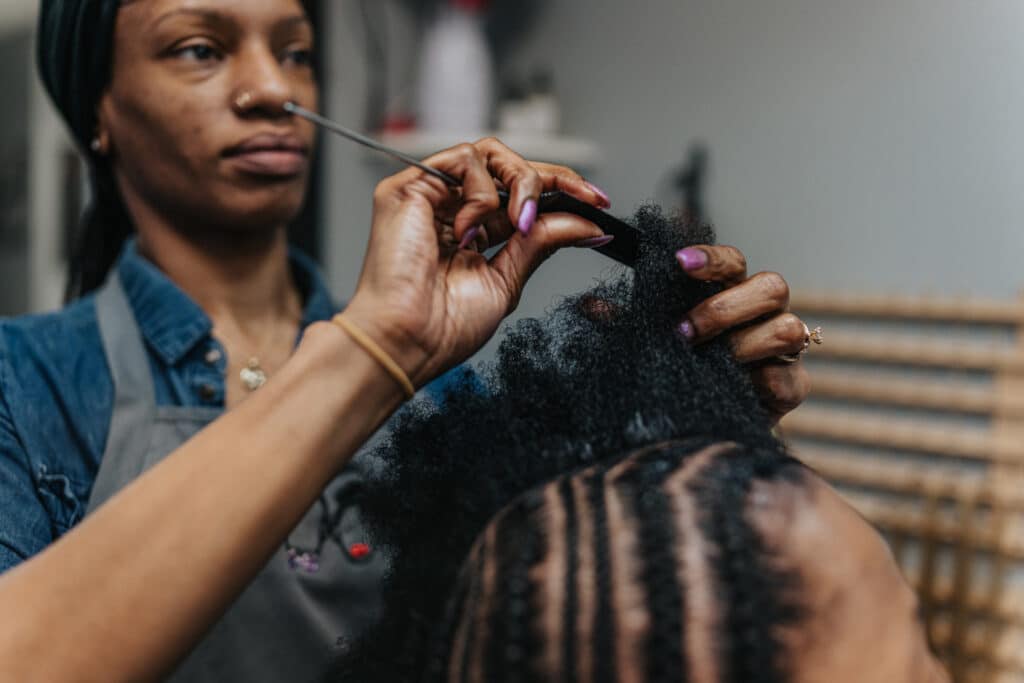
For many people, braided hairstyles are more than just fashion,- they’re a time-tested tradition that makes hair care easier. Sometimes, it’s a t’s a pre-vacation ritual, a protective hairstyle during the summer months, or just a artistic way to express one’s creativity.
But now, a new investigation by Consumer Reports is raising alarming questions about how braiding can be harmful to your health.
Ten popular synthetic braiding hair products were tested. The results are troubling. Among the ten brands Consumer Reports sent to a lab for analysis, which included popular brands like Sensationnel, Magic Fingers, and Shake-N-Go, it found something common with all the brands: every single one of the samples contained potentially harmful carcinogens–chemicals that could be linked to cancer.
Three of the samples tested positive for benzene, a carcinogen that is highly regulated and discouraged for use in laboratories because of the potential to cause cancer.
Synthetic hair has long been a staple in protective hairstyles for Black women — like braids, locs and twists. These styles can be worn for weeks at a time, protecting the hair from breakage, exposure to the elements or day-to-day heat styling. This translates to longer exposure to the chemicals, Consumer Reports said.
Black consumers represent over 70 percent of the hair extension market, spending approximately six times more on hair care than other ethnic groups. Synthetic hair is commonly found at neighborhood beauty supply stores and online. Consumer Reports researchers assessed braiding hair from 10 companies, many of which use synthetic hair made from Kanekalon, a material produced by the Kaneka brand, according to Consumer Reports.
Kanekalon, which is a modacrylic fiber, is commonly recommended by professional braiders due to its resemblance to Afro-textured hair and resistance to unraveling. Modacrylic fiber is composed of acrylonitrile and vinyl chloride, both of which are toxic to humans. The Environmental Protection Agency classifies acrylonitrile as a probable human carcinogen. The National Cancer Institute directly links vinyl chloride with leukemia, lymphoma, and rare forms of liver, brain, and lung cancers.
James Rogers, Director of Product Safety at Consumer Reports, led CR’s synthetic hair testing, says testing found lead in 90 percent of the products. While Rogers says there is no safe level of lead, one company exceeded the U.S. governments allotment. One package of braiding hair exceeded the maximum allowed dose of lead by more than 600%, according to the investigative study. Consumer Reports used California’s maximum allowable dosage level, describing it as the “most protective available in the U.S.,” because there are no federal limits on lead in synthetic braiding hair.
According to Rogers, most synthetic braiding hair lacks ingredient disclosure, and is often worn for weeks at a time which increases potential exposure to unsafe chemicals.
In a statement associated with the report, when Dr. Rogers and his team began the research in 2024, he had three goals: to determine whether the chemicals were present, whether you could measure them and how much of each one was present, and to find out if there was a way to determine the possible risk to consumers who use these products. He also has two daughters who use extensions to get their hair braided. “I know firsthand that getting braids is part of the culture, and alternatives to synthetic hair aren’t always accessible or affordable,” he said.
CR’s risk assessments and exposure models indicate that users of these nine products could be exposed to concerning levels of lead over time.
The risks don’t stop there. When the hair is dipped in hot water during installation, a standard practice, it releases volatile organic compounds, or VOCs, that can irritate eyes, throat, and lungs.

Synthetic braids are made by taking a synthetic fiber, usually made from materials like polypropylene or modacrylic (often called “Kanekalon”), and extruding it into thin strands that are then twisted, braided, and styled to resemble natural hair, often with additional treatments to achieve desired texture and appearance; these strands are then attached to the wearer’s natural hair through braiding techniques.
Polymer mixing:
The raw synthetic polymer material is melted and mixed with additives to achieve the desired qualities like texture, sheen, and heat resistance.
Extrusion:
The molten polymer is forced through tiny holes in a spinneret, creating thin filaments that solidify into strands.
Texturizing:
The strands are often treated with heat or chemicals to create different textures like curls, waves, or kinks, mimicking natural hair patterns.
Dyeing:
The fibers are dyed to achieve the desired color.
Braiding and styling:
The strands are then braided or twisted together to create the desired braid pattern.
Finishing:
The ends of the braids are often sealed with heat to prevent unraveling, and the braids may be further styled with additional techniques like curling or crimping.
This isn’t the first time hair products targeted at Black women or used by predominantly Black women have been found to contain harmful chemicals. Hair relaxers have been linked to health issues, including cancers.
A study show a possible link between frequent use of chemical straighteners and breast, ovarian, and uterine cancers. This could be due to chemicals commonly found in these products, such as formaldehyde, formaldehyde-releasing chemicals, oxidized para-phenylenediamine, and 4-aminobiphenyl, which could potentially lead to cancer.
In a 2020 study in the International Journal of Cancer, researchers found that women who frequently used chemical hair straighteners, defined as more than 6 times a year, had about a 30% higher risk of breast cancer. Similarly, according to a 2021 study in Carcinogenesis and a 2022 study in the Journal of the National Cancer Institute, women who frequently used chemical hair straighteners, defined as more than 4 times a year, were twice as likely to develop ovarian cancer and more than twice as likely to develop uterine cancer as women who did not use chemical hair straighteners.
In these same studies, there was some evidence that permanent hair dye was also associated with increased breast cancer risk, particularly among Black women. However, there was no association found between hair dye and ovarian or uterine cancers.


By subscribing, you consent to receive emails from BlackDoctor.com. You may unsubscribe at any time. Privacy Policy & Terms of Service.