Menu

Vitamin K: The Vitamin That Could Do Wonders For Your Lungs

Table of Contents
vitamin K benefits

It may not get the publicity of some better-known vitamins like D, but vitamin K — found in leafy green vegetables — may boost your lung health.

A new, large study — published Aug. 10 in ERJ Open Research — suggests that people who have low levels of this vitamin also have less healthy lungs. They are more likely to report having asthma, chronic obstructive pulmonary disease (COPD) and wheezing.

“Our results suggest that vitamin K could play a part in keeping our lungs healthy,” said researcher Dr. Torkil Jespersen of Copenhagen University Hospital and the University of Copenhagen in Denmark.

Featured on BlackDoctor

“On their own, our findings do not alter current recommendations for vitamin K intake, but they do suggest that we need more research on whether some people, such as those with lung disease, could benefit from vitamin K supplementation,” Jespersen said in a journal news release.

“This study suggests that people with low levels of vitamin K in their blood may have poorer lung function. Further research will help us understand more about this link and see whether increasing vitamin K can improve lung function or not,” says Dr. Apostolos Bossios, from Sweden’s Karolinska Institute and secretary of the European Respiratory Society assembly on airway diseases, asthma, COPD, and chronic cough. He was not involved in this research.

“In the meantime, we can all try to eat a healthy, balanced diet to support our overall health, and we can protect our lungs by not smoking, taking part in exercise and doing all we can to cut air pollution,” Bossios said in the release.

RELATED: 15 Vitamins For Your Healthiest Summer Ever

What is vitamin K and what role does it play in the body?

Vitamin K is a fat-soluble vitamin that comes in two forms: phylloquinone and menaquinones. Vitamin K is found in the brain, liver, heart, pancreas and bones. It’s broken down by the body very quickly so it rarely reaches toxic levels, USA Today notes.

In addition to leafy greens, vitamin K is found in vegetable oils and cereal grains. It has a role in blood clotting, helping the body heal wounds, but researchers know very little about its role in lung health.

In some cases, vitamin K is promoted as a way to lower one’s risk of arthritis or dementia, “but observational studies do not establish causation,” explains Sarah Booth, PhD, center director of the Jean Mayer USDA Human Nutrition Research Center on Aging at Tufts University. Therefore, more research is needed before such benefits can be known for sure.

Are you vitamin K deficient?

Age Recommended Dietary Allowance
6 to 11 months* 2.5 mcg
12 to 23 months* 30 mcg
2 to 18 years (assigned female at birth, AFAB) 30 to 75 mcg
Over 18 years (AFAB) 90 mcg
2 to 18 (assigned male at birth, AMAB) 30 to 75 mcg
Over 18 years (AMAB) 120 mcg
Pregnant or lactating 75 to 90 mcg

*Adequate Intake
Source: 2020-2025 Dietary Guidelines for Americans

Most adults get enough vitamin K from a healthy diet, however, babies are born with very small amounts of vitamin K in their bodies, which can lead to serious bleeding problems,” according to the Centers for Disease Control and Prevention (CDC). In this case, babies should receive a single, intramuscular dose of vitamin K at birth, the CDC notes.

Additionally, you may be vitamin K deficient if you do not absorb fat well or your pancreas isn’t functioning normally.

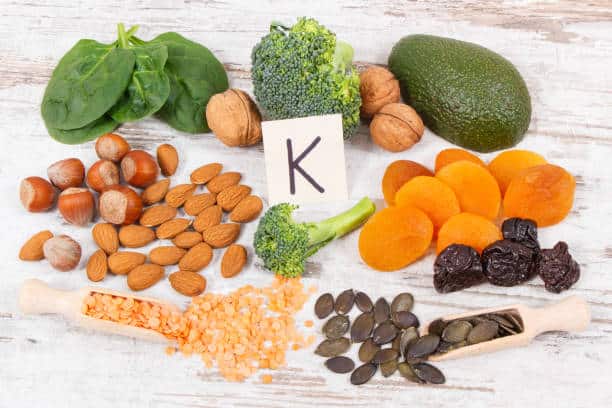
Foods that are rich in vitamin K

Here are the foods that are rich in vitamin K, according to The Manual:

  • Kale and leafy greens. One of the best dietary sources of vitamin K is leafy green vegetables. One cup of cooked spinach, for instance, provides an impressive 740% of the daily value. Collard greens and turnips are also good options. Not a fan of dark leafy greens? You can also opt for lettuce.
  • Parsley. Parsley contains more vitamin K than any other food. One cup of this common herb provides a whopping 820% of the daily value.
  • Natto. Natto is a funky, sticky, fermented soybean product commonly consumed as porridge and condiment in Japan. It’s packed with probiotics, protein, and antioxidants, and the bacteria that carry out the fermenting process make it one of the foods highest in vitamin K2. Just three ounces contains 850 mcg, which is over seven times the daily value.
  • Broccoli. Broccoli isn’t just good for fiber, calcium and vitamin C, it’s also high in vitamin K. One cup of cooked broccoli provides 220 mcg, which is nearly two times the daily value. Broccoli rabe is also high in vitamin K, with 75% of the daily value per cup.
  • Brussel sprouts. Brussels sprouts are a cruciferous vegetable packed with antioxidants and vitamins C and K. Each cup of cooked Brussels sprouts contains 107% of the recommended daily intake of vitamin C and 182% of the daily value of vitamin K, with about 219 mcg.
  • Cabbage. Each cup of cooked cabbage packs in about 165 mcg, or 136% of the daily value of vitamin K. Sauerkraut (fermented cabbage) is also rich in vitamin K.
  • Pickles and fermented vegetables. The pickling or fermenting process that helps create pickles or slaws like kimchi and sauerkraut and makes them rich sources of probiotics also produces menaquinones, vitamin K2.
  • Okra. One cup of cooked okra contains 64 mcg, which is just over half your daily requirement of vitamin K. Not a fan of the slimy texture? Green beans and green peas are also rich in vitamin K.
  • Asparagus. Asparagus is also high in vitamin K, with 91 mcg per cup, which is over 75% of the daily value.
  • Edamame. A cup of cooked soybeans has 66 mcg (55% DV), while a cup of edamame has 41 mcg. Edamame is also rich in antioxidants, fiber, and protein.
  • Fennel. Fennel is a good source of prebiotic fiber and provides 55 mcg (46% DV) of vitamin K per cup.
  • Pesto. A quarter-cup of pesto sauce has 95 mg of vitamin K, which is nearly 80% of the daily value.
  • Kiwi Fruit. Each cup of kiwi provides about 73 mcg, which is 60% of the daily value. If you’re not a fan of kiwi, avocado, pumpkin, pomegranate, blueberries, and blackberries are all high in vitamin K.

Do you need vitamin K supplements?

In most cases, you don’t need to take supplements if you’re getting enough from the foods you eat.

Most multivitamin-mineral supplements contain vitamin K, especially supplements for bone health. But in most cases, you don’t need to take supplements if you’re getting enough of what you need from food. However, you may benefit from a multivitamin or supplement for bone health, which typically contain vitamin K.

If you suspect you have a vitamin K deficiency, talk with your healthcare provider about the next steps. Your symptoms and a blood test can confirm diagnosis and guide treatment.

SHARE
Related Stories
Answer the question below
What actions have you taken regarding your leaky heart valve?

Get our Weekly Newsletter

Stay informed on the latest breakthroughs in family health and wellness. Sign up today!

By subscribing, you consent to receive emails from BlackDoctor.com. You may unsubscribe at any time. Privacy Policy & Terms of Service.

More from BlackDoctor

Where Culture Meets Care

BlackDoctor is the world’s largest and most comprehensive online health resource specifically for the Black community. BlackDoctor understands that the uniqueness of Black culture - our heritage and our traditions - plays a role in our health. BlackDoctor gives you access to innovative new approaches to the health information you need in everyday language so you can break through the disparities, gain control and live your life to its fullest.
✦ AI Search Disclaimer
This AI-powered search tool helps you find relevant health articles from the BlackDoctor.org archive. Please keep the following in mind:
✦ For Informational Purposes Only
The information provided through this AI search is for general educational and informational purposes only. It is not intended as a substitute for professional medical advice, diagnosis, or treatment.
✦ Always Consult a Healthcare Provider
Never disregard professional medical advice or delay seeking it because of something you have read through this search tool. If you have a medical emergency, call your doctor or 911 immediately.
✦ AI Limitations
This search tool uses artificial intelligence to help match your queries with articles in our archive. While we strive for accuracy, AI-generated results may occasionally be incomplete, outdated, or not fully relevant to your specific situation.
✦ No Doctor-Patient Relationship
Using this search tool does not create a doctor-patient relationship between you and BlackDoctor.org or any healthcare provider.
Explore over 35,000 articles and videos across black health, wellness, lifestyle and culture
Full AI Search Experience >
×

Download PDF

Enter your name and email to receive the download link.

BlackDoctor AI Search