Play Video
How Breathwork Helps Reduce Stress and Anxiety
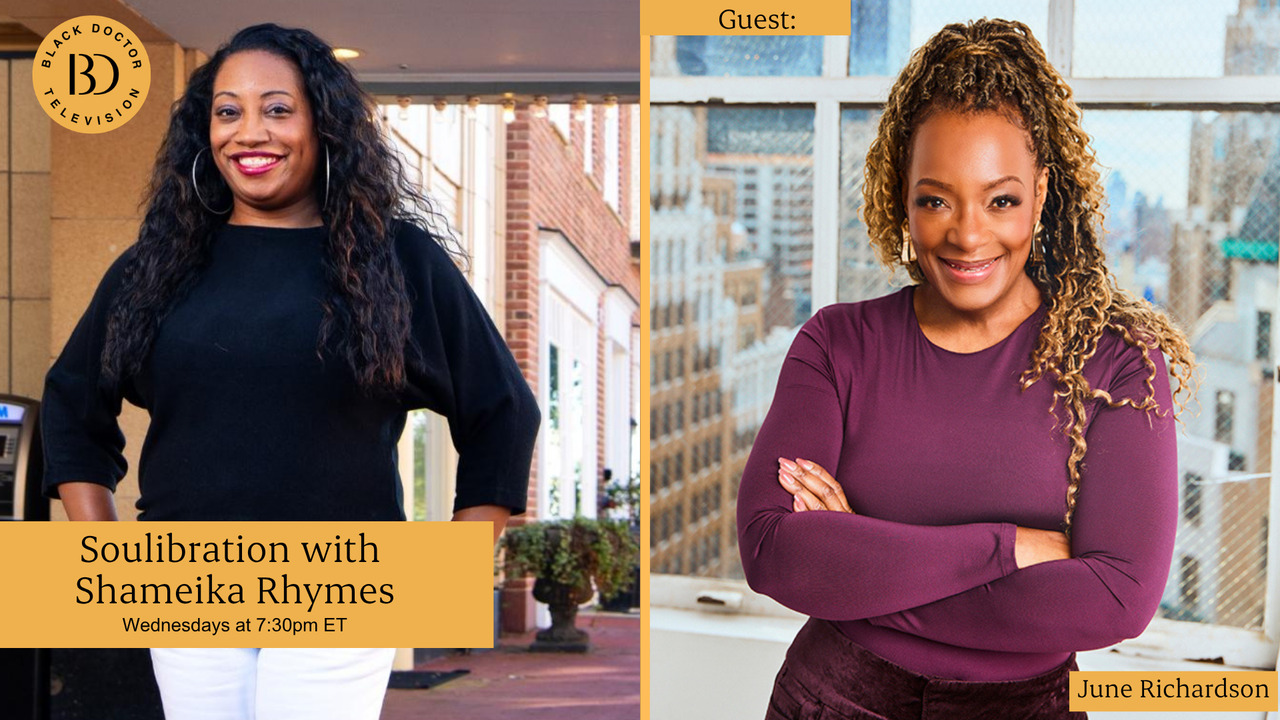
Join Shemeika Rhymes and June Richardson to learn how breathwork reduces stress and calms your nervous system in real time.

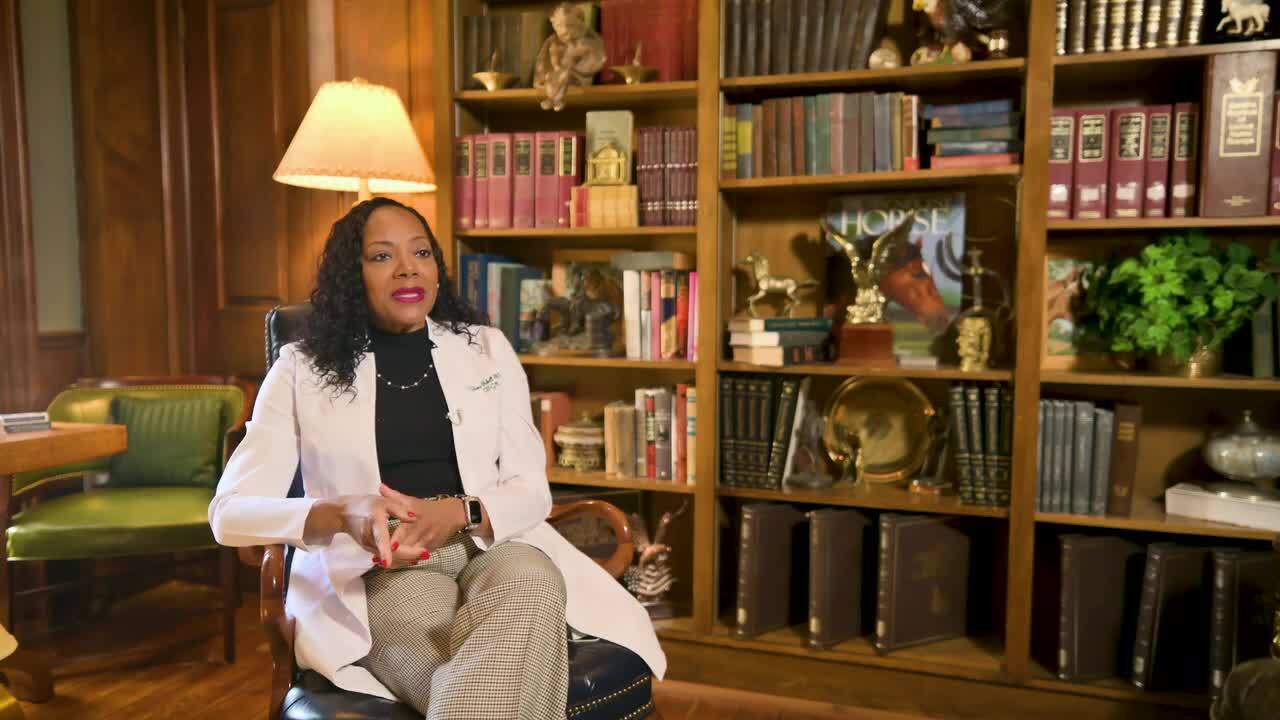
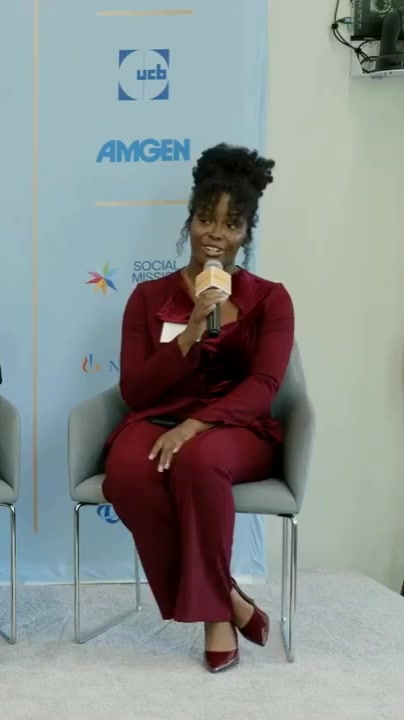
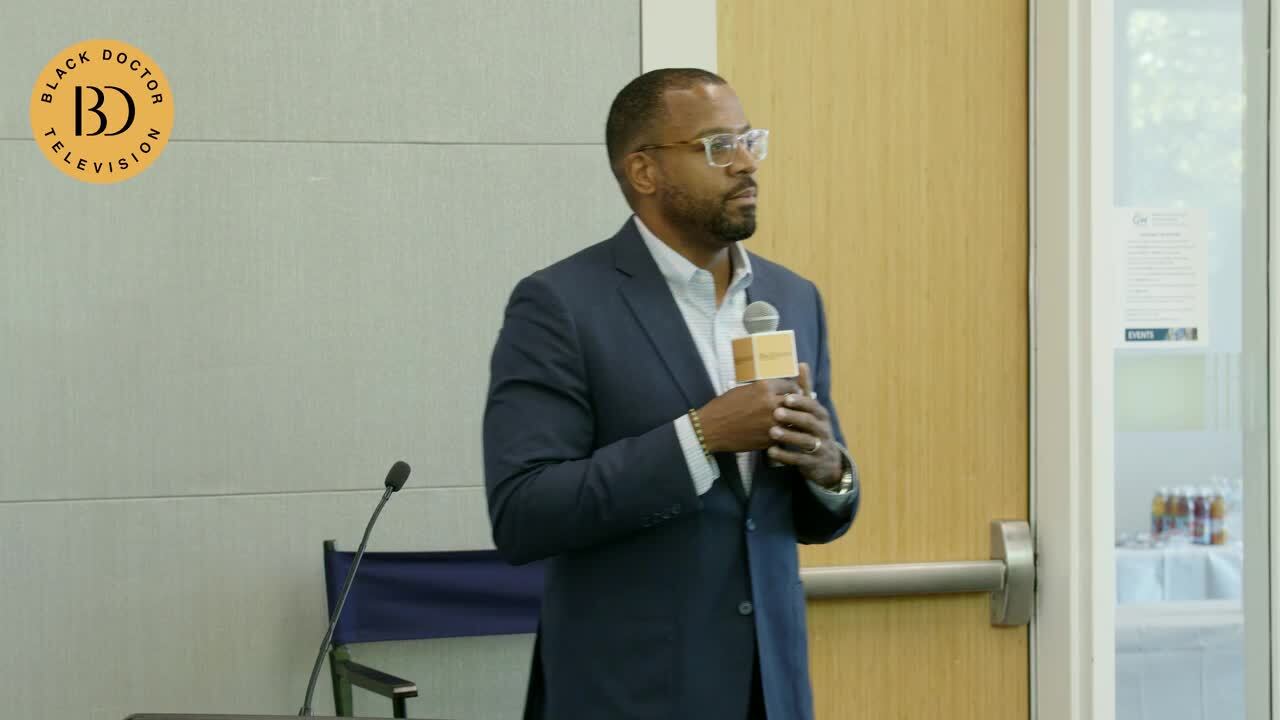
So, I wanna start with the first question being kind of a twofer, 'cause I know we have 35 minutes of time, and I wanna make sure we use it as, best as we can. So can you each introduce yourselves and share a little bit about your, the journey in your health career to this point, and what gives you the most hope and still leaves you concerned relative to this journey that many other people are on? I guess I'll get started 'cause I love efficiency. I'm Caitlin. I am a third-year emergency medicine doctor, over at GW across the street. from this point, I actually started my educational journey in high school.
Went to a summer program, a pipeline program, that showed me my love for science and actually led me to being a science teacher in Baltimore first. from there, kind of had a lot of experience with the students that showed me that they didn't understand a lot of health literacy. being in Baltimore, there's a lot of asthma, there's a lot of allergies, there's not a lot of education on, like, sexual health, and that's what motivated me to go into medicine. Went to-- We- got to go back home to Florida, went to medical school, and there somehow that transitioned into me wanting to care for the most vulnerable and to be an emergency medicine physician.
I'm in my second to last year, so next year I'll be starting as the education chief for the program. That's amazing. Yeah. And the thing that gives me hope, honestly, is events like this where I see people who still are so passionate about advocating for the patients, about sharing these experiences.
this is kind of what makes those long hours in the middle of the night in the emergency department worth it. That's beautiful. And one concern? One concern. Oh. I'm a little concerned with the, like, s- shifting away from guiding the students, especially those from underrepresented backgrounds right now. there was a lot of, kind of framework to support these students in the past, and we're seeing a lot of changes in medical education, which no longer is supporting them. so I worry there's not gonna be a whole lot of doctors that look like me in the future. Thank you. Peyton?
Well, hi, everybody. My name is Peyton Turner. I am a current senior at Emory University. I'm getting my, bachelor's degree in human health and economics. and then next year I'll be getting my master's in science and public health and data science with a concentration in environmental health. That's a mouthful. But, so that's a bit about me. I came in to Emory as a neuroscience and behavioral biology major. I was pre-med. I was so confident I was gonna be a doctor, everything like that, and then I took my first orgo class. Man, I think I got, like, a 48 on that first exam.
I said, "You know what? I don't think this route is for me, and that's okay." luckily, I was taking an econ class at the same time and realized that I really loved econ, hence my major, and wanting to go that route. So that, that summer, I was working as a medical assistant actually in Philadelphia from where-- That's where I'm from. I was working in an HIV/AIDS clinic, so I was working with underserved and uninsured populations, really focusing on sexual health, health literacy.
and working with those patients made me realize how many gaps we have in our education system, especially when it comes to healthcare and things like HIV that have so much stigma around them. So that's definitely a passion project of mine. and now I'm interested in pursuing something in data science because I think everything we do in healthcare is informed by data. understanding how to interpret it in a way that all audiences can understand it, so people that don't or, or, aren't in a technical field like science but are just general public members. putting it that way and being able to use that data to make health outcomes better for everybody, that's gonna be really important.
and especially in environmental health, which is something I'm super interested in as well, environmental justice and environmental racism. so yeah, that's my pathway. And I guess one thing that I'm really hopeful for is the use of AI and data science in healthcare. I'm really impressed by how quickly we're evolving to use that technology for the better, but at the same time, I am a little bit concerned about, you know, bias and incompleteness in that data and how that can further reinforce the disparities that we're actively trying to fight against. So just using that meaningfully, and reasonably with accountability.
Thank you so much, and I'm happy that, you know, we acknowledge sometimes we have speed bumps on our roads to our career successes, and it doesn't mean that it's a bad thing. You have gifts to give the world, and I definitely see you as running health systems.
So props to you. Queena? Hi, everybody. My name is Queena Sabry Williams. I'm a current PA student at the University of Eastern Shore. I'll be graduating in December of this year, so I'm pretty excited for that. my journey slash pathway into healthcare was just a bit nuanced. So growing up, I'm also a first-generation Ghanaian American, so it was a lot of struggles when it came into going into healthcare, like trying to help out my mom with understanding, like, paperwork and everything, and also my late father had leukemia, so dealing with that and also having to commute from Prince George's County to DC, and just always seeing and being surrounded with healthcare providers nationals because of his cancer journey.
I didn't know at the time where I would end up going, but I knew that I wanted to step into the same atmosphere and also provide back to my community in the same ways that people had served my father, and also had supported my mother. So during my undergraduate year, I had discovered the PA profession, and it was just something that spoke to me, that called out to me, and I was just very excited to go for that journey. And I made it a mission to go to the University of Maryland Eastern Shore because it was an HBCU, and also one of the few HBCUs that has PA programs. And I feel very supported and just very loved in that atmosphere, and always feel pushed to be the best I can be.
And I would say one thing that truly gives me hope is learning communities such as this and the Social Mission Alliance.
Like, I had a really And I still have a really great time being a health justice fellow. I've learned so much, especially about health disparities and also being an advocate for healthcare outcomes. And also, one of the things that I do have fear about is just funding, especially for universities such as my own, where there's not enough funding for our program, where we struggle to give scholarships to students, and also with the big, beautiful bill classifying the PA profession as not being professional. So just worrying how students coming after me will be able to support themselves throughout these programs.
Thank you so much. Okay, so the next question is also kinda two together. we talk a lot about the pathway or pipeline, but where is it actually breaking down for Black students and future healthcare professionals? And for students navigating this journey in terms of, you know, pursuing their health careers, what are critical skills or experiences that might not be in the curriculum that you think are super important? Yay. Let's pause. My apologies. would you wanna introduce yourself? Yes. And don't worry, these things happen. I wasn't called, so I said, "There must've been a change.
I'm not gonna go up there if I'm not called." I'm, I'm on the panel. My name is Dr. Janet Franklin. I'm at Amgen. I mentioned before, my question earlier, that I was in academic medicine before pediatric heme/onc, and, certainly have had a lot of experience and passion around the area of, the next generation coming through in terms of healthcare industries and professions, and also the importance of access, mentoring, sponsorship, all those things.
So one Yes. I wanna give you an opportunity to answer the first question in terms of what gives you hope in your career up until this point, and what concerns do you have relative to the future of, the health professions training and workforce pathway? I'm a glass half full person in general, just to put that out there. And so my optimism comes about just from the opportunities where I've had a chance to mentor or to in- to meet with, student groups and things of those natures, where I see people who are either beginning their medical school career or have decided they wanna go into other healthcare professions.
And they have a spark where they say, "You know, I didn't know I have not met a lot of people like you, and now I know I can do this." So that's part of why I have optimism. I think if role models still play a big role in our world, and we can't really underscore that even We just, we have to underscore that more and more because that's really a lot of dynamics that are probably working against people feeling they can do certain things. And so I think that still has a place for everyone. And so I do believe in that whole thing in terms of, you know, giving back and paying it forward.
Those things really have value for our entire communities, particularly when we think about young students who are very impressionable and have lots of things that distract them, so. Great points. Great points. So let's go back to the question that I asked before in terms of, where do you think people, particularly Black students and students who are underrepresented in medicine, are, are falling off the pathway or being pushed out of the pathway?
And what are the skills that we don't historically teach in health professional training programs or undergrad that are, are crucial for their future development as leaders to, to change the system? Who would like to go first? Hello. So I would say from my experience, it would be from the beginning. I w- when I was applying for PA school, I had a lot of trouble finding mentorship and connecting, and also finding people like me that were within the field. And so that came with figuring out financial aid, application support, as well as even making my personal statement. And so I really did not know what to do.
I had to ask a lot of questions, and I felt as though I didn't know who I could go to. And that's a common theme that I've noticed with people or students that are interested in going into the field. It kinda also propelled me and pushed me with SMA to help make a pre-PA pathway program so that I can support other students, especially in the state of Maryland, that want to go into the PA field but don't have the support, and they can find the support through that program and also find that mentorship. I agree. Oh, sorry. I agree. I think, again, with students like me, when I was coming in, you know, schools like Emory do have the resources there for sure in terms of, like, pre-health advising.
but I think students come in with a limited understanding of what the healthcare field actually has to offer. I think everyone either thinks you can be a doctor or a nurse or anything wi- really with clinical, or a clinical setting, and that's it.
so a lot of the students that were like me, the after orgo, they said, "That's enough." they just completelysaid bye to healthcare and try to pursue something else, but they didn't know that there were other opportunities in the healthcare field because we don't have a lot of mentors like that look like us in those fields. But also, there isn't enough representation on our campuses as well, and we're not taught about those things in an academic setting or even just an internship setting either. so I think the most important thing, is for us to seek out those opportunities, to connect with people that are in those other spaces.
And it's also important on the other side that those people let us know that they're there too. because again, any type of relationship, any mentorship is two-sided. so I think that's really important for us to understand. Completely agree. Kaitlyn? I would definitely second that and add some more specifics. I think that first year of college, a lot of students, I think we've done really good at trying to support our, kids or y- older adolescents into getting into college, but I don't think they get enough support when they get there that first year. that transition is a really large transition, and I think a lot of pipelines kind of skip over that and focus on the later years towards the application process.
And a lot of times what I've feel like I've seen is that's almost too late for them to get that additional help that they need. in terms of skills that I think should be stressed a little bit more for our medical education as a whole, I think just being a human being and remembering that you're treating human beings, it becomes kind of like a competition of numbers at some point, and it's really important that we kind of remind them at every stage that the most important person in the room is the patient and not them.
Thank you. I think my concern is coming around the idea of funding, because I think of a lot of the programs that I used to get invited to. There was like Saturday Science Symposium that was for elementary school children and junior high school children. They would come up, have a day just devoted to meeting people who are scientists, who were in the lab, who were radiation technologists, just all kinds of areas to give them exposure about what you could be. And they also had a d- whole day of programs that was, you know, designed to be hands-on, you know, quite a, quite a wide age range.
And I remember how much I enjoyed that. And I also think about the programs where, when I was coming along, there were a lot of, summer opportunities for pre-med programs or programs for persons interested in a science career, and you could apply and, and again, these were definitely focused for minority students, primarily Black students, but minority students. And there, there are less and less of tho- less and less of those now, and I worry about that because those are the, the avenues that I remember myself and some of my friends who also were successful in going to medicine.
That's how we got kind of nourished and had exposure, understood more about what it was that we could do, and how you could actually do it. And those are The, the funding issues are real, and that's been a real problem, I think. I agree entirely. And I, I think, Peyton mentioned the importance of like networking, understanding the different roles that occu- that make up the healthcare team and how invaluable each one is.
And I think, Dr. Franklin, you make a good point that support systems for mentorship, for sponsorship are being defunded, are drying up. People, you know, who historically mentor people are running out of places to recommend that students take part of. And so that leads to the next question around mentorship and sponsorship individually and on the part of institutions. In this, you know, brave new world that we've entered, where certain words and certain programs are either forced underground or erased entirely, how do we move from mentorship to sponsorship for a generation of people who, who need this as much as ever?
Happy to start with that. I mean, I think sponsorship really is easiest, though it needs to be done in many areas, when there's an organization structure to it in the sense that I think my current job right now. So if I look for persons I wanna sponsor, I'm gonna look around me. And so, and I, and I have a, you know, an affinity for those who look like me, no question. but certainly sometimes others have also reached out. So I think that's one way to be a sponsor because you know, you know your pathway, what the ups and downs were along your way, 'cause it's never smooth, and then you have a really clear vision as to how you might be able to sponsor someone else to be able to take their own skills, their own profile, their own CV, you know, strengths, and move along, you know, step by step.
It's not a big leap, but it's by steps, right? I think the other way is that I've had, just relatives or friends, refer me to their neighbor's daughters, whatever, you know, boyfriend, and he, he's interested in, you know, you know, pre-med or he's interested in science or he might wanna go into pharmac- pharmaceutical, industry or whatever it might be, whatever the linker is, and they give them my They say, "Can he call you?
Can he email you?" And I always say yes. I always say yes. And that's been one way I've been able to try to be a, a mentor/sponsor for someone in that setting too. But again, it takes someone, you know, helping them out to make a connection. I know it's hard when you're much younger to maybe always feel like you can reach out to someone who's so-called, you know, older than you or more established in their career than you. Thank you for that. I think in terms of sponsorship, my biggest as kind of the in-between with resident, not a student, but also not a full, not a full-fledged attending, is making the connection with people.
So while I may not be the most senior person in the room, I'm not the chair of your department, I am someone who works with the chair of the department. I am someone who works with these people, so leveraging those personal relationships on behalf of others, I feel like is something I'm really big on right now. in terms of mentorship, just guiding people in asking any question they would like. I generally, for the medical students that come through the emergency department, always like to let them know, like, "Yes, I'm an ER doctor, but I had other doctor friends or other specialty friends that I would love to help you connect with." And I think that that's another part of mentorship, is just if you can't directly provide the thing that they need, finding the person for them.
Yeah, definitely piggyback on that. That's a really big thing. I think when it comes to sponsorship, again, like I said in my last, response, it's a two-sided relationship.
So not only does the person seeking advice need to reach out, but the person who's supposed to provide it say, "Hey, let me contact this dude, and let me contact this person, let me get you whatever," because that's the role of a sponsor, and that's the role of a mentor. so it really takes being intentional about your actions and intentional about what you want the relationship to be like for that to prosper. I agree with what everyone else had said because it really does resonate, just having a strong network and a strong support and also having it be two-sided.
I just say, like, from my own experience from the Social Mission Alliance, like helping me take my words into an actionable step was really something that really changed and let me know like, okay, I'm getting the support, I'm getting the sponsorship, and I'm ready to just take my ideas and really take the next step and connect with others, so I can also be a support in the future. Thank you. I think you, like many of you alluded to individual relationships, but relationships within systems, and I think, the systems that we exist in, whether health systems, academic institutions, private organizations, all have a role to play in facilitating these communities, these networks, these mentoring relationships, these sponsoring, these sponsorship opportunities.
And, and right now, do you have any, recommendations or, like, requests as, in terms of how you think institutions like the ones that I've named should step up to support the pathway and the relationships that will sustain people along the pathway and lead them not to fall off?
Funding, 100%. Write a check, run a fundraiser, any of these things. I think right now, especially in our unprecedented times, I know we're tired of hearing that, we have to get more creative than ever to kind of support those students that fall through the gaps. I've seen some very interesting, linguistics jujitsu at even our own institution to make sure that funding is still present and there for those students. so I'd say that is the biggest thing an institution can do is continue to stick by those goals, even if you're changing the name of the program or changing the name of some of the miss- changing a couple of words of the mission statement.
I think the overall goal stays the same. and if you really care about something, you put your money where your mouth is. I 100% agree with that as well. I think funding is also important. And another thing that I would say is really organizing with students as well, because sometimes I would see, just from my own experiences, like the institution would talk about things and try and organize it, but students aren't really involved, so there isn't much of a connect with what would support the students or what students are interested in. So things tend to fall off more early than they could.
Yeah, I would definitely say, like, listening to the people that are asking. and, like, you have to be intentional about what you're going to do. So as an institution, whether it's academic or even if it's a community center, like being intentional about what your goals are for those students and listening to the students to make sure that you're meeting them.
I think that's the most important thing. Don't try to make up something that you think they're going to like. Listen to what they're asking for. yeah. I think one of the things that companies can do, or larger institutions of any type, is to sponsor summer programs, summer internships. I know at Amgen we have a summer intern program that's pretty diverse. You have to work hard to make it diverse, 'cause otherwise it gets really easy to not do that. But I think that's really important, and I know that spending that time in that environment is just really enriching, no matter what you decide to do later.
Doesn't matter whether you change your mind or not. And I think that it can, you know, I think other, you know, colleges and inst- and universities have summer programs as well, but I think, again, it's kind of maybe harder to do or less, less, you know, easy to fund, or you need the volunteer staff or faculty, whoever you're drawing on for your, your, your resources to make the program work, 'cause these things tend to be from that, that mechanism, not from someone who's full-time. And I think that's the way to try to keep that in mind. Those things have value and, and again, you're right, sometimes the labels or the names have to be changed, but I think it's important just to have That's, to me, that community outreach to me.
That's one way of doing community outreach. Could you speak more to the intentionality required to keep things diverse, to do the outreach that could make that kinda happen?
Intentionality is probably everything, and I know that in our We have an academics group that has been really keen in terms of, you know, developing and broadening the schools that we reach out to, no matter what, you know, area of, of, say, you know, a business such as a, a biotech company might be recruiting for. And so, while we go to some of the most classic universities you would think of, I think we've had, over the last several years, stronger connections with many HBCUs and other public universities where they have, you know, really sizable numbers of minority students.
So again, the presence is everything because, you know, people don't know about Amgen necessarily. It's not something a company would know about if you were just a, an undergrad or a high school student. And I think the other thing is that by coming to those places, you can ask, ask, be, be asked the questions that students wanna know, so they can figure out, "Well, is this for me, or is, is this another pathway I wanna join that's slightly different, but at least I know what that is, and that's not me?"So those things are important. We've also gone to some of the student, conferences, Black engineers, for example, and chemists and things like that as well to have a presence.
And so again, you, you have to make yourself available to the audience that may want to reach out to you. And so that's another thing we've been trying to do, in our, in our, setting. Those are really great points, and definitely something that I try to emulate with the programs that I lead.
so we're wrapping up with the, the final question for everyone, and the question is, it's, it's an actionable question: What recommendations would you make for a student on the pathway, to Actions that they can proactively take right now to increase their likelihood of succeeding, finding, mentors, finding the resources, that are crucial to support? I would probably Sorry, I'm just, that's the emergency medicine in me. I'm just like, "Let's just talk about it." I would probably say don't be afraid to send the email. I Working with middle schoolers, you would be surprised how, like, uncomfortable most of them are.
So, or not, if you're a pediatrician. how uncomfortable they are talking to strangers or people who necessarily they don't have a great relationship or they haven't grown up with. so really encouraging, no matter where you are in that pipeline, like, I promise you, if they-- The worst thing that could possibly happen is they email y- they don't email you back, and that's it. But the best thing that could happen is you could make a mentor for life. Like, one of the best people I have met and is still my mentor to this day is someone who I emailed as a medical student, as a third-year medical student.
She is my attending now. She helps me with my research. She, helped me apply for chief. so that cold email means a whole lot. Yeah, I would say cold email everyone. Take advantage of those coffee chats. talk to your professors. Talk to your professors 'cause most of them have PhDs or did something outside of academia.
that's how I got one of my internships. just use your networks and take advantage of every opportunity that's presented to you. Even if you don't think you're gonna be interested in it for your career, just do it anyway, 'cause you never know who you're gonna meet. I agree. I was gonna s-- I was just thinking to myself, like, the worst opportunity is missed opportunities. So the best thing you can do for yourself is put yourself out there, even in the face of doubt. 'Cause there's been so many times, and I believe a lot of people can relate, where I would think maybe it might not work out, but then I'm just like, "It will." And then sometimes it does, sometimes it doesn't.
So I think just having confidence in yourself will to- will take you far. Thinking a little bit differently on this question. I think one of the things that I would say is actionable for everyone in the room is that you yourself can be an advocate or a sponsor or a mentor for someone, even as just a connecting factor. So I'm thinking about how, you know, you'll hear someone say, you know, for example, your friend comes over with their children. They talk about, "Well, you know, I wanna be a scientist. I wanna be a ballet dancer." And someone says, "Well, I wanna, you know, be a doctor," or that's my example I can give you, a nurse or whatever it could be.
And you suddenly need to pick up all those things because, you know, if they really have that interest, you have to figure ways, "How can I foster? What can I-- What do I know?
What's in my community where I could get them maybe to join the science club for kids or this high school, you know, college, bound group?" Or whatever it might be. I mean, sometimes we have to help, those who don't know those resources. So I think it's not always about what they can do. When you're adult, you can do that, but I think for those who are still The early pipeline is what I worry about losing. And therefore, if, if you can't get them to a certain age where they really have the ability to make decisions and discern what's probably for them, then it's how do we make sure we don't lose those opportunities to let them know that there's ways to, to get more information about that?
Or you can find out a fun way to see if this is something you like to do and let them encourage it. Just encourage it. The way we do for those who say they wanna do music lessons and other kinds of things. Thank you so much. And it's a, it's a two-way street, like y'all said, and thank you for emphasizing what can happen on the other side. So that's the last question for the panel, but I think there's a lot of wisdom in this room as well, and so I wanna use the time for questions, but also suggestions from the role of mentee, mentor, sponsor. What can we all be doing to advance the pathway as, you know, the, the ground moves under our feet?
I see a question over here. Good afternoon, everyone. As the educator in the room, we are facing, the demographic cliff, so we are not seeing as many students that are applying to, higher ed and, and into these different, professions.
But not everyone knows what all of the healthcare professions are. So a lot of people think that I can only be a doctor or I can only be a nurse. So they, they do not know about all of the others. So we need to get out there and tell them about these pathways into healthcare. the other thing too is we have advisors, mentors, and sponsors, and most students are looking for sponsors with the money. And the advisors at the different school levels do not also know about the different pathways. So we have to start getting in there and start speaking, you know, what the truth is about healthcare.
My fear as an educator is not seeing people that look like me and not seeing women getting into these fields and into these professions because they do not know. So it's, we have to tell themSo that's my call to action for everyone in the room. Help me help you be the best that you can be, and help me help our future be the best that they can be in these times, 'cause this too shall pass. I wanna be fair on, on either side of the room, so we'll go if we don't have a mic over here, we'll- We can. -go with doctor. I can talk a lot. So I represent, a group of physicians called the Association of Nigerian Physicians in the Americas.
And for those of you who know Nigerians, we're loud and we get a lot of degrees. There's a lot of us who are doctors, and every year there's a conference, it rotates, it's gonna be in Chicago, and we have this special program where we try to give back to communities of color in the Americas because you guys are hosting us and we are thriving.
So if you don't know about anpa.org, there's an entire effort partnering with Mentoring in Medicine to kinda bring young minorities to learn about the health sciences and medicine and pharmacy and nursing, and we really would love to connect with BDO, I think I put a note to follow up later, to see how we can support this work that you guys are talking about here. I mentor a lot of people around the world in medicine and science. It's a passion that we have, and so please let's connect with BDO and figure out how to bring the two groups together, okay? Thank you. Yes. We must absolutely put a pin in that in terms of professional societies, state chapters, et cetera, really coming together to make the road.
I think we have time for two more questions. Hi again. so first, amazing panel. Thank you everyone for your insight and expertise. Go GW eMed. so I think one thing we have to also focus on is teaching mentees how to be good mentees. Yes. And, and sometimes that's some of the hardest things to do. Those are some of the most difficult conversations. The path of least resistance is to let someone mess up and just let them go about their business and keep failing. And I think that while it's a tough conversation, we need to be comfortable and also meet the mentee in a way that doesn't necessarily put them on guard or on the defensive and not willing to listen.
And that could be as simple as saying, "You know, you probably shouldn't have put that in an email," or, "You know, it probably wasn't great that you were on 'Pokémon Go' in the middle of clinic." That actually happened.
Not kidding. you know, there are better ways to spend one's time, but I, I think it's, it's easier to not, to just ignore the problem, and it's our job as mentors, let alone sponsors, to set people up for success. So it's something as simple as saying when, and I'm sure many have gotten this in the room, the email of, "Hey," like, "I Do you have a project for me? Thanks." It's like one line, and it's not thinking about, "Well, what kind of work do you do?" sometimes it's even about a project that you don't even work in. So I tell students, I'm like: Hey, listen, I don't have a magical pot of projects, but if you have an idea and a question, I'll help you work through it.
It's about being intentional in those emails, being intentional about meetings. I mean, someone mentioned about meeting at, at conferences, which is a great place to meet with a lot of mentors. Do not email the last days beforehand. It's months before with a purpose. And so I think as mentors, we can really set our people up for success with very simple changes, let alone we need to be willing to have those tough conversations that things they have done may not have been the best for the environment, for their careers, and on Even though it might be hard in the moment, they will thank you down the road.
Ashanti. Yeah. Hi. You're probably thinking, "She has a question?" No, more a good statement, and yeah, w-we're just gonna go there because you guys are Social Mission Alliance. So how do you feel about I mean, let's just call it out.
There is an attack on higher ed. There's an attack on DEI. I mean, and you know the stats. People like us with an EdD, PhD, Black folks, we're 2%, Black doctors, 6%. We can go on and on and on. So how can we actually work together, Black Doctor and all of our other industry partners, to ensure our future for representation because it matters? Anyone wanna answer? You want Can we- Oh, you wanna answer it? So while he gets We g- Okay, let's get Dr. Straker. Well, it's not a total answer, but it is something that I think we have to pay attention to. You know, the history, particularly of Black people in the United States, is we've always taken care of our community.
So we've never had money to start with, and we've always utilized some form of support within our community. And in today's environment, I mean, there are actually institutions where faculty have been told that they can't write a recommendation for a student for, like, a scholarship that's specific to Black students because of this new anti-DEI thing. And it's a, and it's a, at place where on some campuses where students are not even able to have, like, affinity groups even. We have to utilize our own communities. We have to utilize, if there's a sorority or a fraternity and they have a house, they have to, we have to get them to be able to sponsor places where we can all meet together.
They don't have to necessarily pay us for it, but if we can have environments like that, we have to start using and building our own institutions, like Black Doctor.
But I think it is, it's gonna take, it's gotta take more than that, and that's gonna be something that we're gonna have to really, really get together and do, because the institutions are even being told not to refer people to those. Mm-hmm. So we have to use our own networking in this process, and that's one other thing I just wanna bring up. So, you know, if it's your church, if it's your fror- sorority, fraternity, if it's your brother got a store down the street, it, whatever it is, we, we have to do that. Panelists? I just wanna add quickly, yeah, definitely pouring into organizations that are for us, but I will say some of my, like, best mentors were people that didn't look like me.
So it's really important to, when we think about diversity, not just think about, "Oh, I want a Black mentor," but get a mentor who's white or a different race or a different gender because they have connections too and networks too that you might not know exist, right? So don't be so one-dimensional. Be open to really truly diversity. I would like to add to that and also use those individuals as, for lack of better words, a shield. There are some things that coming from someone that looks like the same as the person you're trying to advocate for can come off, aggressive or seen as being favoritism, et cetera.
So using those other mentors, that may not look like you is a wonderful way. Like, I've written emails and been like, "You send this," and it works phenomenally. Okay. So thank you all so much.
We have a lot to learn, and I think there are a lot of actionable items within this room, and keeping with that theme, don't mean to steal it from our wonderful hosts. thank you so much to our panelists.

By subscribing, you consent to receive emails from BlackDoctor.com. You may unsubscribe at any time. Privacy Policy & Terms of Service.