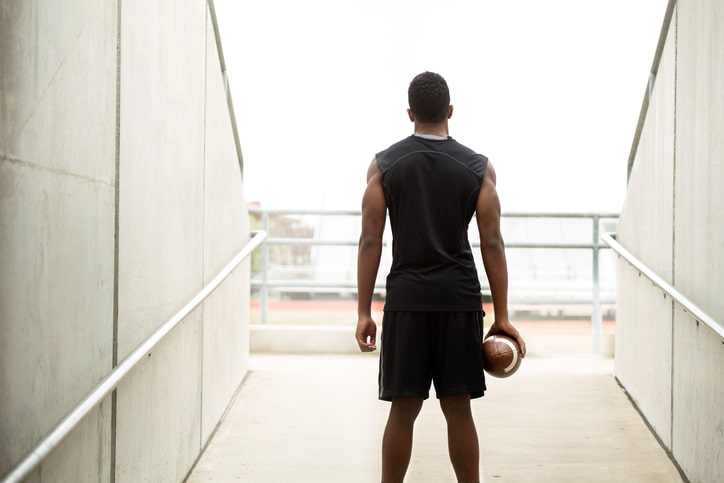
College requires a substantial amount of time in a student’s life. Balancing your time to attend classes, and the time needed to study and complete coursework will add up. It requires hours of time and complete focus to fully dive in and understand the material you are learning. Athletics also call for a large amount of time. Going to practice and memorizing plays are necessary when preparing to compete against other teams. So, what happens when we combine the schedules of a student athlete?
What we find is an intense and rigorous schedule. Oftentimes, student athletes are going to class and then straight to practice.This is where we find the common “class, practice, study, eat, sleep, repeat” schedule. There are some benefits of being a student athlete, such as involvement in extracurriculars, meeting new people and time-management skills. But, what happens to the mental health of these students? Increasingly, we are seeing student athletes’ mental health suffer in exchange for their participation.
Depression, bipolar disorder, substance abuse, anxiety disorder, eating disorders, personality disorder and post-traumatic stress disorder (PTSD) are a few common mental health issues that student athletes fall victim to. A study focusing on student athletes participating in the NCAA sanctioned intercollegiate athletic programs found that between 10 and 15 percent of student athletes (2 percent higher than their non-athletic counter parts) are more likely to experience psychological issues severe enough to warrant counseling (Watson & Kissinger, 2007). These disorders are due to various stressors.
Per a PhD Sport Psychology article, a large stressor for student athletes is the pressure, in various forms, that they face. The pressure to perform and execute in their sport, the pressure to maintain academic standing in order to participate, and also pressure from their courses to meet deadlines for assignments are present. Pressure is also driven by the physical requirements they need to maintain. In order to maintain physical expectations many athletes suffer from eating disorders in order to gain weight or lose weight.
Another stressor of student athletes is the transition into college. College for all students means being in a new environment and meeting new people. This often requires time to become familiar and comfortable in that space. Taking the time to become familiar is key to being successful. When student athletes are instead using that time to get familiar with their new teams and coaches, they neglect getting adjusted to their college/university and are more vulnerable to suffer from mental disorders.
Some signs that a student athlete is suffering from a mental disorder can include: mood swings, changes in sleep patterns, changes in eating patterns/diet, a decline in academic performance, a decline in physical performance and isolation. Student athletes are more likely not to seek help, so it is important for friends, family and professors to be aware of these signs also. Coaches are encouraged to have strong relationships with their athletes, encourage athletes to seek help (reduce the stigma of seeking help) and make sure athletes are informed of where to seek help.
Tips
There are some a number of ways that student athletes can learn to manage their stress and schedule. An important tip is to focus on one thing at a time. Trying to juggle too many things at once increases the anxiety one feels, while also decreasing their ability to complete tasks. Many feel overwhelmed by their schedule, but most find that when not multi-tasking, they are more effective. Learning time management is fundamental. Student athletes can prioritize their time by working on things they know are due soon, or will require more time to complete. Also, they should try and work ahead if they have spare time. Getting ahead on work can’t hurt.
Dealing with stress does not have to be detrimental and neither should being a student athlete. With hard work and strategizing, it is possible to be successful in both realms. Making the grades counts, but do not neglect your mental health. When your mental health suffers, more issues will arise. Student athletes should try these methods to help reduce stress and success will follow.


By subscribing, you consent to receive emails from BlackDoctor.com. You may unsubscribe at any time. Privacy Policy & Terms of Service.