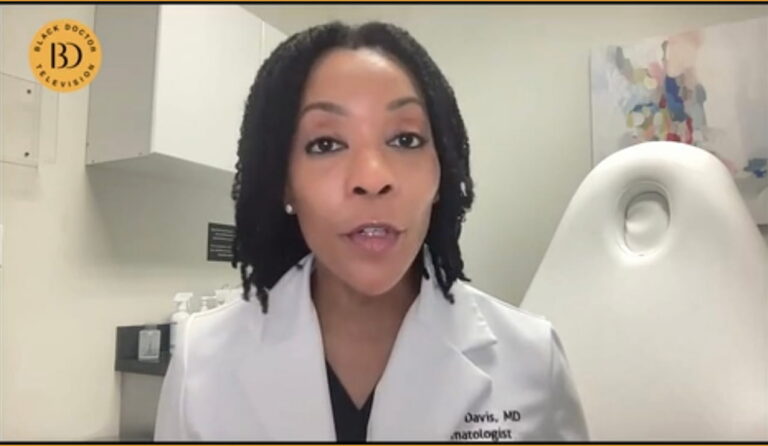
In honor of National Women’s Checkup Day, it’s crucial to highlight the significance of regular health checkups and screenings for women’s overall well-being. Dr. Natasha Ramsey, is a board-certified pediatrician and spokesperson for Here We Flo, a Black-owned, female-led sexual wellness and period care brand. Here We Flo, a champion in menstrual health and wellness, not only offers sustainable period products but also aims to destigmatize periods. Their efforts in education and support for menstrual equity are changing the narrative, making periods a topic of compassion and understanding.
BlackDoctor.org spoke with Dr. Ramsey to discuss the importance of annual screenings and checkups for early detection and prevention of various health issues.
“It’s important for women to be aware of these issues so they can identify any potential health problems early and seek treatment. Women are often caregivers, prioritizing the health of others over their own,” Dr. Ramsey shares.
“There are several misconceptions and barriers that can prevent women from prioritizing their health. Women are often juggling demanding jobs and caregiving responsibilities, making it challenging to find time for their own health checkups. Additionally, many women may lack the information needed to understand the importance of regular checkups or to advocate for themselves in medical settings.”
To combat this, Dr. Ramsey walks us through a checklist of screenings:
Adolescence is a time when young women are exploring their sexuality making it an important time to begin screening for sexually transmitted infections.
During adolescence, your doctor may also begin screening you for high cholesterol, diabetes, and high blood pressure and discussing your weight or other risk factors that may impact these numbers.
“Blood pressure and cholesterol screenings are usually done at regular check-ups or annual visits,” Dr. Ramsey shares.
Your doctor may also order blood work and begin discussing if you are showing any symptoms of anemia.
“Something that comes up often is anemia…when they start having their menstrual cycle that’s normally [when] people start having issues with anemia as well because not only is your body growing, it needs additional nutrition but then also you’re losing iron and other key vitamins every time you menstruate,” Dr. Ramsey shares.
RELATED: 5 Women’s Health Screenings You Need Right Now!
As we transition into adulthood, there are additional screenings beyond those for high blood pressure, cholesterol, diabetes, and anemia that continue to be important.
“In adulthood, there are screenings in addition to high blood pressure, cholesterol, diabetes and anemia that we continue to screen for. Other things that start to come on the list are cancer screenings. In adolescence, we don’t really screen for cancer because most of the time it’s too early to detect something or it might be that someone has some type of abnormality but their body is able to clear it by the time they’re a little bit older,” Dr. Ramsey says.
For cervical cancer, screening should typically begin around age 21. A common mistake is assuming that 18-year-olds need screening because they are sexually active, but the guidelines actually recommend starting at 21. This highlights the importance of education and knowing the recommended guidelines. It’s crucial to advocate for yourself and ensure that unnecessary invasive exams are not performed based on misconceptions.
As we get older (and depending on your risk factors), you should also begin screening for other cancers such as breast and colon cancer.
“As we age, we continue to screen for these conditions, and our screening needs are influenced by factors like family history of cancer. These are the primary screenings that are recommended, and it’s important for people to be aware of them,” Dr. Ramsey says. “Sometimes, people are unaware that they should be getting these screenings, so knowing what’s recommended can help ensure they are completed.”
Dr. Ramsey’s key to optimal health? Taking ownership of your health and being proactive about screenings.
“If you’re 22 and you know that at 21 you should have had a Pap smear screening, you can bring that up with your doctor,” she says. “It’s about being aware of the screenings that are recommended for your age group and discussing them with your healthcare provider.”
Aside from knowing what health screenings are recommended for your age group, it is also important to understand your family history and any other risk factors that may put you at a higher risk of developing a condition. This is especially important for Black women who often get diagnosed at ages far younger than the recommended guidelines.
As for specific ages for screenings, there’s some controversy. Mammograms used to start at age 50, but now there are recommendations for starting at age 40, especially if there’s a family history of breast cancer.
“The key is to be informed about the guidelines and advocate for yourself based on your individual needs,” Dr. Ramsey adds.
For a full list of age-related screenings, click here.
RELATED: Missing the Mark: How Breast Cancer Guidelines Fail Black Women
Dr. Ramsey offers advice on taking care of your well-being:
Some people fear screenings because they worry about the results. But knowing the purpose of the screening—that it’s about catching things early when they’re easier to treat—can help ease that fear.
Screenings are also about shared decision-making with your healthcare provider.
“Sometimes, screenings find something unclear, and you and your provider need to decide on the next steps. It’s better to know and make a plan than to be unaware and potentially face more serious health issues later,” Dr. Ramsey advises.
Screenings also help identify asymptomatic conditions and prevent further complications. For instance, high blood pressure often shows no symptoms but can lead to serious problems. So, screenings are crucial for early intervention.
Screenings aren’t without issues, though.
“If we screen everyone too early, we might find things that aren’t real, leading to unnecessary worry and tests. That’s why guidelines change and it’s important to stay informed about what’s recommended for you. For example, with cervical cancer screenings, they used to start at 18, but guidelines changed to 21 to avoid unnecessary treatments for infections that the body could clear on its own,” Dr. Ramsey notes.
Remember, your health is your superpower. By embracing regular checkups, seeking knowledge, and lovingly advocating for yourself, you’re writing a beautiful story of health and happiness.
“In the end, it’s about knowing your options, understanding the purpose of screenings, and making informed decisions about your health,” Dr. Ramsey concludes.


By subscribing, you consent to receive emails from BlackDoctor.com. You may unsubscribe at any time. Privacy Policy & Terms of Service.