As women, we hear often about breast health, getting a mammogram; heart health; good nutrition; exercise; pre-natal checkups, and the like, but one area that we may overlook is HIV risk. Each year, on June 27, the United States observes National HIV Testing Day. It is a day to remind us to get the facts and get tested for HIV at least once if we are between the ages of 13 and 64 years of age.
In 2011, the latest year for which data are available, 23 percent of all persons living with HIV were women. The Centers for Disease Control and Prevention (CDC) estimates that at some point in her lifetime, one in 32 black women will be diagnosed with HIV compared to one in 106 Latinas, and one in 526 white women. Heterosexual contact with a male partner who is HIV positive is the most common means of transmission for women.
Making HIV Testing Part of Routine Check-Ups
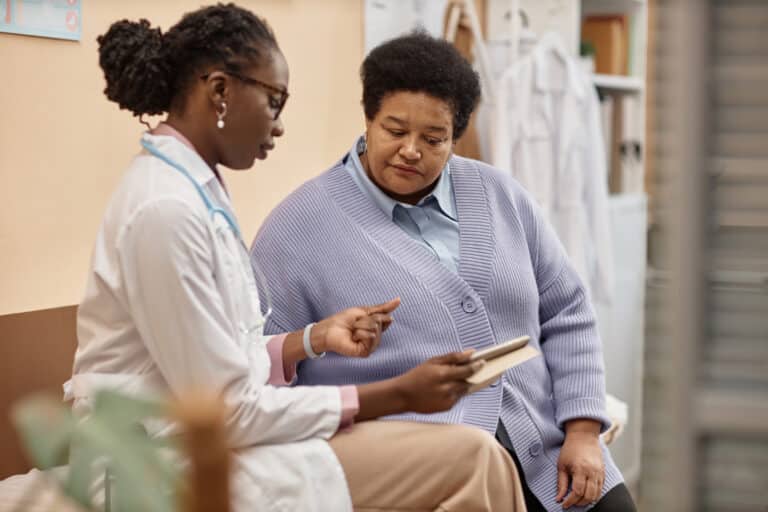
As part of our regular check-up, it is important for us to discuss with our health care provider our HIV risk and get tested for HIV. Local health departments and community-based organizations are also resources for information. CDC supports several evidence-based behavioral interventions that promote HIV awareness and prevention in women. One example is Sister to Sister, a one-on-one intervention developed specifically for sexually active black women.
Get The LATEST Articles Straight To Your Inbox!
Sister to Sister only takes about 20 minutes to deliver, meaning it can be completed during a routine health care visit. It focuses on helping women better understand their HIV risk, and build the skills and confidence they need to change their behavior and reduce their chances of exposure to HIV or other sexually transmitted diseases.
Local health departments also provide support for persons with HIV in the continuum of care. This continuum starts with HIV testing. For those found to have HIV, it continues with entry into medical care, initiation of antiretroviral therapy (ART), and staying in care and on ART to achieve suppression. Suppression means that the virus is at a low or undetectable level, which helps individuals with HIV maintain their health and reduces the risk of transmission.
CDC estimates that 88% of women with HIV infection have been diagnosed, but that only 45% of these women were engaged in medical care, and only 32% had achieved suppression of the virus through ART. There is strong evidence that supports the practice of getting everyone with HIV into treatment as soon as possible and staying on treatment.
Other CDC High-Impact Prevention approaches include campaigns such as Take Charge. Take the Test., encouraging black women to get tested for HIV, Let’s Stop HIV Together, which raises awareness of HIV risk, and One Test. Two Lives., which promotes HIV testing of all pregnant women as a routine part of prenatal care, for their own health and to reduce the risk of mother-to-child transmission of HIV.
As part of CDC’s National HIV Testing Day Activities, BlackDoctors.org has posted “5 Reasons Women Should #TakeChargeandTest On National HIV Testing Day”. I invite you to take time to read this as well and learn even more about how to protect your health and prevent HIV.
At CDC, we remain committed to increasing HIV awareness and reducing HIV risk among women. As a woman and a public health professional, I am committed personally to using the information I have to protect my own health, that of my family, and the health of women across the country. Knowledge is a powerful tool – especially when it is shared and applied. Join me and together we can reduce the rate of HIV infections in women and improve the lives of women living with HIV.

Hazel D. Dean, ScD, DrPH (hon), FACE is Deputy Director, National Center for HIV/AIDS, Viral Hepatitis, STD, and TB Prevention at Centers for Disease Control and Prevention.


By subscribing, you consent to receive emails from BlackDoctor.com. You may unsubscribe at any time. Privacy Policy & Terms of Service.