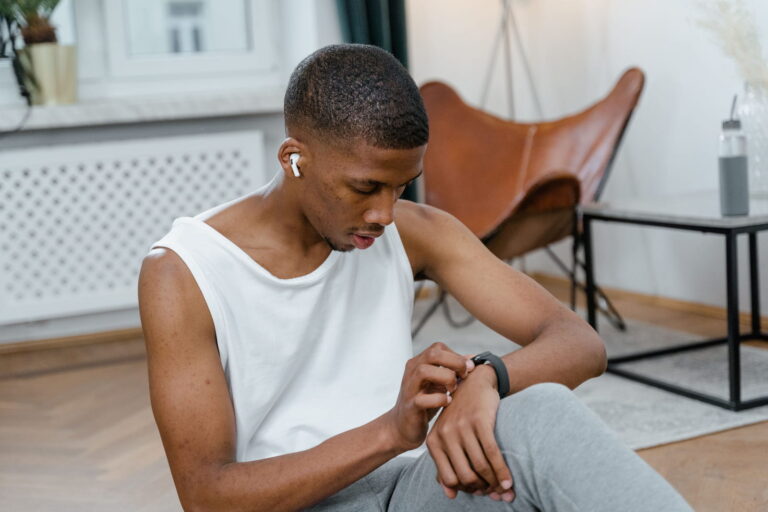
For people living with sickle cell disease (SCD), symptoms and complications can change from one day to the next. But most doctors’ appointments offer only a snapshot of what’s happening.
That’s one reason researchers are looking at a tool many people already wear every day: the smartwatch. Could information from a device on someone’s wrist give doctors a clearer picture of how sickle cell disease affects them between appointments?
New research in Blood examined whether wearable technology could remotely monitor adults with high-risk SCD in their everyday lives. The study, part of the SCD-CARRE trial, focused on whether researchers could reliably collect information about participants’ physical activity, sleep, and heart rate outside of a clinical setting.
The researchers enrolled 173 adults with SCD and gave them Garmin wearable devices. Participants were asked to wear the devices continuously for seven days at the start of the study and again at follow-up visits at four, eight, and 12 months.
For the data to be considered valid, participants had to wear the device for at least 10 hours a day on three or more days.
Overall, the researchers found that remote data collection was feasible for most participants. Of the 173 people enrolled, 155 had wearable data available. Among them, 82 percent met the researchers’ criteria for feasible data collection.
Also, when participants did wear the devices, they tended to keep them on. Those with valid data wore their devices for an average of 21.5 hours per day, giving researchers a fairly detailed look at their daily activity and physiology.
RELATED: Can Wrist-Worn Fitness Trackers Predict Multiple Sclerosis Progression?
The wearable data also offered a glimpse into participants’ everyday lives.
On average, they took about 4,226 steps a day and spent roughly 18 hours a day sedentary, while about 3.5 hours were classified as active. Their average heart rate was about 80 beats per minute, with an average minimum of 60 and a maximum of approximately 122.
Sleep data were available for 106 participants, and they averaged about 6.3 hours of sleep per night.
These numbers aren’t meant to define what daily activity or sleep “should” look like for someone with SCD. Instead, they show the kind of information that researchers can collect when monitoring happens continuously rather than only during a doctor’s visit.
That could be important because SCD can affect physical functioning, cardiovascular health, pain, sleep, and overall well-being. A wearable could potentially help clinicians see changes or patterns that might otherwise be missed between appointments.
The wearable study comes at a time when researchers are increasingly interested in using artificial intelligence (AI) and machine learning to better understand how SCD can affect people.
At a workshop hosted by the National Heart, Lung, and Blood Institute, researchers discussed combining AI and machine learning with “digital phenotyping,” which is using data collected over time to build a picture of a person’s health. One area of interest is whether these tools could eventually help researchers better understand or predict pain and other SCD complications.
The workshop also explored “network medicine,” an approach that considers multiple factors, including genetic, environmental, and clinical information, to help researchers better understand complex diseases.
That makes wearable technology appealing. A smartwatch can generate a steady stream of information on activity, heart rate, and sleep. Researchers could potentially combine that information with medical records and other health data to look for patterns that aren’t obvious from any single data point.
The technology isn’t ready to replace traditional medical care, and this study showed why. Eighteen participants had no wearable data because of device errors, the device not being worn, or pending data. Another 10 participants had available data but no valid wear days.
The researchers also found that participants receiving more intensive disease-modifying treatment were more likely to have insufficient data. And while the study initially included oxygen-saturation monitoring, researchers discontinued it because the readings weren’t reliable enough. Sleep monitoring and device malfunctions presented additional challenges.
RELATED: How Smartwatches Are Detecting Silent Atrial Fibrillation — and Why It Matters for Black Adults
The findings don’t show that a smartwatch can predict a sickle cell crisis or improve health outcomes. Instead, they answer an important preliminary question: Can researchers successfully collect useful wearable data from adults with high-risk SCD while they navigate their daily lives?
For many participants, the answer was yes. The next step is figuring out what that information can actually tell doctors. Researchers plan to look at how wearable measurements relate to clinical outcomes and differences in treatment.
For now, the study points toward a future in which a smartwatch could be more than a way to count steps or track sleep. With more research, wearable technology could give doctors a more continuous view of how sickle cell disease affects their patients, even when they’re nowhere near the doctor’s office.



By subscribing, you consent to receive emails from BlackDoctor.com. You may unsubscribe at any time. Privacy Policy & Terms of Service.