Dancy, who got a divorce and whose children are 16, 10, 9 and 4, also learned to ask for help from others, like her mother, who lives within a 15-minute drive.
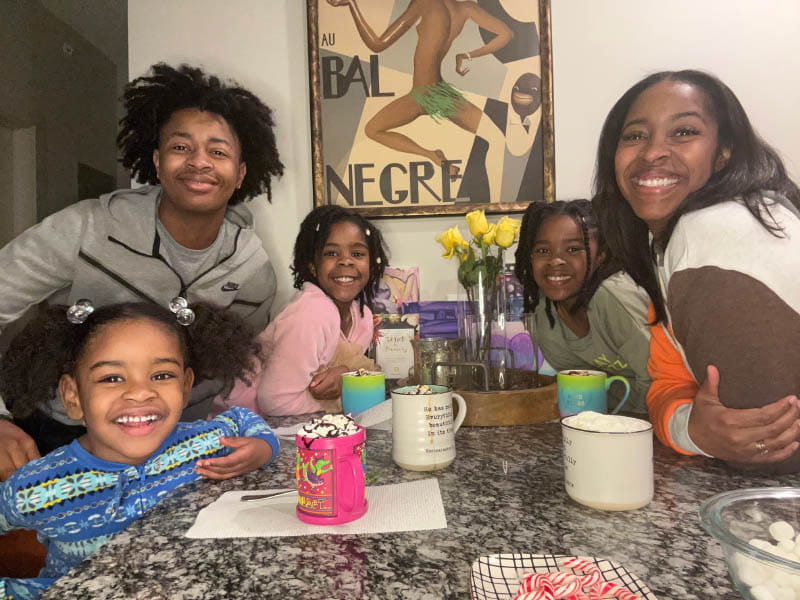
Marian Dancy (far right) with her kids, from left, Harper Dancy, Darian West, Taylor Dancy and Morgan Dancy. (Photo courtesy of Marian Dancy)
Four years later, Dancy’s prognosis is good. Her ejection fraction of 46 percent is not quite in the normal range, but she rarely experiences symptoms.
“Even though I’m doing better physically now, none of us know how long we have on this earth. The present is what you have now. The future is great if you make it there. It really forced me to be intentional,” she said. “If today is the last day, how did I live today?”
Peripartum cardiomyopathy can be difficult to detect because symptoms of heart failure,such as shortness of breath and swelling in the feet and legs can mimic symptoms that you may experience throughout your pregnancy. If you notice any new shortness of breath or swelling, after delivery or develop a sudden onset of these symptoms during pregnancy, contact your doctor for evaluation.
He or she will conduct a physical exam and look for signs of fluid in your lungs. They may use an x-ray to see, or a stethoscope to listen for, evidence of fluid in the lungs, a rapid heart rate or abnormal heart sounds. Your healthcare provider may also suggest a heart ultrasound, called an echocardiogram, which can detect cardiomyopathy by showing that the heart function is weak. You may also have to undergo lab tests to confirm your diagnosis.
By American Heart Association


By subscribing, you consent to receive emails from BlackDoctor.com. You may unsubscribe at any time. Privacy Policy & Terms of Service.