Octavia Spencer is used to commanding the screen, but her most vital role to date is one that hits close to home. Partnering with Sofía Vergara and a collective of leading health organizations, Spencer is sounding the alarm on the “silent” risks of chronic kidney disease (CKD).
For the Oscar winner, the “Detect the SOS” campaign is more than just a public health mission—it is a personal crusade rooted in her own journey with type 2 diabetes and high blood pressure. By sharing her story, Spencer aims to empower marginalized communities to advocate for themselves, proving that while we can’t stop the clock on aging, we can always choose to get healthier.
“What I’ve learned as I’m aging—and I’ve been able to control both—is that people with high blood pressure and type 2 diabetes are at risk for kidney disease,” Spencer tells BlackDoctor. “With that comes other complications that could arise, like cardiovascular issues, heart attack, and stroke. So, the ‘SOS’ that we are promoting is the ‘silent warning.’ If you suffer from those illnesses, your body might be sending a warning that there are other problems through the kidneys.”
The urgency of her message is backed by staggering data. According to the American Heart Association, about 58 percent of Black adults have high blood pressure. Furthermore, reports indicate that 49 percent of Black women are expected to develop diabetes in their lifetime.
Spencer does not take these statistics lightly.
“As a Black woman, I know that diabetes and high blood pressure are quite prevalent in our community,” she adds.

For Spencer, the road to diagnosis wasn’t paved with obvious symptoms. Her journey with type 2 diabetes began simply with extreme thirst.
“That was the only way I knew something was wrong—I was just unusually thirsty. With high blood pressure, I didn’t suffer from anything except when they actually took my blood pressure reading,” she shares.
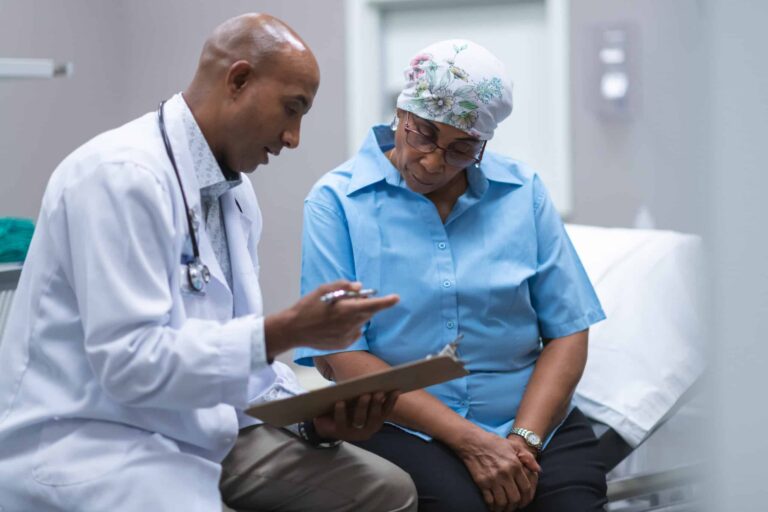
Recognizing that many warning signs are often invisible, Spencer is using her platform to encourage others to prioritize their screenings before a crisis occurs. She points to a simple, often overlooked solution: the uACR (urine albumin-to-creatinine ratio) urine test, which tests for signs of kidney damage such as albumin (a protein) in the urine.
“The thing is, the SOS is easy to detect. It’s just a simple urine test called a uACR,” Spencer notes. “It should be used as part of your screenings when you have physicals, but often it isn’t. When we raise awareness through this collective, we perhaps give people the information they need to advocate for themselves. It’s a simple test, it’s painless, so why not make the public aware and put a face on an issue that can be resolved?”

Spencer understands that for many, the hesitation to get tested stems from a fear of what might be found. However, she discovered that clarity brought a sense of power rather than panic.
“I know it can be scary. When I realized there was something else I needed to be aware of, I was told about the uACR. I asked my doctor—that’s all I did. I went in, I asked my doctor, and it was just that simple. We did the screening, and then I got the information. Like most people, I fear the unknown. But I can tell you, having the knowledge that my kidneys are functioning properly is the best reward,” she says.
This sense of empowerment is something both Spencer and Vergara are passionate about, especially for women of color who are disproportionately affected by these risk factors.
“If undetected, chronic kidney disease can lead to other risk factors. It’s important to both of us. I’m not speaking for her, but having been involved in the campaign with her, I know this is equally important to her as well. I’m just excited to be a part of something that will help people advocate for themselves,” Spencer adds.
The duo’s joint ad, airing during Super Bowl LX, utilizes a lighthearted approach to deliver a heavyweight message: “Health is wealth.”
“At this age, at 55, I know now more than ever that health is wealth. That’s what I would say to anyone watching,” she says. “When we know things, sometimes we aren’t as proactive as we should be, but as I’m aging, I understand that the more I’m aware, the more consistent I need to be. I am on a better health journey now. I know I can’t get any younger, but I can get healthier.”
When she isn’t advocating for public health, Spencer is busy producing projects that mirror her commitment to social awareness. Her true crime series, FEDS and Lost Women of Alaska—both of which she narrates and executive produces—are set to return to HBO Max / ID Discovery. The Emmy-nominated Lost Women franchise returns on February 25, followed by FEDS on March 4.
“I developed these shows with Warner Bros. Discovery about six years ago, and this is the second season for both. This season, Lost Women will take place in Alaska and will follow the disappearance of indigenous women. In FEDS, we will follow active FBI agents on some of their high-profile and very dangerous cases,” she explains.
Whether she is investigating the disappearance of indigenous women or educating the public on kidney health, Spencer’s work is driven by a singular, intentional goal: protecting the most vulnerable.
“That’s why I’m drawn to stories like this—perhaps it’s to bring a bit of closure, raise awareness for these women, and perhaps bring justice to some of them,” Spencer concludes. “It’s important for me to be a voice for the voiceless and raise awareness for all of our communities. I’m grateful to use my platform to produce shows.”
Through both her health advocacy and her storytelling, Octavia Spencer is proving that the most powerful tool for any community is the courage to speak up—and the knowledge to act.
Visit DetectTheSOS.com to learn more about the UACR test, find resources for starting the conversation with your doctor, and join the collective mission to prioritize community health.


By subscribing, you consent to receive emails from BlackDoctor.com. You may unsubscribe at any time. Privacy Policy & Terms of Service.