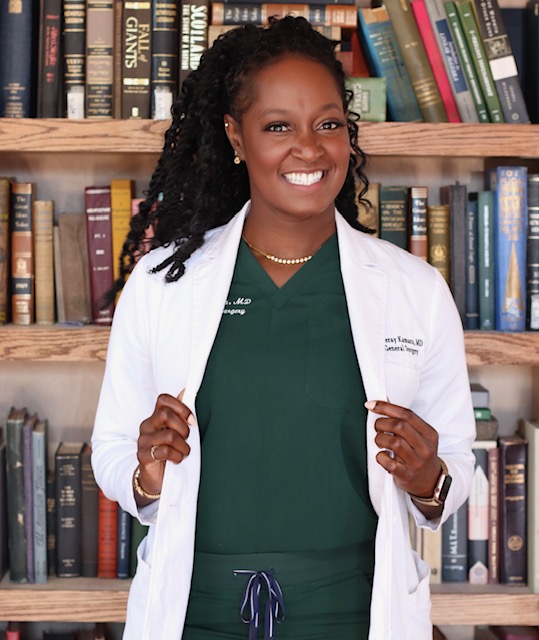
Dr. Maseray Kamara is a dedicated colorectal surgeon with a passion for both surgical excellence and public health advocacy. From a young age, she aspired to become a doctor, initially drawn to cardiology. However, her journey in medical school led her to discover her true calling in surgery, where she found the immediate impact of resolving medical conditions through operative intervention deeply rewarding. It was during her residency that she found her niche in colorectal surgery—a field that allows her to improve not only surgical outcomes but also the overall health literacy of her patients and the community.
For Dr. Kamara, colorectal surgery is more than just operating on patients—it is an opportunity to educate people on crucial aspects of their health.
“I’m deeply passionate about increasing health literacy, making sure people understand their bodies, and empowering them to take control of their health. Colorectal surgery allows me to do just that—whether it’s through discussions about colorectal cancer awareness or helping patients improve their quality of life with better digestive health,” Dr. Kamara tells BlackDoctor.org.
By empowering individuals with knowledge, she hopes to encourage proactive health management, early detection, and prevention.
“What I love about colorectal surgery is that it’s not just about performing operations; it’s about having meaningful conversations with patients. Many people don’t realize how closely gut health is tied to overall health. I get to talk to my patients about things they might not feel comfortable discussing, such as constipation, bowel habits, and what a normal bowel movement should look like. These may not be glamorous topics, but they are essential to good health,” Dr. Kamara adds.
One of the most significant advancements in colorectal surgery is robotic-assisted procedures. Dr. Kamara specializes in robotic surgery, a minimally invasive technique that offers numerous benefits for both patients and surgeons. By using small incisions instead of large abdominal cuts, robotic surgery enhances wound healing, reduces pain, and allows for quicker recovery times.
“As a surgeon, the technology allows me to operate with enhanced precision. The robotic system gives me a magnified view of the surgical site and allows for finer, more controlled movements—especially important when working in tight spaces like the pelvis. This means safer, more effective surgeries for my patients,” Dr. Kamara shares.
Dr. Kamara is also actively involved in research aimed at optimizing patient recovery through Enhanced Recovery After Surgery (ERAS) protocols. These protocols focus on standardizing preoperative, intraoperative, and postoperative care to improve outcomes and shorten hospital stays. Key components include:
“By following these guidelines, we can get patients home sooner, minimize complications, and improve their overall experience,” Dr. Kamara notes.
As a first-generation Sierra Leonean American, Dr. Kamara’s approach to medicine is deeply influenced by her background. Growing up, she heard countless stories from her family about the challenges of accessing healthcare in Sierra Leone. These experiences shaped her commitment to addressing healthcare disparities and ensuring that all patients—regardless of their background—receive clear, compassionate, and effective medical care.
One of her key priorities is improving patient communication. She witnessed firsthand how overwhelming the healthcare system can be for patients who do not fully understand their diagnoses or treatment plans.
“That experience instilled in me a commitment to patient communication. I make it a point to sit down with my patients, explain their conditions in clear terms, and ensure they understand their options. No one should walk away from a doctor’s visit feeling more confused than when they arrived,” Dr. Kamara shares.
Dr. Kamara also believes in reaching beyond the walls of her clinic. “Through community events, public speaking, and media outreach, I strive to provide people with the tools they need to advocate for themselves and their loved ones,” she notes.
Beyond the operating room, Dr. Kamara is a passionate advocate for health literacy. She uses various platforms—including social media, online articles, and public speaking engagements—to educate the public about colorectal health. Through her Instagram account (@Dr.Kamara), she shares valuable insights on topics such as:
“I recognize that most people aren’t watching traditional news or reading medical journals—they’re scrolling through their phones. So, I meet them where they are, using digital platforms to share accurate, accessible health information. If we can normalize conversations about colorectal health, we can help more people take action before it’s too late,” Dr. Karmara says.
RELATED: What’s Hiding in Your Stool? A New Test For Detecting Colon Cancer
Despite being one of the most preventable cancers, colorectal cancer remains a major health concern, particularly in underserved communities. Dr. Kamara highlights several key barriers to screening:
“I always emphasize that colonoscopy is the gold standard because it doesn’t just detect cancer—it can prevent it by removing precancerous polyps. But for those who are hesitant, stool-based tests are another option. My message is simple: some screening is better than no screening,” Dr. Kamara advises.
RELATED: Know Your Risk: 10 Things Blacks Need to Know About Colorectal Cancer
Colorectal cancer is highly treatable when detected early. Dr. Kamara urges people to be aware of key warning signs, including:
“Too often, people dismiss these symptoms or assume it’s just hemorrhoids. If something feels off, advocate for yourself and see a doctor,” Dr. Kamara adds.
In addition to screening, Dr. Kamara highlights lifestyle modifications that can reduce the risk of colorectal cancer:
“Simple changes today can make a big difference in long-term health,” Dr. Kamara shares.
As advancements in surgery and technology continue to evolve, Dr. Kamara is particularly excited about innovations that enhance patient outcomes. Techniques such as natural orifice specimen extraction (NOSE) allow for even smaller incisions, further reducing pain and recovery time. By refining minimally invasive approaches, surgeons can improve patient experiences while maintaining high surgical precision.
“My goal is always to help my patients get back to their lives as quickly and safely as possible,” she says.
RELATED: “If Only We Knew Sooner”: One Woman’s Fight to Raise Colon Cancer Awareness
As we commemorate Colorectal Cancer Awareness Month, Dr. Kamara encourages everyone to start conversations about family medical history, embrace healthier habits, and prioritize screening. Her ultimate goal is to normalize discussions about colorectal health and ensure that no one is left uninformed or unprepared when it comes to their well-being.
“Above all, if you’re due for a colonoscopy—get it done! It’s a simple step that could save your life,” Dr. Kamara concludes. I hope that by sharing this message, more people will prioritize their well-being and take the necessary steps to prevent colorectal cancer. If we talk about it, we can tackle it—together.”


By subscribing, you consent to receive emails from BlackDoctor.com. You may unsubscribe at any time. Privacy Policy & Terms of Service.