As you prepare to head out into the sun this summer, it’s important to protect yourself. Of all the skin cancers, melanoma is the one that scares doctors and patients the most and unfortunately, many Black Americans are unaware that they are at risk of developing it.
“The patients have to understand they are at risk so they can come to the doctor,” Meena Moossavi, MD, a dermatologist practicing in Detroit, Michigan says. “The providers need to know what to look for so they can diagnose as soon as possible.”
Luckily, there are now several options for treatment should you be diagnosed with this aggressive, sometimes deadly, cancer.
“If you get diagnosed right away, it’s a better prognosis than when the diagnosis is made after months or years,” Moossavi adds. “I’ve been talking about this with the [medical] students and residents and we always come to the same conclusion: Education is the most important thing.”
Melanoma affects over 1 million Americans, and its rates have risen significantly in the past 30 years, according to the American Academy of Dermatology (AAD). Although Black people less likely to develop melanoma than non-Hispanic White people, Blacks who do develop the cancer have a much lower five-year survival rate.
Here, experts explore what melanoma is, along with its causes, risk factors and key symptoms. Plus, you’ll learn about melanoma’s stages, types and treatments.
RELATED: Why Blacks Have Higher Melanoma Mortality Rates
The American Cancer Society (ACS) explains that cancer occurs when cells begin to grow out of control. Melanoma is a type of cancer that starts in the pigment-making cells, known as “melanocytes.” While not as common as other forms of skin cancer, it is more serious.
“Melanoma is more aggressive and more likely to spread to the lymph nodes,” according to Dr. Hugh Greenway, a dermatologic surgeon with Scripps MD Anderson Cancer Center and Scripps Clinic in California. “It’ll spread to the liver, to the brain and throughout the body if not checked.”
According to the AAD, ultraviolet light from the sun or tanning beds is the cause of melanoma.
Risk factors include:
To reduce these risks, Greenway recommends wearing sunglasses, a wide-brimmed hat and using a water-resistant sunscreen that protects against both UVB and UVA light when out in the sun.
“I tell my patients here at Scripps between a 30 to 50 [SPF sunscreen] is fine,” he advises.

The Skin Cancer Foundation lists four main types of melanoma:
RELATED: Skin Cancer Can Strike Your Nails: Here’s How to Check
So, what does melanoma look like?
Scripps MD Anderson Cancer Center says to be on the lookout for irregular-looking spots on your skin, new spots or ones that change size, shape, or color.
Other melanoma symptoms may include:
To help you identify a melanoma, Greenway suggests the A-B-C-D-E rule.
“‘A’ stands for asymmetry,” he explains. If you draw a line down the middle of a melanoma spot or mole, one half won’t typically match the other.
The “B” is borders that aren’t regular. “That one [mole] that’s got a lot of outcropping and things, we say that’s a little irregular,” he notes.
“C” stands for color. “All of a sudden if you’ve got a mole that’s got a lot of blacks in it, reds, different colors, that could be a sign that mole’s a problem.
‘D’ is just for being different, and ‘E’ is for a mole that’s sort of starting to evolve and change a little bit.”
He advises that itchy moles or ones you’re suddenly aware of could be early signs of melanoma, while bleeding moles may indicate more advanced stages of the disease.
According to the ACS, the stages of melanoma are:
Scripps states that melanoma treatments include:
One study published recently in the journal Cancer Discovery found that certain mRNA vaccines combined with immunotherapy helped reduce the risk of melanoma tumors returning, although more research is needed before this treatment is broadly available.
Early detection is also key to better melanoma outcomes, according to Greenway.
“You probably ought to have your skin checked once a year,” he recommends. “We know that if we can make the diagnosis [early], we can cure it with greater than 99% [cure rate] in most people.”
Malignant melanoma often begins as a new mole or a change in an existing mole. Common symptoms of malignant melanoma include:
Early detection is crucial, so monitoring any changes in your skin is important.
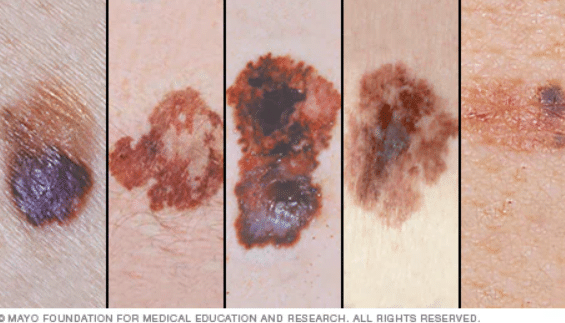
You can find melanoma symptoms pictures on reputable medical websites like the American Academy of Dermatology, the Mayo Clinic, or the Skin Cancer Foundation. These images help distinguish benign moles from potentially cancerous ones and show variations of melanoma across skin tones.
Catching melanoma in its early stages can drastically improve treatment outcomes.
Ocular melanoma symptoms (or eye melanoma symptoms) can be hard to detect early. They may include:
Since these symptoms can be subtle, regular eye exams are vital, especially if you are at higher risk.
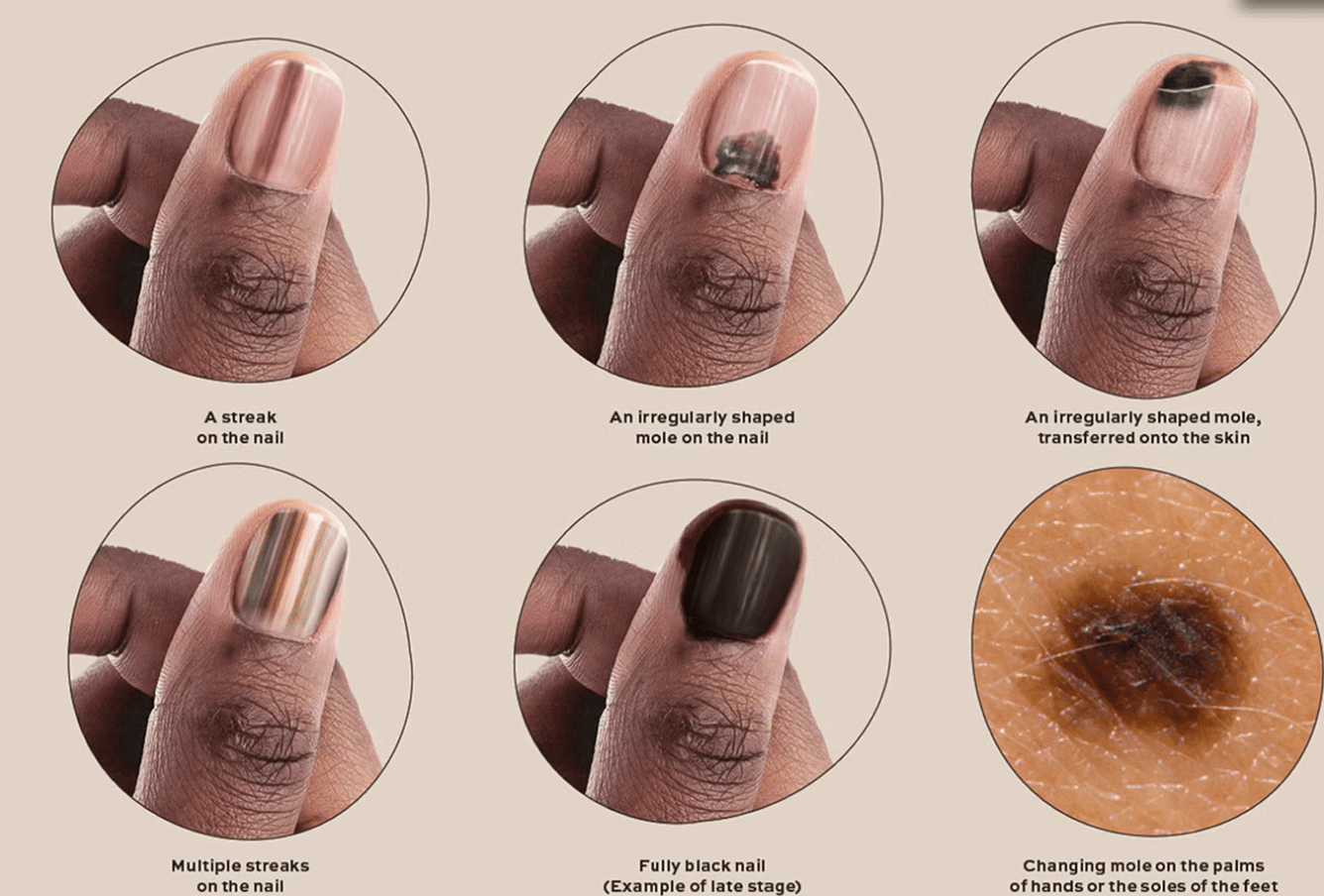
Fingernail melanoma symptoms, also called subungual melanoma, include:
If you notice persistent nail changes, consult a dermatologist.
Eye melanoma symptoms differ because they often don’t involve skin changes. Instead, symptoms may include:
Because this type of melanoma develops in parts of the eye not visible externally, it’s often diagnosed during routine eye exams.
Symptoms of late-stage melanoma (stage 3 or 4) may include:
At this stage, melanoma has typically spread beyond the skin to other parts of the body, making prompt medical treatment critical.


By subscribing, you consent to receive emails from BlackDoctor.com. You may unsubscribe at any time. Privacy Policy & Terms of Service.