The HIV virus affects millions of people around the world. Though, no one is more at risk for the disease than the Black community. There’s a list of reasons why Black Americans living with HIV remain at a disadvantage. The Centers for Disease Control and Prevention (CDC) reported that “Black people account for a higher proportion of new HIV diagnoses compared to other ethnicities.” Though, that doesn’t mean the disease has to take over our everyday lives and become a “death sentence.”
For far too long, stigmas surrounding HIV have resulted in a lack of preventative care and treatments for Black patients. In fact, with the right medication, the virus can be properly managed. Treatments can even control and inhibit symptoms like HIV rashes.
Furthermore, rashes have been known to be a common sign of the HIV virus. Understanding the signs of HIV, especially how the rash appears on darker skin can create more awareness around the virus. More importantly, it can lead to more effective treatment options for patients.
RELATED: Key Nutritional Supplements for Those Living with HIV
One of the first signs of HIV infection is the rash. It usually appears in the first few days after contracting the disease. The HIV rash can even show up after a person takes medication to treat the disease.
Furthermore, the rash will usually last two weeks to nearly a month. Making matters worse, the HIV rash can usually appear on our face. It’s one thing to have a face full of pimples but entirely another to deal with a skin rash.
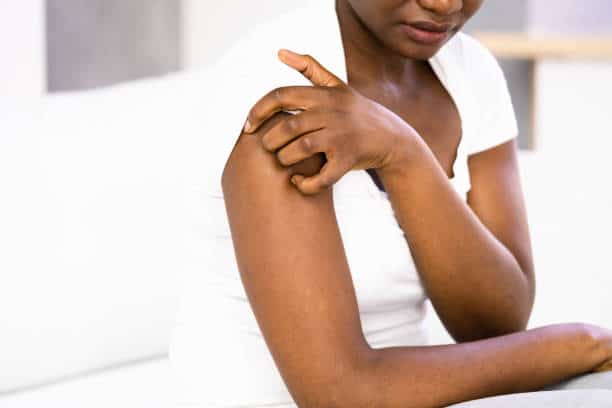
Having an HIV rash on our face or any kind of skin condition can make anyone feel extremely insecure. Unfortunately, the HIV rash acts very much like eczema, taking up residence on any part of our body, including our most vulnerable body parts like our hands and feet.
The skin condition can range from any color, depending on the color of a person’s skin. On darker skin, the infected area may appear purple.
Moreover, people living with HIV also have a weakened immune system that makes them susceptible to various kinds of infections like herpes and shingles. These diseases alone can then lead sufferers to develop HIV rashes as well.
However, just because a person has HIV or an HIV rash doesn’t mean it’s the end of the world. In fact, advancements in HIV medical treatment have come such a long way over the years that many people have gone on to live healthy lives. In fact, some even “receive an undetectable viral load” just by being on the right medication plan.
Those with HIV should definitely consult with their doctor and begin treatment right away. It’s recommended that patients start their treatment plan early to help with managing the virus.
Patients can even take steps on their own to help relieve symptoms, such as avoiding hot showers and direct sunlight. On the other hand, their doctor can prescribe them certain medications to treat the disease, such as an anti-itch cream like hydrocortisone. In the end, a heavily medicated cream can reduce itchiness.
RELATED: HIV Diet: What to Eat and What to Avoid
Unfortunately, scratching can lead sufferers to experience green or yellow fluid draining from the affected area. Even worse, the skin could swell, grow crusty, and feel warm to the touch.
Obviously, attending routine doctor’s visits and taking the prescribed medication can really create a sense of physical well-being for HIV sufferers. Even more so, it can really help those who struggle with HIV rashes. Taking our treatment means taking back control of our health and our lives.


By subscribing, you consent to receive emails from BlackDoctor.com. You may unsubscribe at any time. Privacy Policy & Terms of Service.