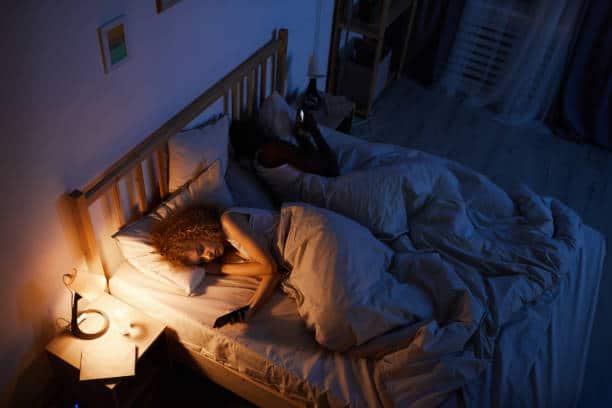
After a long day at work, you’re probably dreaming (pun intended) about taking a shower and getting in bed. And sometimes you may be so tired that you fall asleep with the lights on. However, as it turns out, having the lights on may not be good for your health. Keeping your bedroom dark not only helps you get a good night’s sleep, but may significantly lower your odds of developing three major health problems, a new study suggests. bedroom light
According to the study, older men and women who used night lights, or left their TV, smartphone, or tablet on in the room were more likely to be obese, and have high blood pressure and diabetes, compared with adults who were not exposed to any light during the night.
“Maybe even a small amount of light at night is not so benign, it can be harmful,” says lead author Dr. Minjee Kim, an assistant professor of neurology at Northwestern University Feinberg School of Medicine’s Center for Circadian and Sleep Medicine in Chicago.
She cautions, however, that the new study doesn’t prove that exposure to light during sleep causes any of these health conditions, only that there may be a link.
And, Kim says, there may be a biological explanation beyond disrupted sleep that ties light to an increased risk for obesity, diabetes and high blood pressure.
“It’s not natural to see those lights at night,” Kim adds. “Light actually turns off some of the parts in the brain that tell our body it’s the daytime versus nighttime. So those signals are messed up in a way, because the circadian signal is weakened, and over time, that has implications for our health.”
Over time this can lead to metabolic and heart diseases.
RELATED: 7 Bedtime Behaviors to Help You Sleep Better
Several factors may account for the worsening health effects of overnight exposure to light, Wickwire says.
“First, light at night could worsen health by dysregulating the circadian clock,” he notes. “In addition to sleep, circadian health is vital for
the prevention of disease and optimal performance.”
Second, Wickwire notes, light is a powerful melatonin suppressant.
“Melatonin, also called the darkness hormone, is associated with multiple health properties, including anti-inflammatory and antioxidant properties. Light at night reduces melatonin,” Wickwire adds.
In addition to increasing physiologic stress, he says, light at night can also be a marker for overall poor health, as people awake at night may be engaged in other risky behaviors.
Getting a good night’s rest is needed for our overall health, but it isn’t always easy. Fortunately, there are ways to improve the level of sleep you are getting.
To get all the benefits sleep provides, Wickwire has this advice: “Create a sacred space for sleep,” he suggests. “Your bedroom environment should be cool, dark, quiet and uncluttered.”
Kim’s team also has tips about keeping bedroom lights to a minimum:


By subscribing, you consent to receive emails from BlackDoctor.com. You may unsubscribe at any time. Privacy Policy & Terms of Service.