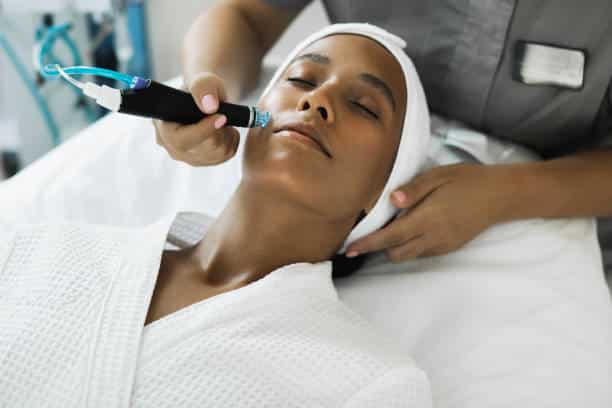
Laser hair removal works by directing light into pigmented hair follicles. That light is absorbed by melanin and converted into heat, destroying the follicle while sparing surrounding tissue. It’s why people with fair skin and dark hair often experience the best outcomes.
But dark skin contains more melanin overall, making earlier lasers vulnerable to misfiring: instead of heating only the follicle, the laser could heat the skin cells too. That has led to risks like burns, hyperpigmentation, hypopigmentation, and scarring, effectively excluding darker-skinned patients from safe treatment for decades.
Thankfully, innovation has changed that. Among modern devices, the Nd: YAG (1064 nm) laser now offers a safer path. Its longer wavelength penetrates deeper, targeting the follicle with minimal absorption by the melanin-rich epidermis above—a major breakthrough for darker Fitzpatrick skin types III–VI.
RELATED: Top 5 Benefits of Laser Hair Removal
The ideal laser meets two criteria: deeper follicle targeting with minimal epidermal interaction.
When you arrive for your laser hair removal appointment, expect a series of carefully planned steps designed to maximize effectiveness while minimizing risk, especially for melanin-rich skin. Understanding each phase of the session can help reduce anxiety and empower you to advocate for your skin’s needs.
Upon arrival, your practitioner will likely review your medical history, confirm you haven’t had recent sun exposure or used contraindicated skincare (like retinoids), and examine the treatment area. This is also when they’ll verify your skin type and hair color to determine the optimal laser settings, particularly important for darker skin tones, where minimizing melanin interaction is crucial.
Before beginning, the technician will thoroughly cleanse the skin to remove any oils, lotions, or debris. You’ll also be asked to wear protective goggles to shield your eyes from the laser light.
If your clinic uses contact cooling systems, a cooling gel may be applied to the treatment area to help with temperature regulation. For other systems, like those with cryogen spray or built-in cooling tips (like the GentleMax Pro), they’ll activate these tools during the treatment to protect the skin’s surface.
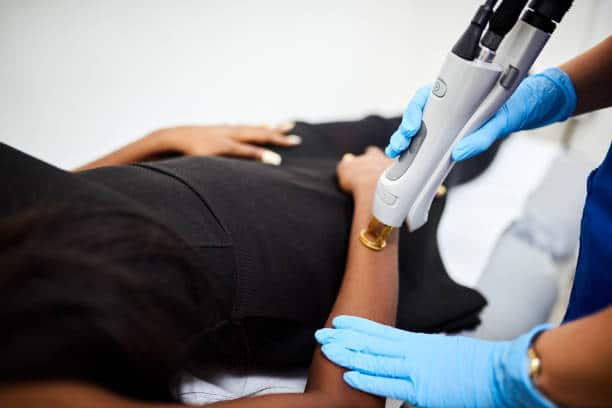
Once your skin is prepped and protective measures are in place, the technician will begin applying the laser in a grid-like pattern across the treatment area. The laser emits highly concentrated pulses of light that pass through the epidermis to target the melanin in the hair shaft and follicle.
For those with dark skin, the Nd: YAG 1064 nm wavelength is typically used because it penetrates deeper and bypasses surface melanin. The treatment is precise, and your technician may make slight adjustments to the laser’s settings based on your real-time response to avoid overheating the skin.
You may feel a sensation often described as a quick snap or flick, similar to a rubber band being snapped against the skin. However, discomfort varies depending on the area being treated, hair density, and your personal pain threshold. Most modern systems incorporate cooling features to keep discomfort minimal, and some clinics offer numbing creams if needed (though these are usually not required for smaller areas).
The length of the session depends on the size of the treatment area:
Technicians may pause periodically to assess your skin’s response, adjust settings, or apply cooling between passes—especially important for dark skin, where overheating increases the risk of post-inflammatory hyperpigmentation.
RELATED: Razor Blades or Laser Rays? Hair Removal and Your Skin
Right after the treatment, it’s common to experience mild redness (erythema), swelling around hair follicles (follicular edema), and a sensation of heat or tingling in the treated area. These are normal and usually subside within a few hours to a couple of days.
In some cases, you may notice the treated hairs looking darker or slightly raised—this means the follicles were successfully targeted. These hairs often “shed” on their own over the next one to three weeks, not to be mistaken for regrowth.
At this point, your technician will typically apply a calming cream (like aloe vera, hydrocortisone, or a vitamin-rich post-laser treatment cream) and give you post-care instructions.
Even with modern lasers, caution is warranted:
Maximizing Safety & Success
Laser hair removal finally offers safe, effective outcomes for darker skin—but only when backed by knowledge, technology, and trust. Do your research, follow expert advice, and embrace lasting smoothness tailored to you.


By subscribing, you consent to receive emails from BlackDoctor.com. You may unsubscribe at any time. Privacy Policy & Terms of Service.