From tax reform to shifts in healthcare, immigration, and SNAP, this legislation will likely affect you
Congress has passed its newest—and most sweeping—spending bill: the One Big Beautiful Bill. Backed by the Trump administration and passed through reconciliation (a process allowing budget-related laws to bypass a Senate filibuster), the bill touches nearly every corner of the federal government. It adjusts taxes, slashes Medicaid, changes food assistance rules, ramps up immigration enforcement, and raises the debt ceiling—all in one legislative package.
Here’s what’s actually in the bill—and how it may affect you, according to USAFacts.
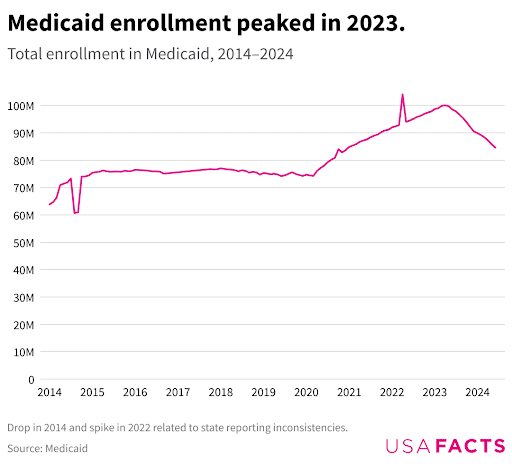
The bill slashes federal funding for Medicaid, the healthcare program that covers many low-income Americans, including a large portion of Black families.
Let’s break it down:
Since the Affordable Care Act expanded Medicaid in 2014, over 90 percent of Americans have had health coverage. That era of near-universal coverage may be reversing. Cuts to Medicaid may also ripple through hospitals and state budgets, especially in states that rely heavily on federal healthcare funding.
Impact on Black Americans: Black Americans are disproportionately represented among Medicaid recipients due to long-standing racial disparities in income, employment benefits, and access to care. These cuts threaten not only insurance coverage but also access to preventative care, maternal health services, and treatment for chronic conditions like diabetes and hypertension—all of which disproportionately affect Black communities.
This bill locks in some of the tax cuts first passed in 2017, most of which helped higher earners. It also makes a few adjustments:
The average Black household earns about $52,000 per year, and that income range sees only modest tax savings under these changes. Meanwhile, households earning over $100,000—which are disproportionately white—see more significant breaks.
Bottom line: If you’re working class or middle class, especially in a high-cost city, you might see small benefits, but high earners walk away with much more.
Impact on Black Americans: Due to enduring racial wealth gaps and income disparities, Black households are less likely to benefit from deductions tied to homeownership, high earnings, or capital income. The reduction in the child tax credit and the continued erosion of progressive tax structures may widen the racial wealth gap, making upward mobility even more difficult for many Black families.

SNAP—what used to be called food stamps—is on the chopping block in this bill.
Here’s what’s changing:
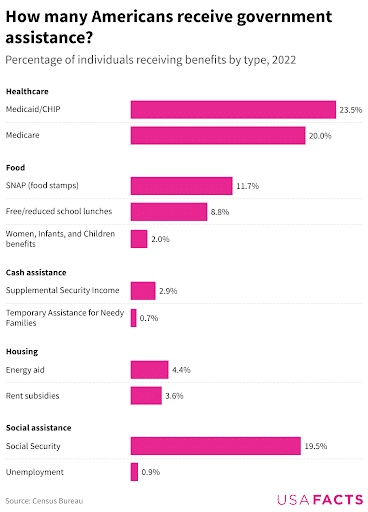
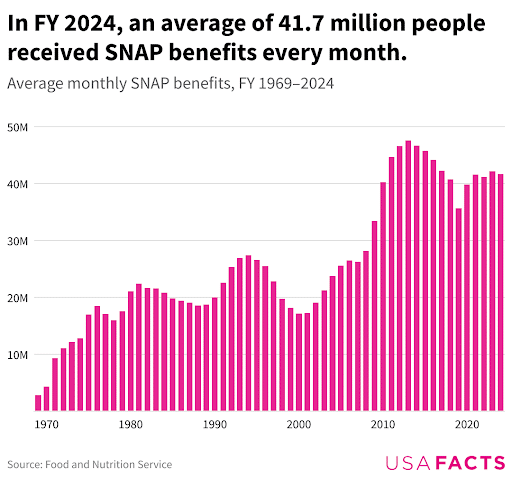
In 2024, over 12 percent of all Americans relied on SNAP, and Black households were overrepresented in that group due to systemic wage disparities and job discrimination. The average monthly benefit was about $188 per person.
Food insecurity is already higher in Black communities. These cuts could mean longer food pantry lines, more skipped meals, and even harder decisions between rent, groceries, and medicine.
Impact on Black Americans: Black households have historically experienced higher rates of food insecurity. Nearly one in four Black Americans relies on SNAP at some point during the year. Stricter work requirements and funding cuts may disproportionately harm Black communities, especially where job opportunities are limited or unemployment is high.
The bill pumps billions into ICE and Customs and Border Protection (CBP)—two agencies responsible for deportations and immigration enforcement. In 2024 alone, over 678,000 people were deported—a sharp rise.
This doesn’t just affect people from Latin America. Roughly one in 10 Black Americans are immigrants, and many Black immigrants—from Haiti, Nigeria, Jamaica, and elsewhere—face higher rates of detention and deportation than other groups.
The increased ICE and CBP budgets signal tougher enforcement and more resources for removal, not for reform or asylum support. For many Black immigrant families, this raises fears of separation, surveillance, and legal precarity.
The bill pours billions into border security and immigration enforcement. Funding for:
Deportations are on the rise. By November 2024, the U.S. had already deported 678,000 people—a major increase from previous years.
Since 2003, CBP’s budget has more than doubled, and ICE’s has nearly tripled. The new bill locks in this trajectory, prioritizing stricter enforcement over immigration reforms or expanded legal pathways.
Impact on Black Americans: Though often overlooked, Black immigrants—particularly from the Caribbean and Africa—are more likely to be detained and deported than immigrants from other regions. Enhanced enforcement measures may exacerbate racial profiling and add stress to mixed-status Black families and communities, especially in urban centers.
To pay for some of these provisions—and to keep the government funded—the bill also:
In FY 2024, the government collected $4.9 trillion in revenue. About 49 percent came from individual income taxes, with corporate taxes making up 11 percent.
The bill tilts further toward tax relief, particularly for corporations and higher earners, even as the federal deficit remains a long-term fiscal concern.
Impact on Black Americans: The shift toward corporate tax relief and reduced social spending suggests a federal budget increasingly disconnected from the needs of working-class Americans. For Black communities, already navigating systemic inequities in education, housing, healthcare, and employment, these shifts could mean fewer public resources at a time when investment is most needed.
The One Big Beautiful Bill is more than a budget. It’s a broad restructuring of federal priorities, reflecting the Trump administration’s goals: smaller social safety nets, lower taxes, tougher immigration enforcement, and deregulation.
Whether you’re a taxpayer, healthcare recipient, business owner, SNAP beneficiary, or immigrant, this bill likely touches your life.
For Black Americans, the stakes may be even higher. Decades of economic and social exclusion have made federal programs like Medicaid, SNAP, and progressive taxation critical to narrowing racial disparities. As these systems are rolled back, the communities most reliant on them could face deeper challenges in health, housing, nutrition, and financial security.
Stay informed. Policy changes affect more than the headlines—they shape your everyday reality.


By subscribing, you consent to receive emails from BlackDoctor.com. You may unsubscribe at any time. Privacy Policy & Terms of Service.