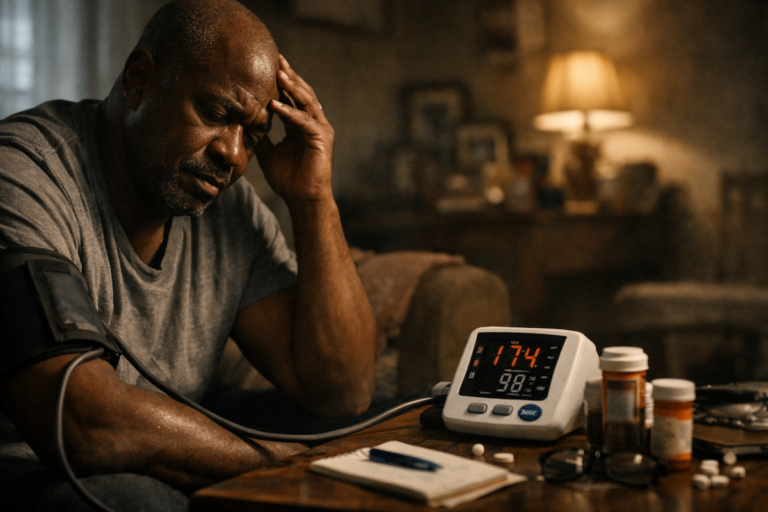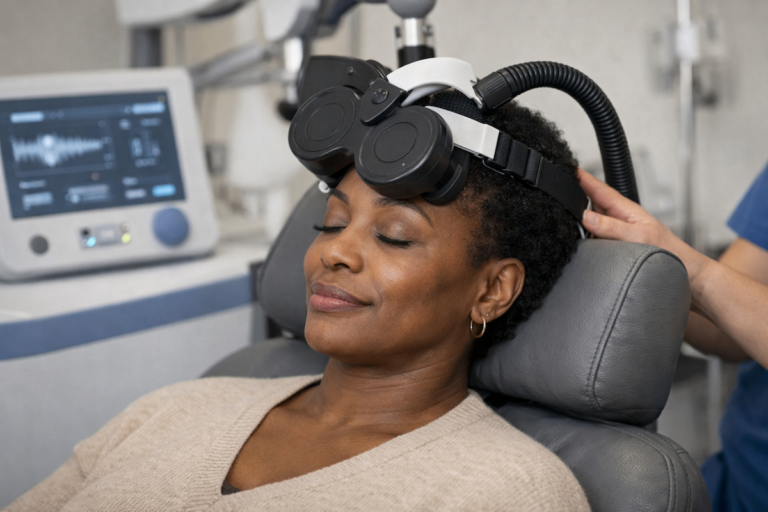
The mind can play an important role in treating headaches and other types of chronic pain. Biofeedback helps people recognize and control the tension and stress that can fuel pain. Specifically, it can teach you to release the tension in your muscles and improve your circulation, two steps that can significantly ease many types of pain.
Biofeedback is a tool that helps people gain more control over their bodies. It works by translating subtle physical changes into easy-to-read signals. Through biofeedback, patients can learn how their state of mind affects their circulation, tension, and pain. In the end, they often feel more relaxed and more in control. Biofeedback is often used in combination with other relaxation and stress-reducing approaches, including exercise, meditation, or physical therapy.
RELATED: What Not to Do During a Migraine
Biofeedback works by translating subtle physical changes into easy-to-read signals. A session starts when a therapist attaches sensors to your skin, usually a thermistor that measures the temperature of a finger and/or an electrode that registers the tension in sore muscles. These sensors don’t just spit out numbers.
The electrodes, for instance, may be hooked up to a pair of headphones that translate tension into sound; the thermistor can be attached to a flashy computer-generated graph.
The therapist will then help you relax, perhaps by asking you to imagine a quiet, peaceful place or by teaching you a breathing technique. As your mind becomes calm, the temperature in your finger may rise from, say, 88 degrees to 94 degrees, a sign that your circulation is improving.
The readings from the electrodes may drop from perhaps seven microvolts to three microvolts, indicating that your muscles are becoming relaxed. You would normally overlook such changes, but the biofeedback system makes them impossible to ignore.
Thanks to biofeedback, the connection between your brain and your body becomes a two-way street. You suddenly become aware of your ability to enhance your blood flow and release tension, actions that once seemed beyond your control.
And after 10 or 12 sessions, this ability becomes so ingrained that you can call on it whenever you need pain relief. You won’t have headphones or blinking lights to guide you when you relax at home, but the subsiding pain will give you all the feedback you need.
Pain centers around the country incorporate biofeedback into their treatments, often in concert with other relaxation therapies such as hypnosis. In the hands of a competent technician, these techniques can be a valuable addition to the standard treatments of exercise and medication.
Biofeedback is most useful for stress-related pain, especially migraines and tension headaches. As reported by the American Pain Society, migraines generally respond best to temperature feedback while tension headaches are best treated with electrical feedback.
A study published in the journal Pain found that a combination of biofeedback and relaxation cut migraine pain by 43 percent. A meta-analysis of 53 studies concluded that biofeedback can be an effective treatment for tension-type headaches, and a review of 55 studies found it to be effective for migraines as well.
There is ample evidence that biofeedback can also ease the pain of chronically sore backs, necks, and shoulders. It may even help relieve some of the most serious and vexing forms of pain.
A small study published in Applied Psychophysiology and Biofeedback found that biofeedback can reduce phantom limb pain, the difficult-to-treat pain that lingers after an amputation.
A report from the American Cancer Society notes that biofeedback may be able to ease pain and improve the quality of life for some cancer patients.
Not every type of pain responds to biofeedback. The therapy is not recommended for sudden, severe lower back pain and other aches caused by temporary injuries.
Biofeedback is very safe. Before you get started, though, you should check with your doctor to see if there are other, more direct ways to control your symptoms. You can also ask if he or she thinks biofeedback might be worth a try.
You can search for qualified therapists in your area by visiting Biofeedback Certification Institute of America. Click on “How can I find a practitioner near me” and enter your city, state, and zip code.


By subscribing, you consent to receive emails from BlackDoctor.com. You may unsubscribe at any time. Privacy Policy & Terms of Service.