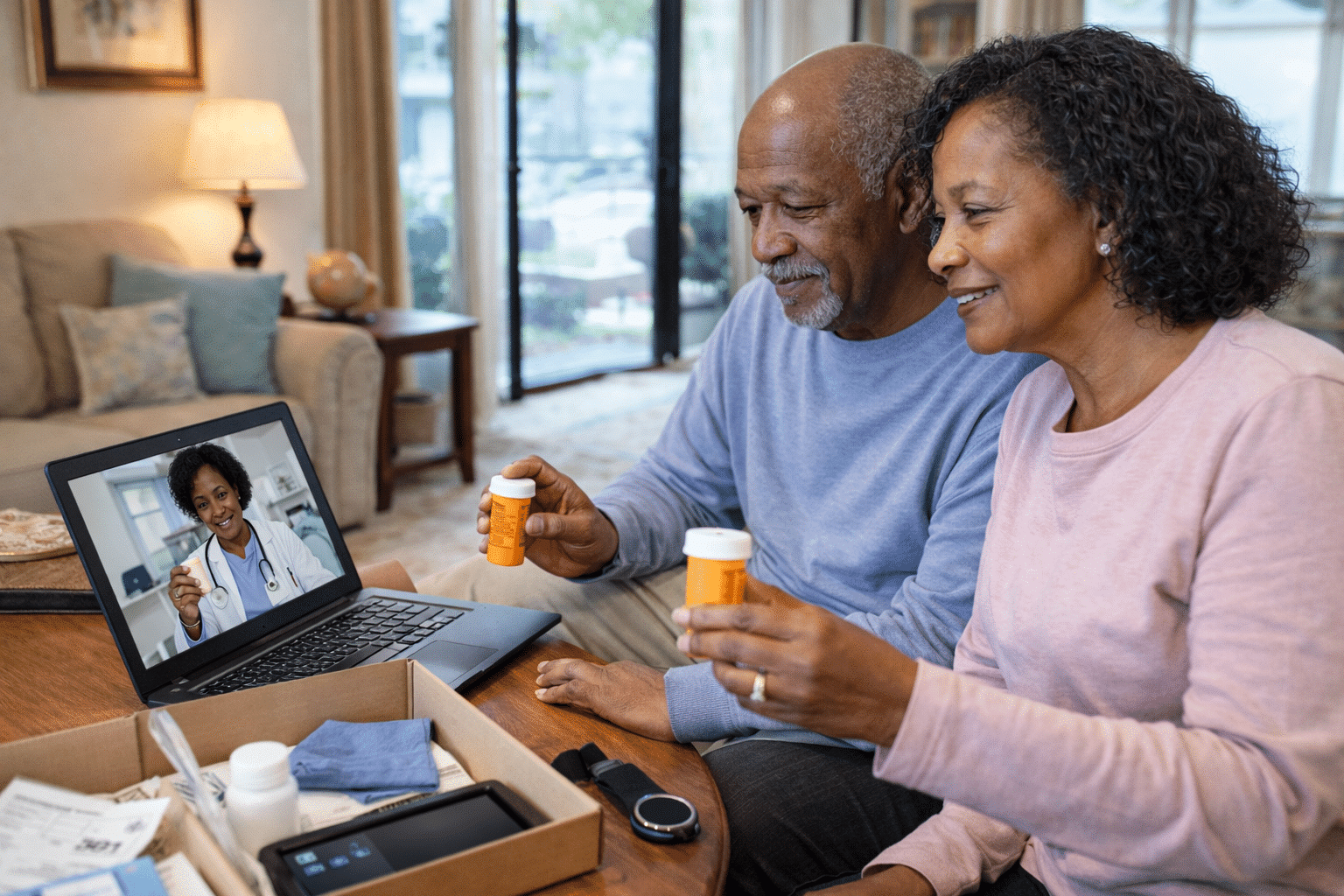
If you’ve ever looked into participating in a clinical trial, you might’ve discovered the process isn’t always simple. It often requires conversations with your healthcare provider, research into available studies, and careful consideration of whether a specific trial fits your medical and personal needs. For many patients, the decision-making process can feel overwhelming.
One of the most common challenges is the potential costs of participation. Travel expenses, lodging near research sites, time away from work, and caregiving responsibilities can all create obstacles. Because most clinical trials are conducted at major academic medical centers or large research hospitals, patients may be required to travel repeatedly—sometimes over months or even years—to attend appointments, complete evaluations, and receive treatment.
These barriers significantly limit participation rates, particularly among Black Americans. According to the National Cancer Institute, Black Americans remain underrepresented in clinical trials, typically accounting for only about 5% to 7%. At the same time, Black communities are disproportionately affected by conditions like hypertension, diabetes, and certain cancers. Yet they are often underrepresented in the research that helps develop new treatments for these very conditions.
One company, Science 37, is working to address this gap by offering at-home clinical trials.
Science 37 aims to close the participation gap by bringing clinical research directly to patients’ homes. The company has become the first FDA-inspected clinical trial site to deliver decentralized trials nationwide.
Rather than requiring participants to travel to centralized research facilities, Science 37 deploys licensed investigators and mobile research teams across all 50 states. Operating as a single FDA-inspected site, the company meets patients where they live—eliminating geographic barriers that have historically limited access to research opportunities.
“Our approach is different from what others are currently doing in this space,” says Tyler Van Horn, CEO of Science 37. “We go directly to the patient’s home, providing a seamless clinical trial experience that eliminates the need for them to travel and spend long hours in hospital settings.”
In a typical trial, only a small percentage of patients have access to research opportunities within their immediate geographic area. By expanding beyond traditional site locations, the company aims to reach individuals who otherwise would not have the opportunity to participate.
Over the past 18 months, Science 37 has been inspected by the U.S. Food and Drug Administration (FDA) three times. Each inspection resulted in a “No Action Indicated” classification, meaning regulators identified no violations or issues requiring corrective action. This designation indicates that the company’s operations were found to be compliant with federal regulatory standards.
“It has been beneficial both for the patients we serve and for advancing research more efficiently,“ Van Horn says.
In recent years, Science 37 has expanded its work across multiple therapeutic areas, including central nervous system disorders, respiratory conditions, cardiovascular disease, and metabolic disorders. The company has also supported pediatric trials and research focused on rare and ultra-rare diseases—areas where patients often manage complex or chronic conditions. In many of these cases, at-home participation may not simply be more convenient; it may be essential to enrollment.

The direct-to-patient model may be especially meaningful for communities that have historically faced barriers to trial participation, including Black Americans.
Lower participation among Black Americans has long been shaped by both structural barriers and medical mistrust. Historical injustices in research, combined with limited access to trial sites and insufficient outreach in Black communities, have reinforced hesitation around enrollment.
At the same time, representation in clinical research is essential. When Black Americans are underrepresented in trials, new treatments may not fully reflect how therapies work across diverse populations—potentially contributing to ongoing health disparities.
For Black Americans living with chronic conditions such as heart disease, diabetes, or respiratory illness, clinical trials may offer access to new treatments before they become widely available. A decentralized, at-home model may make participation more realistic for those balancing work, family, or mobility challenges.
Most importantly, greater representation in clinical trials helps ensure that new medications are tested across diverse populations, improving safety data, dosage guidance, and treatment effectiveness for Black patients specifically.
Addressing underrepresentation requires both rebuilding trust and reducing logistical burdens.
At-home clinical trials may help mitigate structural obstacles by eliminating travel requirements and reducing time away from work or family responsibilities. For individuals managing chronic conditions, limited mobility, or caregiving duties, the option to participate from home could make enrollment more feasible.
For patients interested in learning more, discussing clinical trial options with a healthcare provider is often the first step. Clinical trial registries and research institutions also provide searchable databases where individuals can review eligibility criteria and study requirements.
As healthcare continues to evolve, models that reduce barriers and increase representation may help ensure that new treatments reflect the needs of Black communities. Expanding access is not only about convenience—it is about equity in care and health outcomes.



By subscribing, you consent to receive emails from BlackDoctor.com. You may unsubscribe at any time. Privacy Policy & Terms of Service.