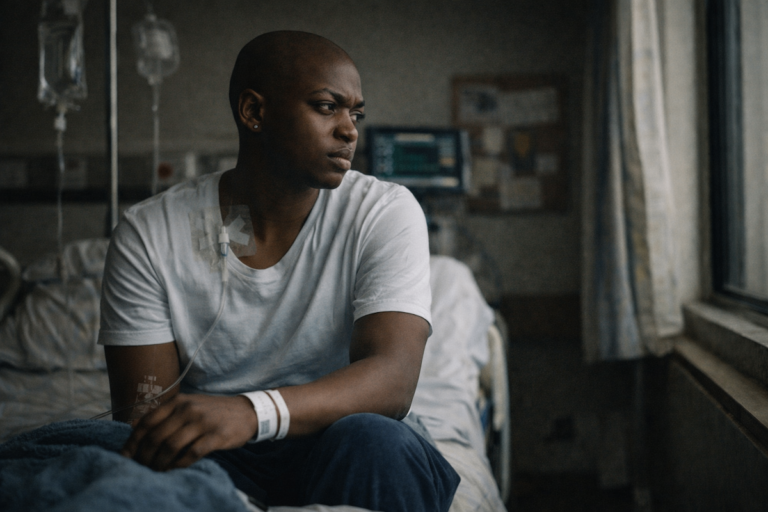
In 2019, Jermayne Harris spent his time in a hospital bed writing the menu for his food truck while navigating an unthinkable diagnosis.
Diagnosed with advanced heart failure at just 23, what most would see as an ending, Harris saw as the beginning.
Harris first began noticing symptoms in 2017 after experiencing a cold that lasted for over a month.
He was in his physical prime, yet the cold-like symptoms made it difficult for him to breathe.
“Eventually, it got to the point where it was hard to get moving, to go up and down the steps. It got harder to be at work, on my feet for several hours and then eventually I started swelling,” Harris tells BlackDoctor.org. “It got to the point where I couldn’t function anymore— couldn’t keep up with work or competition. And so I drove myself to the hospital, and the next morning I found out I had congestive heart failure.”
Harris was put on medication, given a ZOLL LifeVest, and later received a defibrillator.
After a stable 2018, his health began to decline again.
“This was around November 2018 into early 2019. On January 1st, I had a panic attack at work, and I feel like from that point on, my health really took a turn for the worse over the next couple of months,” Harris adds.
In 2017, his ejection fraction—a measure of how much blood the heart pumps with each beat—was just 15%. By 2019, it had dropped even lower.
“My heart was pumping at 10%, so it had gotten significantly worse. I was in the hospital for about four days. I got out, but I didn’t feel as good as I had the first time. Over the next 30 days or so, I think I threw up every day. That’s when I found out I had a blood clot in my line as well,” he says.
“Like I said, 2018 was a really good year. I felt like I was going in the right direction. My ejection fraction had gone up to about 40%, which was really good considering where it started. So to see it go back down and start feeling those symptoms again— I was also struggling with a lot of PTSD at the time— that was actually scarier than the first time. Because now I knew what was going on, and it felt worse, so I really didn’t know what to expect from there.”
By late March, Harris was back in the hospital and no longer responding to medication.
RELATED: Heart Failure In Your 20s? The Unknown Condition That Needs Awareness
He was life-flighted to another hospital. That’s when the option for an ABBOTT HEARTMATE 3 LVAD (left ventricular assist device) was presented. On April 4, 2019, Harris underwent open-heart surgery.
“They put the LVAD in, and I got out around April 21st, I think— it was Easter Sunday of 2019. So I’ll never forget that day,” Harris, who’s been listed on the heart transplant list since then, shares.
After surgery, Harris had to relearn basic life skills.
“I had to learn how to walk again. I believe I was in bed for about 16 days. Even just learning how to sit up straight or take a deep breath— those were the physical things I had to go through,” he notes.
Emotionally, the journey was just as difficult.
“Being on the LVAD, physically, I’ve handled it better. But emotionally— especially before the surgery— having that conversation with my mom about power of attorney and a will, that was probably the hardest part emotionally. Just having to explore those options and knowing that the surgery itself was a risk,” he adds.
Since then, Harris’s quality of life has significantly improved.
“The LVAD is doing exactly what it’s supposed to do. Would I love for my heart to be functioning on its own by now? Absolutely. But I’m thankful to say that the device is doing its job, and I’m still able to live a full life,” he shares.
RELATED: Which Heart Failure Device Is Right For You?
During his hospital stay, Harris found joy and inspiration from watching Food Network, which sparked the idea for a food truck.
“While I was in the hospital, watching Food Network and all these different shows, seeing the different techniques people were using, it kind of pushed me to start writing a menu. The biggest thing for me was that I wanted everything to be made from scratch. I didn’t want to open any cans or use any pre-made sauces. I wanted everything to be mine,” Harris says.
What started as an idea soon became a reality.
“I had been running a catering and meal prep business since 2017. But the food truck came later. I was able to purchase it, and I have to say, one thing about the community is that I’ve felt very loved and supported by the people around me— especially my family,” Harris adds.
“My support system is my church community— even people I didn’t know personally, like those from social media, showed up and supported me so much. Our first food truck event was actually a success because of that. It was really good to see everyone come out and support me. It was overwhelming in a good way. I think just being loved by the community means a lot,” Harris shares.
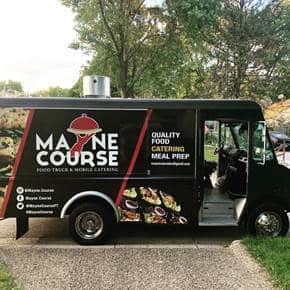
Harris eventually sold the food truck and shifted focus to catering part-time and mentoring students as a culinary arts teacher in Columbus, Ohio.
“It really started after I got out of the hospital in 2019. Because I had the LVAD, I couldn’t work long or physically demanding hours, so it was hard to find a job. I eventually started working at a place here in Columbus where I was able to teach young kids how to cook. I think that’s where it all started,” Harris shares.
“Then I got the opportunity to work at a high school—actually, the same performing arts high school I graduated from. It’s called Columbus Downtown High School. I started there as an assistant to the culinary program. Then, when one of the teachers left, I was able to step into that position. And it’s been amazing,” Harris, who’s also a football coach, adds.
Harris sees the opportunity as a way to pass along the lessons he’s learned.
“I see myself in a lot of my students. It’s great to help them connect the dots—when they have all these new ideas but aren’t quite sure how to bring it all together. I get to help them do that, and then send them off to college where they can continue to grow and build on that knowledge,” Harris explains.
It also means a lot to Harris to be someone his students can see themselves in.
“Probably 90 percent of my students are African American,” he notes. “It’s powerful to be able to show them that I come from the same place they do—same city, same school system, same circumstances. I even went to the same school and went through the same culinary program. So being able to show them what’s possible, that they really can do whatever they set their mind to— that matters.”
RELATED: Heart Failure at Age 30: “I Was Absolutely Terrified”
Over time, Harris has developed a better understanding of flavor without relying on salt.
“I’d say watching the Food Network really helped with that. I just try to keep things as heart-healthy as possible,” he notes.
His advice? Trust the doctors.
“That’s one part of this journey I’m really proud of— I followed what they told me to do, and I stuck to it until they said it was okay to change things,” he adds. “Eventually, I didn’t have to be on that strict diet anymore, but I didn’t ease up until my doctors cleared it. Over time, you do get better at it. Anybody can— it just takes discipline. I also think it’s really important to read food labels now. One thing I struggled with when I had to cut out salt was that I turned to sugar instead— and while it doesn’t have the same effect, it’s not exactly a great substitute either.”
As a husband and father to a daughter who depends on him, Harris urges others—especially young adults who may not think they’re at risk for heart failure—to get checked if something feels off.
“I think if I had waited any longer, it could’ve gotten a lot worse. I think the swelling was really what pushed me to finally go to the hospital. And I one hundred percent understand people’s mistrust of the medical field— especially in our community— but I think it’s so important to know what’s going on with your body. It’s not just about you— it affects the people around you, too,” he says.
Harris is now prioritizing fatherhood, teaching, and maintaining an active lifestyle, especially given his family’s history of health issues.
“In a lot of Black households—especially in mine—high blood pressure and diabetes run deep, so that’s something I’ve always had to be careful about. And then there’s just trying to stay active. Obviously, being on the LVAD, it hasn’t always been easy to stay physically active,” he shares. “There are days when your body just doesn’t agree with what your mind is telling you to do. Some days, you just can’t push through. But I always try to find a reason to get up and be the best version of myself.”
He’s also making progress on weight loss.
“My goal is to get back down to about 200 pounds. I’m at 225 right now—down from 250—so I think I’m doing okay,” he says.
For Harris, it all comes down to purpose. Through his journey, he’s not only rewriting his own story, but helping others see the strength in theirs.

By subscribing, you consent to receive emails from BlackDoctor.com. You may unsubscribe at any time. Privacy Policy & Terms of Service.