
Imagine getting a test result back from your doctor that says something might be wrong, but they’re not sure what it means yet. The uncertainty can be daunting, especially when it involves something as serious as cancer. This is the reality for many people who undergo genetic testing for cancer. A recent study by Invitae shines a light on this issue, providing new insights into the significance of these uncertain genetic results, known as variants of uncertain significance (VUS). This study, which was presented at the 2024 American Society of Clinical Oncology (ASCO) Annual Meeting held in Chicago, not only addresses the challenges faced by patients but also underscores the critical importance of genetic testing across various cancer types.
Here’s what you need to know.
Genetic testing translates your DNA into information that medical professionals can use to understand your health better. Sometimes, these tests reveal changes in your genes that doctors don’t fully understand yet. These are called variants of uncertain significance, or VUS. They’re like finding a word in a book written in a language you don’t fully understand—it might be important, but without more context, you just can’t be sure.
Brian Reys, a clinical investigator and genetic counselor at UT Southwestern, explains, “Reclassification can be positive, meaning that it changes someone’s clinical care, or negative, indicating it doesn’t contribute to their health picture. This process is crucial as it can change a patient’s clinical care plan, such as recommending more frequent cancer screenings if a variant is found to increase cancer risk.”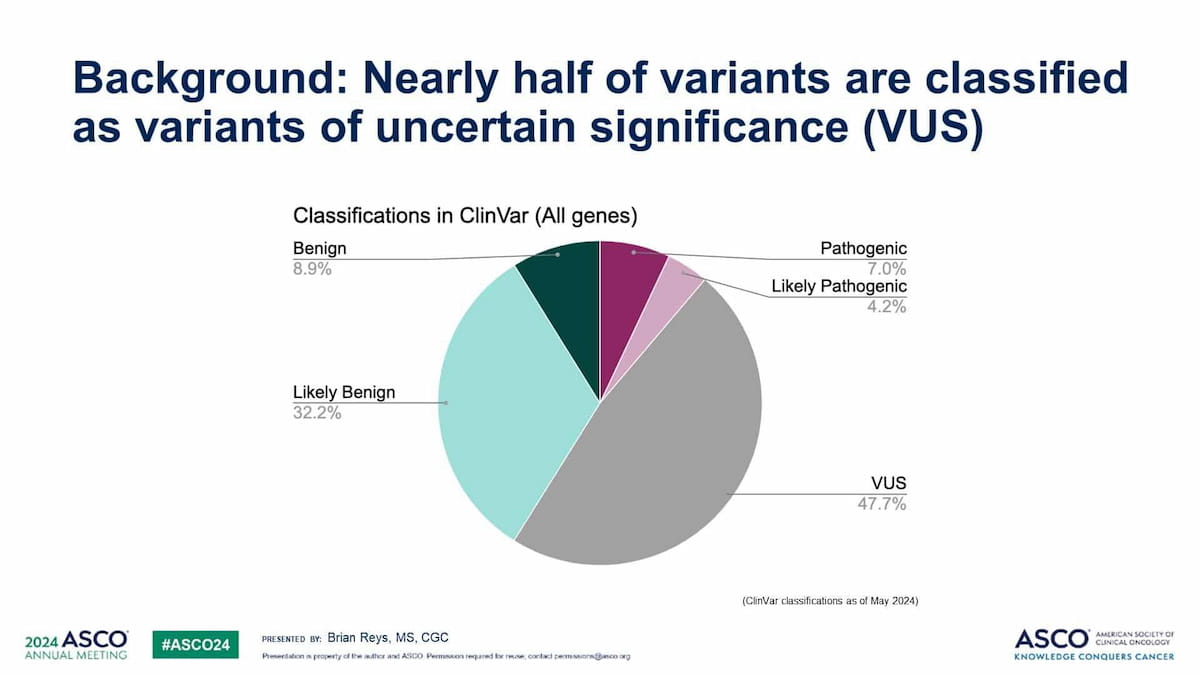
The study focused on understanding how these uncertain results can be clarified over time, providing crucial answers to patients who are left in limbo. Reclassification of VUS provides clarity for patients who initially received uncertain results. For some, this means peace of mind if a variant is reclassified as non-contributory to health risks. For others, it can lead to proactive measures if a variant is found to be significant.
“When people initially get these uncertain results, we’re essentially telling them, ‘Hey, we found something, but we don’t know what it means yet.’ Over time, as we learn more, we can re-contact them with more definitive answers,” Reys tells BlackDoctor.org. “These reclassifications really helped clarify previously uncertain results, which is a huge relief for many patients.”
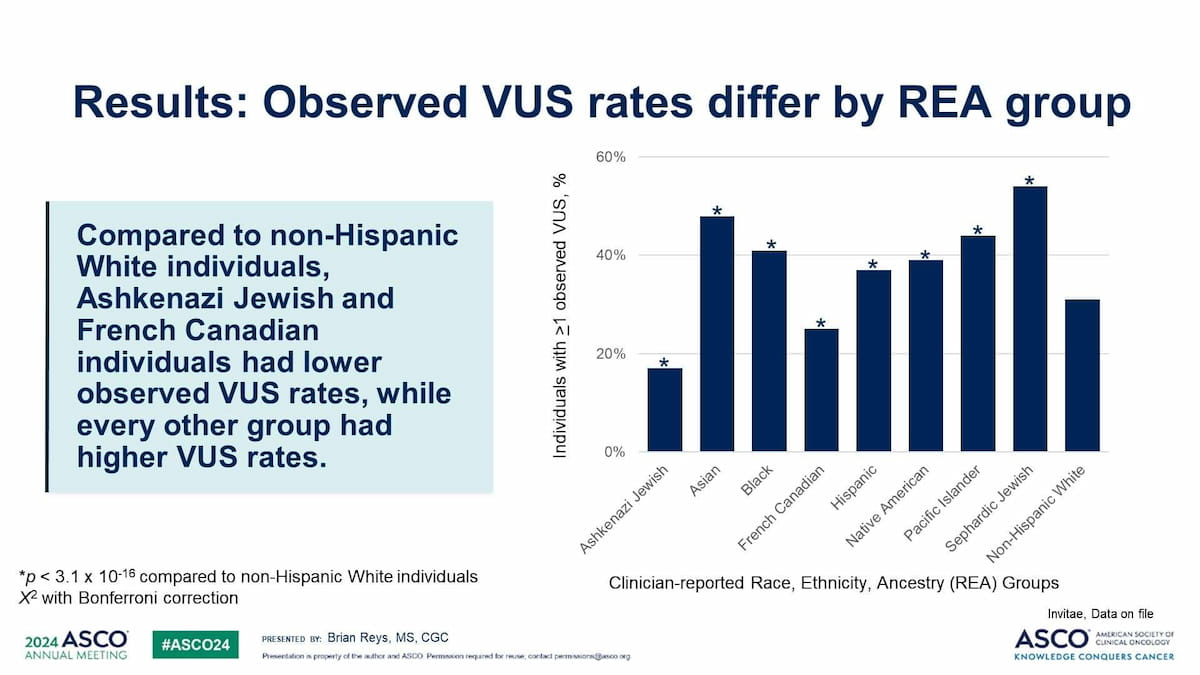
One significant finding of the study was that VUS disproportionately affects people of color compared to white individuals. This disparity is likely due to the underrepresentation of minority populations in genetic research and databases. As more people from diverse backgrounds undergo genetic testing, the understanding of VUS in these populations is expected to improve.
Reys pointed out, “Traditionally, people of color have been less likely to pursue genetic testing. This ends up creating health disparities because fewer people are getting genetic testing that can help improve their care and reduce cancer risk. We need to encourage more conversations about whether genetic testing is right for them.”
One of the significant barriers to genetic testing among minorities is a lack of awareness and fear. Reys encourages having open conversations about genetic testing and family history of diseases. He also emphasizes the role of genetic counselors in providing unbiased information and addressing privacy concerns, which will help you make informed decisions about genetic testing.
“Fear is such a driver for many of us in decision-making,” Reys notes. “If one of the barriers is just addressing concerns that people have, genetic counseling can be a perfect fit. We can provide third-party opinions and help people understand what genetic testing could mean for them.”
Future research aims to understand what factors contribute to the reclassification of VUS. There is a particular interest in the role of family studies, where additional genetic information from relatives can aid in reclassification. Promoting equity in genetic research by encouraging diverse participation is also a key goal.
“One exciting area we haven’t explored fully is understanding what causes variants to be reclassified,” Reys shares. “We expect that as more Ashkenazi Jewish, Asian, Black, and Hispanic communities get genetic testing done, VUS rates will come down because we’ll understand more about these variations.”
If you are considering genetic testing, here are some tips to help you navigate the process:


By subscribing, you consent to receive emails from BlackDoctor.com. You may unsubscribe at any time. Privacy Policy & Terms of Service.