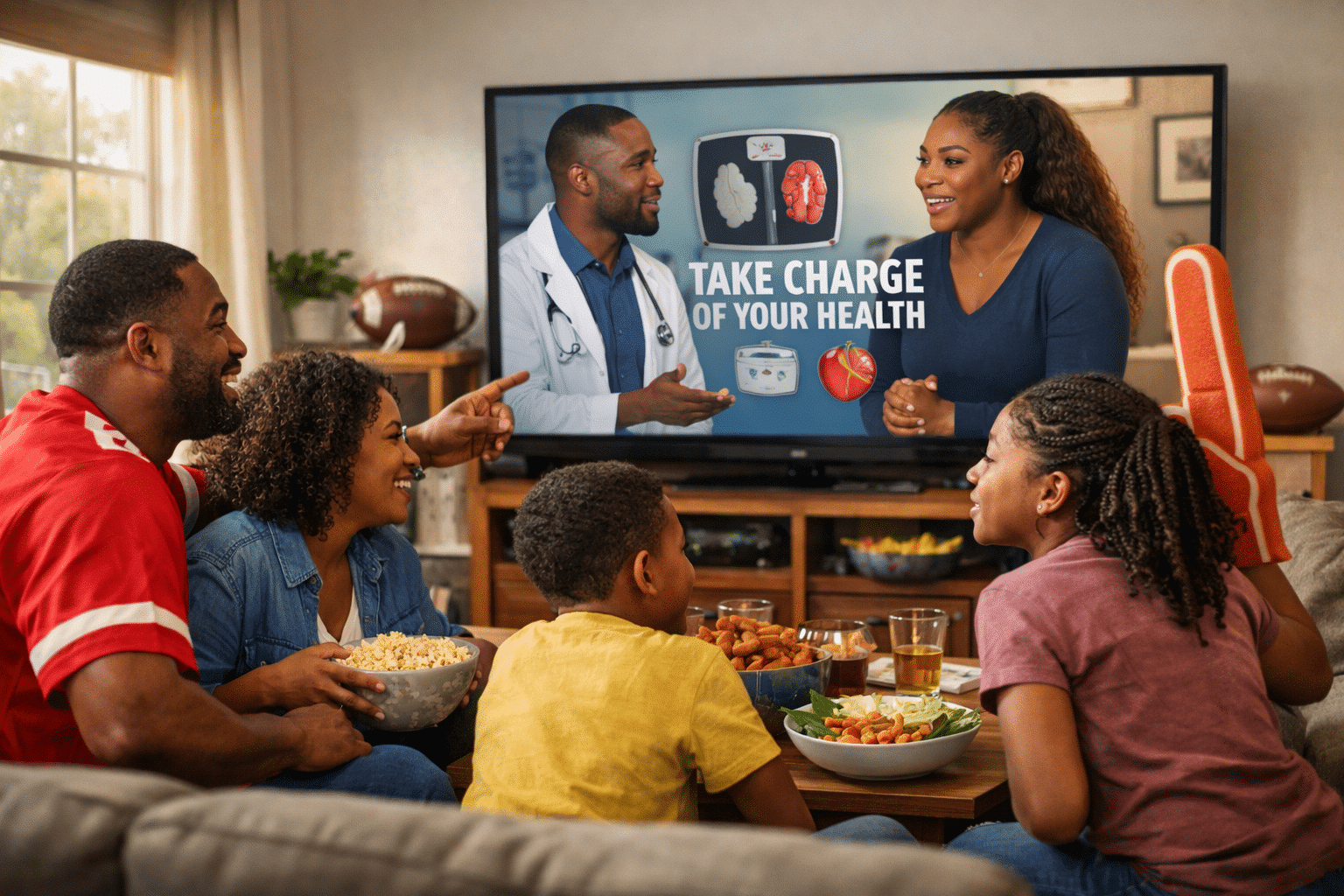
For many viewers, the Super Bowl is about football, halftime performances, and high-budget commercials. But during Super Bowl 2026, something different happened. A noticeable number of ads focused not on beer, cars, or insurance but on health.
From weight management and prostate cancer screening to kidney disease awareness and nutrition, this year’s commercials reflected a growing effort to reach Americans where they are during one of the most-watched events of the year. And for many families, those messages may have landed closer to home than expected.
Because for all the excitement of game day, many of the conditions highlighted in these commercials – heart disease, obesity, prostate cancer, kidney disease – are already affecting millions of households, often quietly and without warning.
Health campaigns used to live mostly in doctors’ offices, pamphlets, or public service announcements. Now they’re showing up in mainstream media.
That shift reflects a simple truth: most people aren’t actively searching for health information. So instead, health campaigns are starting to meet people where they already are while watching TV, scrolling online, or sitting with family during big cultural moments. When those messages show up in everyday spaces, they can feel more relatable and easier to act on.
And during the Super Bowl, those messages reached tens of millions of viewers at once.
One of the most visible storylines in this year’s commercials was weight management.
A 90-second ad from Wegovy introduced its new oral weight-loss medication, featuring celebrities including Kenan Thompson, DJ Khaled, John C. Reilly, and Danny Trejo. The campaign emphasized that weight struggles aren’t simply about discipline—they’re influenced by biology, metabolism, and medical conditions.
Serena Williams appeared in a telehealth commercial from Ro, highlighting the growing availability of GLP-1 medications, while Hims & Hers ran a bold campaign focused on expanding access to treatments once considered out of reach for many Americans. Eli Lilly’s Zepbound also appeared in both pre-game and in-game coverage, underscoring just how central this conversation has become.
For many viewers, these ads reflected a reality they already know. Managing weight isn’t just about appearance. It’s tied to energy, mobility, blood pressure, diabetes risk, and long-term heart health. In communities where access to healthy food, safe exercise spaces, and preventive care isn’t always consistent, the conversation becomes even more complex.
What stood out most was the shift in tone. Instead of shame or blame, the message centered on support, science, and long-term health.
Another memorable moment came from Novartis, which used humor and football metaphors to talk about prostate cancer screening. Using NFL tight ends to deliver the message made the topic feel approachable, even for viewers who might normally tune out health discussions.
That matters, because many men delay screenings for years. Conversations about prostate health are often avoided, even among close friends and family. Yet early detection remains one of the most powerful tools in preventing serious outcomes.
For Black men in particular, this conversation carries even greater urgency. Prostate cancer often develops earlier and can progress more aggressively, yet many men still delay screening. If you saw that commercial and it caught your attention, take it as a reminder to check in on your health. Talk to your doctor about when you should begin screening, learn your family history, and encourage your brothers, fathers, uncles, and friends to do the same. Awareness only matters if it leads to action, and early detection remains one of the most powerful tools for saving lives.
A commercial featuring Octavia Spencer and Sofia Vergara encouraged viewers to get screened for kidney disease, a condition that often develops silently.
Many people don’t realize kidney damage can progress for years without obvious symptoms. Fatigue, swelling, or changes in urination often appear only after significant decline has already occurred.
For individuals living with high blood pressure or diabetes, kidney health is closely connected to overall well-being. Regular checkups and simple blood or urine tests can reveal problems early, long before serious complications develop.
Another widely discussed message focused on diet and processed foods, with a campaign featuring Mike Tyson drawing attention to how everyday eating habits shape long-term health.
For many families, this message hits close to home. Busy schedules, rising food costs, and limited grocery options can make convenience foods the easiest choice. But over time, diets high in ultra-processed foods are linked to inflammation, diabetes, heart disease, and weight gain.
These conversations aren’t about perfection. They’re about awareness-understanding how small, gradual changes can improve energy, blood sugar, and overall health over time.
If there was one clear message woven throughout this year’s Super Bowl commercials, it’s that taking care of your health doesn’t have to start with something big. It can start with one small step.
Maybe that means finally scheduling a checkup you’ve been putting off. It could mean asking your doctor about a screening, learning your family health history, or simply paying closer attention to changes in your body.
Many serious conditions do not begin with obvious symptoms. That is why those routine appointments matter more than we sometimes realize.
These commercials were not just advertisements. They were invitations to pay attention, to check in with yourself, and to take your health seriously.
Now that the conversation has started, the most important part is what you do next. A phone call, an appointment, or even a conversation with someone you love could be the step that helps protect your health for years to come.


By subscribing, you consent to receive emails from BlackDoctor.com. You may unsubscribe at any time. Privacy Policy & Terms of Service.