A new at-home test will help people struggling with upper respiratory symptoms figure out whether they have COVID-19 or the flu.
The U.S. Food and Drug Administration approved Lucira under an emergency use authorization (EUA) on Friday.
“Today’s authorization of the first OTC [over-the-counter] test that can detect influenza A and B, along with SARS-CoV-2, is a major milestone in bringing greater consumer access to diagnostic tests that can be performed entirely at home,” Dr. Jeff Shuren, director of the FDA’s Center for Devices and Radiological Health, said in an agency news release. “The FDA strongly supports innovation in test development, and we are eager to continue advancing greater access to at-home infectious disease testing to best support public health needs.”
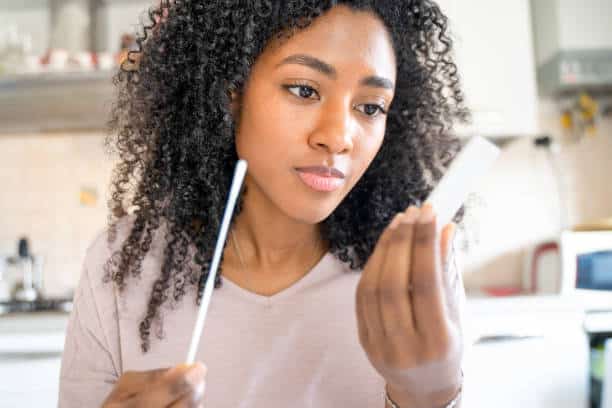
Those who have symptoms of a respiratory tract infection can collect a sample from their noses using a nasal swab and then swirling that in a vial of test solution. After 30 minutes, the test unit will show whether someone is positive for COVID or flu.
The test will be sold without a prescription. It can be used by anyone 14 and up or by an adult on children ages 2 and older.
The FDA notes that Lucira was accurate in 99.3% of negative samples and 90.1% of positive samples for influenza A and 100% of negative and 88.3% of positive COVID samples. It was 99.9% accurate for negative influenza B samples, but there was not enough circulating virus to determine how accurate it was for positive samples.
The study did confirm that the test can identify Influenza B in contrived specimens, according to the FDA. The EUA requires Lucira to continue collecting samples to study the test’s ability to detect Influenza B in real-world settings.
RELATED: Getting the Flu & COVID at the Same Time: How Can You Tell?
If you receive positive test results, you should share this information with your doctors, according to the FDA. You should also take precautions to avoid spreading the virus and seek follow-up care with a physician.
Negative results for SARS-CoV-2 and influenza B, if it’s necessary for patient management, should be
confirmed with an authorized molecular test performed in an approved laboratory, the FDA notes.
If you still have fever, cough and/or shortness of breath even after testing negative, you may still have a respiratory infection, the FDA notes. You should seek follow-up care with your healthcare provider.
The impact of flu, COVID and RSV have underscored the importance of having tests for various respiratory viruses, according to the FDA. The agency plans to continue increasing the number of easy-to-use, at-home tests available to the public.
Lucira Health, the company that manufactures the test, has filed for bankruptcy, so it’s not clear what its manufacturing capacity is at this point or what the possible cost for the tests might be, the New York Times reports.
The Centers for Disease Control and Prevention recommends get tested if:
For guidance on using tests to determine which mitigations are recommended as you recover from COVID-19, go to Isolation and Precautions for People with COVID-19.



By subscribing, you consent to receive emails from BlackDoctor.com. You may unsubscribe at any time. Privacy Policy & Terms of Service.