Mostly all of us have felt the exhaustion of pandemic-era decision-making.
Should I travel to see an elderly relative? Can I see my friends and, if so, is inside OK? Mask or no mask? Test or no test? What day? Which brand? Is it safe to send my child to daycare?
Questions that once felt trivial have come to bear the moral weight of a life-or-death choice. So it might help to know (as you’re tossing and turning over whether to cancel your non-refundable vacation) that your struggle has a name: decision fatigue.
In 2004, psychologist Barry Schwartz wrote an influential book, “The Paradox of Choice: Why More Is Less.” The basic premise is this: Whether picking your favorite ice cream or a new pair of sneakers or a family physician, choice can be a wonderful thing. But too many choices can leave us feeling paralyzed and less satisfied with our decisions in the long run.
And that’s just for the little things.
Faced with a stream of difficult choices about health and safety during a global pandemic, Schwartz suggests, we may experience a unique kind of burnout that could deeply affect our brains and our mental health.
Schwartz, an emeritus professor of psychology at Swarthmore College and a visiting professor at the Haas School of Business at the University of California-Berkeley, has been studying the interactions among psychology, morality, and economics for 50 years. He spoke with Kaiser Health News reporter Jenny Gold about the decision fatigue that so many Americans are feeling two years into the pandemic, and how we can cope. The conversation has been edited for length and clarity.
Q&A: How Has COVID has Affected Black Men?
We all know that choice is good. That’s part of what it means to be an American. So, if choice is good, then more must be better. It turns out, that’s not true.
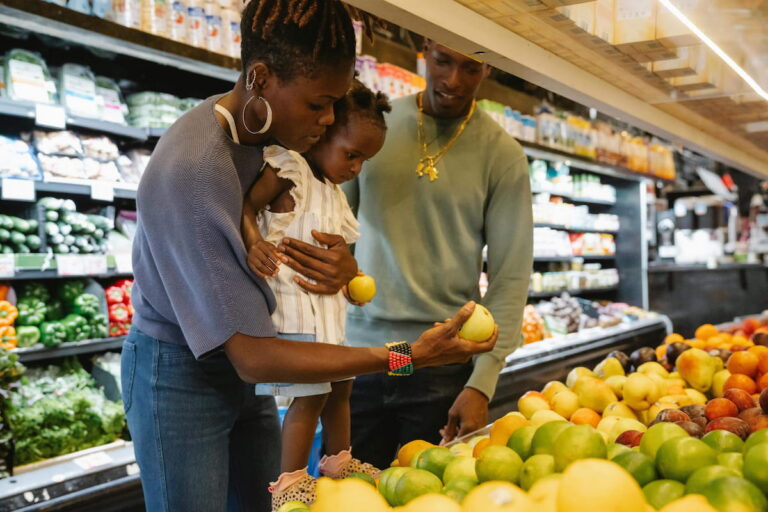
Imagine that when you go to the supermarket, not only do you have to choose among 200 kinds of cereal, but you have to choose among 150 kinds of crackers, 300 kinds of soup, 47 kinds of toothpaste, etc. If you really went on your shopping trip with the aim of getting the best of everything, you’d either die of starvation before you finished or die of fatigue. You can’t live your life that way.
When you overwhelm people with options, instead of liberating them, you paralyze them. They can’t pull the trigger. Or, if they do pull the trigger, they are less satisfied, because it’s so easy to imagine that some alternative that they didn’t choose would have been better than the one they did.
In the immediate aftermath of the pandemic, all the choices that we faced vanished. Restaurants weren’t open, so you didn’t have to decide what to order. Supermarkets weren’t open, or they were too dangerous, so you didn’t have to decide what to buy. All of a sudden your options were restricted.
But, as things eased up, you sort of go back to some version of your previous life, except [with] a whole new set of problems that none of us thought about before.
And the kinds of decisions you’re talking about are extremely high-stakes decisions. Should I see my parents for the holidays and put them at risk? Should I let my kid go to school? Should I have gatherings with friends outside and shiver, or am I willing to risk sitting inside? These are not decisions we’ve had practice with. And having made this decision on Tuesday, you’re faced with it again on Thursday. And, for all you know, everything has changed between Tuesday and Thursday. I think this has created a world that is just impossible for us to negotiate. I don’t know that it’s possible to go to bed with a settled mind.
When we make choices, we are exercising a muscle. And just as in the gym, when you do reps with weights, your muscles get tired. When this choice-making muscle gets tired, we basically can’t do it anymore.
I don’t think you need decision fatigue to explain the explosion of mental health problems. But it puts an additional burden on people.
Imagine that you decided that, starting tomorrow, you are going to be thoughtful about every decision you make. OK, you wake up in the morning: Should I get out of bed? Or should I stay in bed for another 15 minutes? Should I brush my teeth, or skip brushing my teeth? Should I get dressed now, or should I get dressed after I’ve had my coffee?
What the pandemic did for a lot of people is to take routine decisions and make them non-routine. And that puts a kind of pressure on us that accumulates over the course of the day, and then here comes tomorrow, and you’re faced with them all again. I don’t see how it could possibly not contribute to stress and anxiety and depression.
There are two possibilities. One is that we are strengthening our decision-making muscles, which means that we can tolerate more decisions in the course of a day than we used to. Another possibility is that we just adapt to the state of stress and anxiety, and we’re making all kinds of bad decisions.
In principle, it ought to be the case that when you’re confronted with a dramatically new situation, you learn how to make better decisions than you were able to make when it all started. And I don’t doubt that’s true of some people. But I also doubt that it’s true in general, that people are making better decisions than they were when it started.
First, simplify your life and follow some rules. And the rules don’t have to be perfect. [For example:] “I am not going to eat indoors in a restaurant, period.” You will miss out on opportunities that might have been quite pleasant, but you’ve taken one decision off the table. And you can do that with respect to a lot of things the way that, when we do our grocery shopping, we buy Cheerios every week. You know, I’m going to think about a lot of the things I buy at the grocery, but I’m not going to think about breakfast.
The second thing you can do is to stop asking yourself, “What’s the best thing I can do?” Instead, ask yourself, “What’s a good enough thing I can do?” What option will lead to good enough results most of the time? I think that takes an enormous amount of pressure off. There’s no guarantee that you won’t make mistakes. We live in an uncertain world. But it’s a lot easier to find good enough than it is to find best.


By subscribing, you consent to receive emails from BlackDoctor.com. You may unsubscribe at any time. Privacy Policy & Terms of Service.