Although Crohn’s disease and irritable bowel syndrome (IBS) both involve unusual bowel movements, excess gas, abdominal pain, and an inability to tolerate certain foods, the two conditions are fundamentally different. Understanding these differences is essential for anyone managing digestive health issues or seeking a diagnosis.
RELATED: What Diet Is Most Likely to Help Ease Crohn’s Disease?
Crohn’s disease, often grouped under the umbrella of inflammatory bowel diseases (IBD), is a chronic inflammatory condition that can affect any part of the digestive tract—from the mouth to the anus. It most commonly impacts the end of the small intestine (the ileum) and the beginning of the colon.
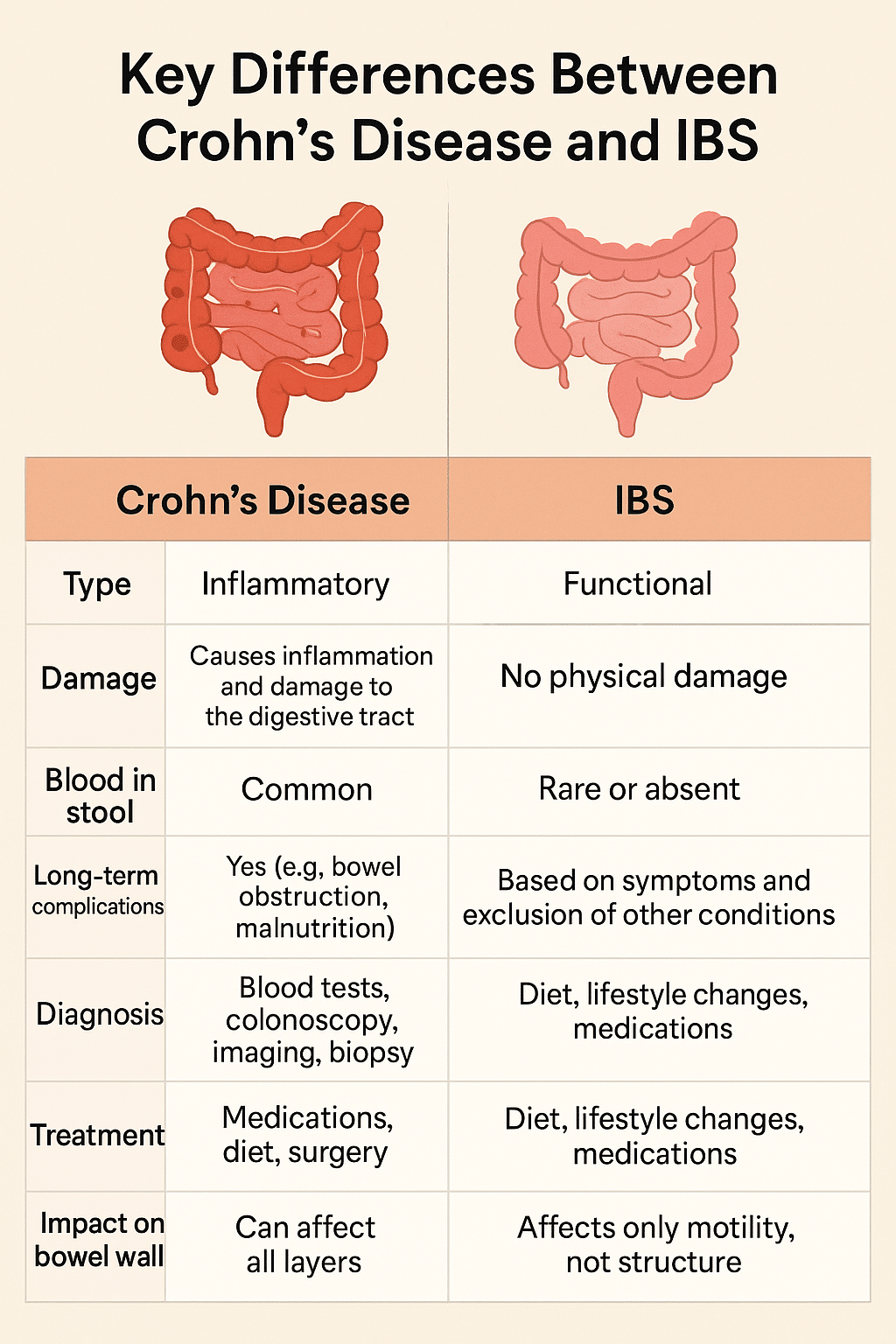
Unlike IBS, Crohn’s disease is an inflammatory disorder. This means that it involves actual damage to the tissues of the digestive tract, typically in the form of ulcers, swelling, and deep tissue inflammation. The inflammation can penetrate multiple layers of the intestinal wall, sometimes leading to serious complications such as:
Intestinal blockages
Abscesses or fistulas
Malnutrition due to poor nutrient absorption
Increased risk of colon cancer
Researchers are still unsure of the exact cause of Crohn’s disease. However, it is generally accepted that the condition arises from a combination of factors, including:
Genetic predisposition: People with a family history of Crohn’s are more likely to develop it, though many patients have no such history.
Immune system irregularities: The immune system may mistakenly attack healthy cells in the gastrointestinal tract while fighting off pathogens.
Environmental factors: Urban living and diets high in processed foods have been linked to higher Crohn’s rates.
While stress and certain foods can worsen symptoms, they are not considered root causes.
RELATED: Crohn’s Disease: Could You Have It and Not Know?
Symptoms can vary widely from person to person but often include:
Persistent diarrhea
Unintended weight loss
Fatigue and low-grade fever
Abdominal pain and cramping
Blood in the stool
Reduced appetite
These symptoms may flare up and then go into remission for periods of time, sometimes months or even years.
Diagnosing Crohn’s typically involves a combination of blood tests, stool samples, colonoscopy, imaging studies (like CT or MRI), and sometimes biopsies of intestinal tissue.
Treatment often includes:
Anti-inflammatory medications, like corticosteroids
Immune system suppressors
Biologics, targeting specific pathways of inflammation
Nutritional therapy
Surgery, in severe cases
READ: Traveling With Ease With IBS

In contrast, IBS is a functional gastrointestinal disorder. This means there is no visible inflammation or damage to the digestive tract. It is more about how the gut functions and reacts to stimuli.
IBS affects an estimated 25 to 45 million Americans. Unlike Crohn’s, it does not cause damage to the intestinal lining or lead to serious health complications like ulcers or intestinal bleeding. However, it can severely impact a person’s quality of life.
The precise cause of IBS remains unclear, but several factors are believed to contribute:
Abnormal muscle contractions in the intestine
Increased gut sensitivity to stretching and movement
Changes in gut microbiota
Psychological factors, including stress and anxiety
Hormonal fluctuations, which may explain why IBS is more common in women
IBS symptoms can mimic some of those seen in Crohn’s disease, which sometimes leads to confusion. These symptoms include:
Abdominal pain or cramping
Bloating and gas
Diarrhea, constipation, or alternating between both
Mucus in the stool
However, IBS does not cause inflammation, ulcers, or permanent damage to the intestines.
If you’re experiencing symptoms like rectal bleeding, unexplained weight loss, or nighttime diarrhea, it’s likely not IBS and may be a sign of a more serious condition like Crohn’s or another form of IBD.
RELATED: IBS: Cut Out Stress, Help Your Gut
Both Crohn’s disease and IBS can be managed with appropriate treatment, but the approach differs significantly.
For Crohn’s disease, a low-residue diet during flare-ups may help. Some patients also benefit from anti-inflammatory diets or eliminating lactose and gluten. Nutritional supplementation is often necessary.
For IBS, the low-FODMAP diet is a popular and evidence-based approach that limits fermentable carbohydrates that contribute to gas and bloating. Keeping a food diary can help identify specific triggers.
Stress can exacerbate both conditions. Mind-body therapies such as cognitive behavioral therapy (CBT), meditation, and gentle exercise like yoga may reduce symptom severity and improve coping strategies.
Regardless of the condition, persistent or worsening digestive symptoms warrant a medical evaluation. If you experience:
Blood in stool
Significant weight loss
Nighttime bowel movements
Fatigue or fever
Severe abdominal pain
…it’s time to seek medical attention. Early diagnosis and treatment can make a significant difference in long-term health outcomes.
By understanding the fundamental differences between Crohn’s disease and IBS, you can pursue the right diagnostic tools and treatment strategies to improve your quality of life. While the symptoms may overlap, the underlying causes, risks, and treatments are distinct, and knowing the difference is the first step toward effective management.


By subscribing, you consent to receive emails from BlackDoctor.com. You may unsubscribe at any time. Privacy Policy & Terms of Service.