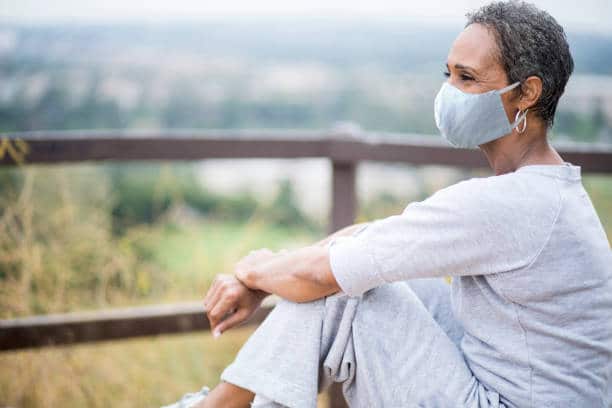
Catching COVID-19 appears to increase an older person’s risk of developing a case of shingles.
Researchers found that people 50 and older who had a COVID infection were 15% more likely to develop shingles, compared to people who were never infected. That risk climbed to 21% in people hospitalized with a severe case of COVID.
“It is important that health care professionals and people 50-plus are aware of this potential increased risk so patients can be diagnosed and treated early if they develop shingles following COVID-19,” says lead researcher Dr. Amit Bhavsar, director of clinical research and development for the pharmaceutical company GSK in Brussels.
RELATED: CDC Supports 2nd Booster Shots for Americans 50 and Older
Shingles is a painful skin rash that occurs in people who’ve previously had chicken pox.
The virus that causes chicken pox, varicella zoster, hides in people’s nerve cells after they’ve gotten over their initial case of the infectious disease, explains Dr. Carrie Kovarik, a professor of dermatology and medicine with the University of Pennsylvania’s Perelman School of Medicine.
In some cases, varicella zoster will reemerge later in life and cause shingles, usually due to a faltering immune system.
“Your T-cells are what keep the chicken pox virus contained,” Kovarik says. “When your T-cells aren’t doing the job — you’d had an illness or you get stressed or you get old — the chicken pox virus can come out down the nerve and onto your skin. It can’t hold onto it any longer.”
Because of this, it makes sense that COVID could prompt shingles, since the virus wreaks such havoc on the immune system, Kovarik shares.
“I’ve definitely seen patients who had one or two episodes of [shingles] in a year who’d never had it before but who had had COVID,” Kovarik adds. “And I had multiple patients like this, and it was happening in more of my patients.”
Dr. Amesh Adalja, a senior scholar with the Johns Hopkins Center for Health Security, agrees.
“This is not a surprising finding as SARS-CoV-2 is known to cause immune dysfunction and physiologic stress,” Adalja says. “Physiologic stress and dysregulated immune function are known factors” in shingles outbreaks.
Nearly all adults over age 50 have had chicken pox, and therefore are at risk for developing shingles, Bhavsar said.
For this study, Bhavsar and his colleagues compared medical data from nearly 400,000 COVID patients 50 and older with more than 1.5 million people who never contracted COVID.
No one in either group had been vaccinated against either COVID or shingles.
The researchers found an elevated risk of shingles among COVID patients that persists for at least six months after their illness.
Because people vaccinated against shingles were excluded from the study, it’s not known whether the shingles vaccine could limit or eliminate this risk from COVID, Bhavsar notes.
Kovarik is concerned that a severe COVID infection might overcome the immunity conferred by the shingles vaccine, particularly in people with weakened immune systems.
“The shingles vaccine is just a stronger dose of the chicken pox vaccine, trying to rev up your immune cells and show them the virus so you can have some immune activity against that virus,” Kovarik says. “People who have some immune problems, maybe they’re not mounting as good of an immune reaction to the vaccine, or the COVID is so strong it can overwhelm your immune response to the shingles.”
Folks who are worried about getting shingles should consider getting both the COVID and shingles vaccines, Kovarik suggests.
“The numbers have shown that the COVID vaccine helps prevent hospitalizations and deaths, so getting a COVID vaccine should prevent a severe case, which would hopefully prevent [shingles] in those patients,” Kovarik concludes.


By subscribing, you consent to receive emails from BlackDoctor.com. You may unsubscribe at any time. Privacy Policy & Terms of Service.